Ferrite (ceramic) magnets are sintered iron oxide with strontium or barium carbonate: cheap, corrosion-resistant and stable up to 250 degC, but hard and brittle — so cutting method directly decides yield.
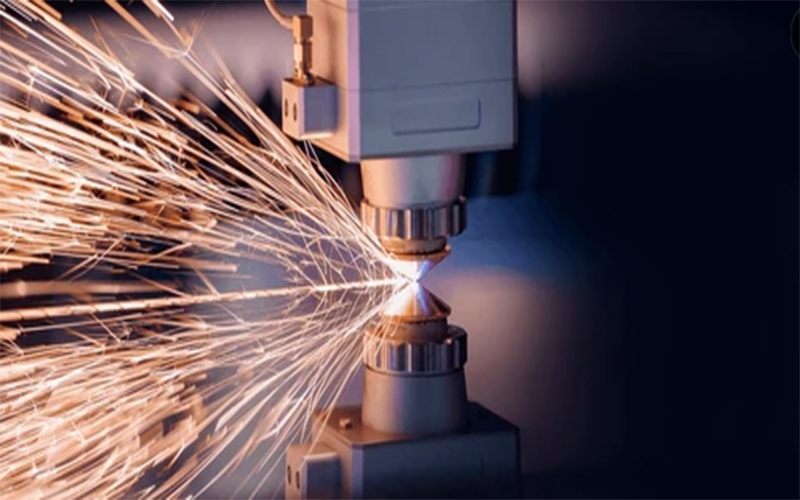
Grinding leaves 50-100 micrometer micro-cracks and runs slowly; laser adds a heat-affected zone that alters magnetic properties; waterjet leaves Ra >3 micrometer edges needing polishing.
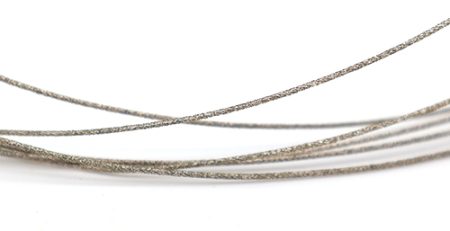
Diamond wire saw cutting is the best fit: a 0.1-0.3 mm diamond-coated wire gives chip-free edges (Ra <0.5 micrometers), no heat damage, ±0.02 mm tolerances and kerf under 0.2 mm.
About 80% of Japanese ferrite manufacturers already use diamond wire saws, cutting production cost by roughly 30% versus grinding in high-volume runs.
1. What Are Ferrite Magnets?
Ferrite magnets, also known as ceramic magnets, are a type of permanent magnet composed primarily of iron oxide (Fe₂O₃) combined with strontium or barium carbonate. They are sintered under high temperatures to form a hard, brittle ceramic material with moderate magnetic strength (0.2–0.4 Tesla).
Key Properties
– Cost-Effective: Cheaper than rare-earth magnets (NdFeB/SmCo)
– High Resistivity: Low electrical conductivity reduces eddy current losses
– Temperature Stability: Maintain performance up to 250°C
– Corrosion Resistance: Do not require coating like NdFeB
Applications
– Electronics: Speakers, sensors, and microwave devices
– Automotive: ABS sensors, electric motor components
– Industrial: Magnetic separators, holding systems
Due to their brittleness, ferrite magnets require specialized cutting methods to avoid chipping and cracking.
2.How Are Ferrite Magnets Processed?
Ferrite magnets are manufactured through sintering, producing blocks or discs that must be cut into precise shapes. Common machining methods include:
– Sensor Components: Precision slots for Hall-effect devices
– Custom Shapes: Trapezoidal/arc cuts for motors
Conclusion
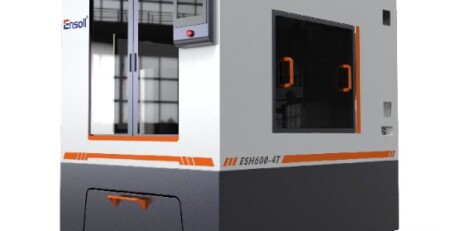
Ferrite magnets demand precision cutting to maintain performance. While grinding and laser methods have limitations, diamond wire saw cutting machines deliver the best balance of accuracy, surface quality, and cost efficiency.
For manufacturers seeking zero-defect ferrite components, upgrading to diamond wire technology reduces waste by 20% and boosts productivity by 3×.
Need a cutting solution? [Contact us] for a free sample test with your ferrite material! Compared with how to cut neodymium magnets, ferrite allows a higher feed rate, but chipping at the exit edge is still the defect to watch.
Frequently Asked Questions
What is the best way to cut ferrite magnets?
Diamond wire saw cutting. The thin diamond-coated wire (0.1-0.3 mm) grinds through the brittle ceramic with very low force, producing chip-free edges at Ra below 0.5 micrometers and tolerances around ±0.02 mm — without the micro-cracks of grinding or the heat damage of laser cutting.
Why do ferrite magnets chip during cutting?
Ferrite is a sintered ceramic with very low tensile strength. Rigid blades and grinding wheels concentrate mechanical stress at the cut edge, and the material fractures as the tool exits. Low-force abrasive micro-grinding with a diamond wire largely eliminates this failure mode.
Can you laser cut ferrite magnets?
Only thin sheets (under about 3 mm) and only for straight cuts. The laser’s heat-affected zone alters the magnetic properties near the cut, so for production parts a cold process like diamond wire saw cutting is preferred.
Does cutting affect ferrite’s magnetic performance?
Yes if the process adds heat or stress. Laser and hot grinding can alter properties near the cut; diamond wire saw cutting is a cold, coolant-controlled process, so the ferrite keeps its rated performance with no heat-affected zone.
The rapid evolution of 5G telecommunications, electric vehicle (EV) charging infrastructure, and high-frequency power supplies has placed a massive spotlight... read more
Key Takeaways
A single-crystal silicon ingot goes through cropping, diameter grinding, slicing, edge chamfering, lapping and polishing before it is ready... read more
The global transition toward clean energy and advanced computing has placed unprecedented pressure on the supply chains of the photovoltaic... read more
Diamond wire loop cutting has revolutionized the cutting process for colored crystals, offering numerous advantages over traditional methods. This... read more
Abstract: This application report documents a precision straight-slicing test on PMI
(polymethacrylimide) structural foam supplied by a European customer. Four slices... read more
In the landscape of modern industrial manufacturing, the ability to cleanly separate materials is a fundamental prerequisite for subsequent processing... read more
Abstract:
This study investigates the impact of different resin binders on the cutting performance of diamond wire loops. Resin-cured hardness samples... read more
Abstract: This application report documents a high-precision straight-slicing test on BG38
glass sheet supplied by a European customer. The workpiece measured... read more
Introduction to KDP Crystals
KDP crystals have a large nonlinear optical coefficient and a high laser damage threshold, making them important... read more
Key Takeaways
Magnetic materials fall into three families: permanent magnets (NdFeB, SmCo, AlNiCo, ferrite), soft magnetics (silicon steel, soft ferrite, amorphous... read more