News

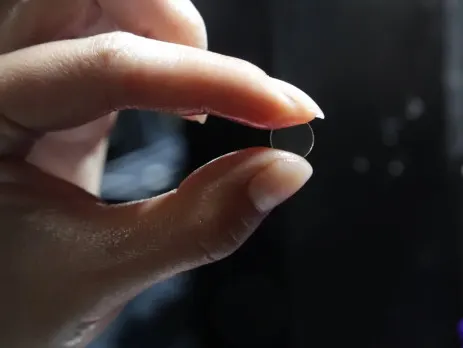
Glass Tube Precision Slicing with Diamond Wire Loop: 3 mm Section Test Data

Abstract: This report documents a precision straight-slicing trial on glass tube supplied by a European customer. The workpiece was a tube of 12 mm outside diameter and 104 mm length, sliced into sections 3 mm long on an ESO-GM diamond wire loop cutting machine, with cutting oil as the cooling medium and a fully coated diamond wire. Across five sections the measured results came out at total thickness variation (TTV) 0.004-0.028 mm, thickness tolerance ±0.026 mm against a 3.000 mm nominal, surface roughness Ra...

Optical Glass Precision Slicing with Diamond Wire Loop: 30.5 mm Rod Test Data

Abstract: This application report covers a high-precision straight-slicing test on optical glass supplied by a European customer. The workpiece was a rod of 30.5 mm diameter, cut into sections 15 mm long on an ESO-GM gantry diamond wire loop cutting machine, with cutting oil as the cooling medium and a fully coated diamond wire. Measured results across three sections: total thickness variation (TTV) 0.003-0.008 mm, thickness tolerance ±0.141 mm against a 15.000 mm nominal, surface roughness Ra 0.58-1.06 μm, and maximum edge chipping 4.9-6.2 μm....

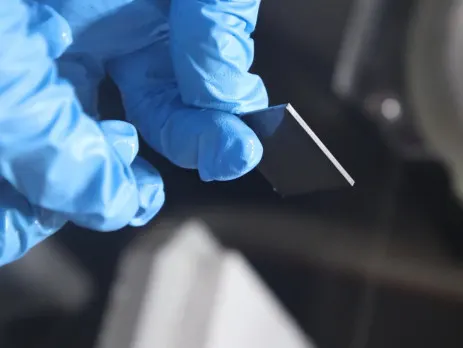
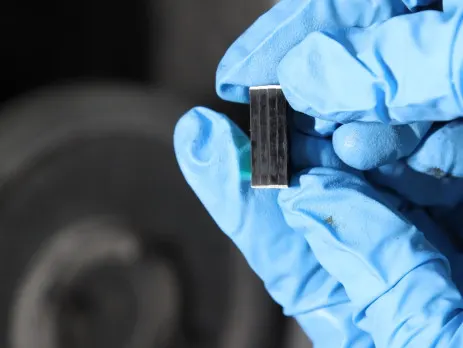
BG38 Glass Sheet Slicing with Diamond Wire Loop: 5 mm Test Data

Abstract: This application report documents a high-precision straight-slicing test on BG38 glass sheet supplied by a European customer. The workpiece measured 86 mm x 60 mm x 1 mm and was cut into strips of 5 mm x 60 mm x 1 mm on an ESO-GM gantry diamond wire loop cutting machine, using cutting oil as the cooling medium and a fully coated diamond wire. Measured results: total thickness variation (TTV) 0.003-0.020 mm (average 0.014 mm), thickness tolerance ±0.027 mm, surface roughness Ra 0.63-0.76...

How to Measure TTV on Thin Slices: The Nine-Point Method

Abstract: Total thickness variation (TTV) is the single number most often quoted for a precision slicing process, and the easiest one to measure badly. This guide documents the nine-point grid dual-probe method used in Ensoll's slicing tests for PEEK and PMI foam cut with a diamond wire loop: how the sample is prepared, how it is held, where the nine points sit, how TTV is calculated from them, and which errors produce a plausible but wrong number. Key TakeawaysTTV = Tmax - Tmin...

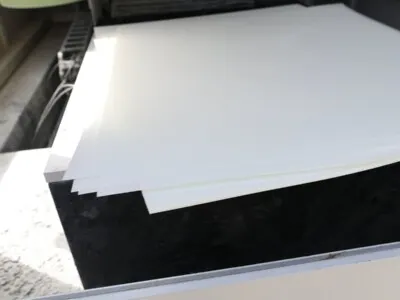
PEEK vs PMI Foam: Diamond Wire Cutting Comparison

Abstract: PEEK and PMI foam sit at opposite ends of the material spectrum that a diamond wire loop has to handle - one is a dense, tough thermoplastic, the other a low-density cellular structural foam. This comparison sets Ensoll's two published slicing tests side by side: a 200 mm x 60 mm x 60 mm PEEK block cut into 6.5 mm slices with cutting fluid, and four 400 mm x 400 mm PMI foam slices cut to 0.8 mm dry. It compares the...