
Diamond wire cutting for sintered NdFeB, SmCo and bonded magnets — cutting a brittle, corrosion-sensitive material without cracking it or degrading its magnetic properties.
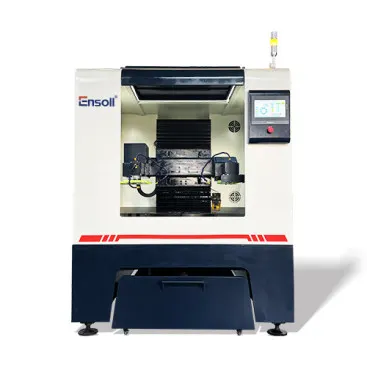
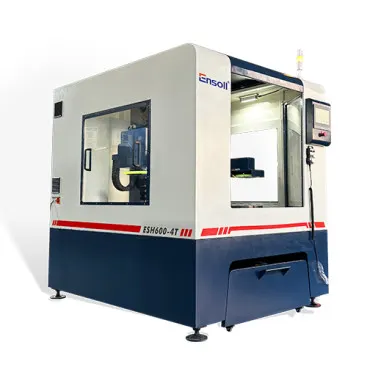
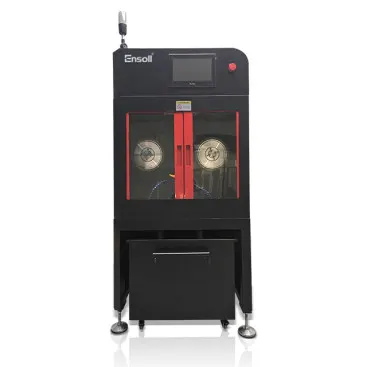
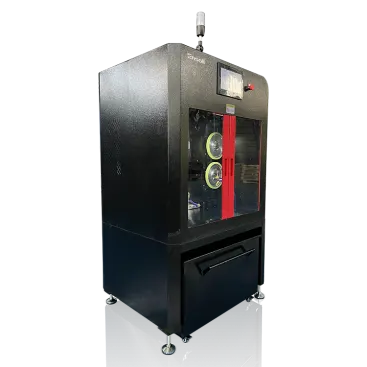
NdFeB is brittle, and it is brittle in a specific way
Sintered neodymium magnets have very high hardness and very low fracture toughness. They behave like a ceramic: no plastic deformation, no warning, and a chip that runs along the grain boundary. Wire cutting suits them because it applies low, constant force across a narrow kerf instead of the impact loading of a blade.
Why not EDM or grinding
EDM works and is common, but it is slow on large sections and it leaves a recast layer that has to be removed. Grinding generates heat that can partially demagnetise the surface layer if cooling is inadequate. O corte por fio situa-se entre eles: mais rápido que EDM em secções espessas, mais frio que a retificação, e não precisa de um caminho condutivo.
Intervalos de parâmetros
| Material | Fio Ø | Abrasivo | Avanço | Atenção a |
|---|---|---|---|---|
| NdFeB sinterizado (N35–N52) | 0.25–0,40 mm | D126 | 1–4 mm/min | Lascamento de arestas, lascamento nos cantos |
| SmCo | 0.25–0,40 mm | D126 | 0.8–3 mm/min | Mais frágil que NdFeB nos cantos |
| Ligado / ímã de polímero | 0.30–0,50 mm | D64–D126 | 2–8 mm/min | Mancha do ligante em avanços altos |
| Material revestido com Ni-Cu-Ni | 0.25–0,40 mm | D126 | 1–3 mm/min | Deslaminação do revestimento na aresta do corte |
Proteção do íman, não apenas do corte
Duas coisas degradam um íman durante a usinagem, e nenhuma delas é visível na face cortada:
- Calor — NdFeB perde coercividade à medida que a temperatura aumenta, e a perda torna-se permanente acima da temperatura máxima de operação do material. Arrefecimento por inundação não é opcional.
- Corrosão — NdFeB não revestido oxida-se facilmente. O refrigerante à base de água numa face cortada exposta inicia o processo imediatamente. Ou corte material revestido, ou planeie um novo revestimento, or use an inhibited coolant and dry the part promptly.
Chipping at corners
Nearly all rejections on wire-cut magnets are corner chips. The cause is the exit geometry: at a corner the wire is simultaneously leaving two faces. Fix with a support block behind the exit face and a feed ramp-down over the last 2 mm — not with a change of wire.
Perguntas frequentes
Does cutting affect the magnetic properties?
The bulk properties are unaffected as long as the part stays below its maximum operating temperature. The cut face can lose some coercivity in a thin surface layer if cooling is poor; that layer is usually removed by the subsequent coating step.
Can I cut a magnet that is already magnetised?
Sim, but the chips will stick to the wire, the guides and the machine. Most shops demagnetise, cut, então remagnetize — o manuseamento por si só justifica-o.
Por que é que a face cortada enferruja num dia?
NdFeB nu oxida no ar húmido. Se a peça não for diretamente para revestimento, seque-a e armazene-a seca, ou use um líquido de arrefecimento inibido. Isto é mais um problema de logística do que de corte.