Ringförmige Diamantdrahtsäge zum Schneiden von Keramik
- Hard-and-brittle material cutting suffers from low efficiency, geringe Materialausbeute, schlechter Oberflächenqualität, hohen Werkzeugkosten und Verschmutzung; thick circular saw blades waste material in wide kerfs, and free-abrasive wire saws contaminate with diamond slurry.
- Wire saws are classified by abrasive type (free vs bonded) and motion (reciprocating vs unidirectional); reciprocating multi-wire free-abrasive saws still dominate semiconductors and optoelectronics.
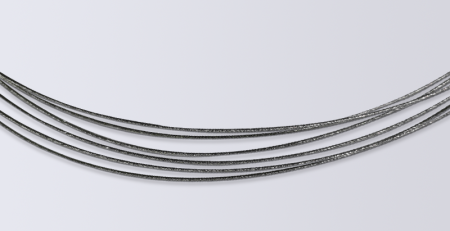
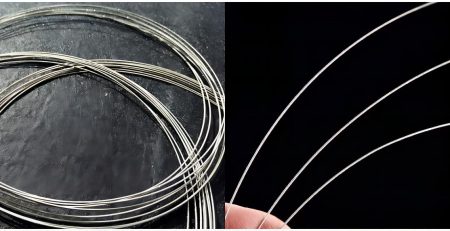
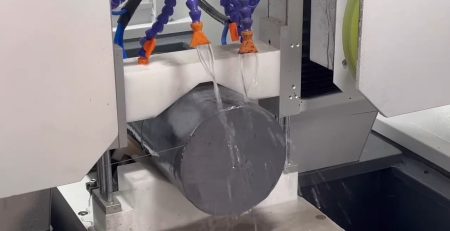
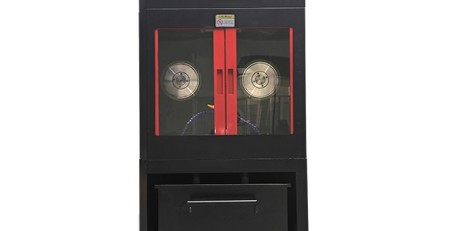
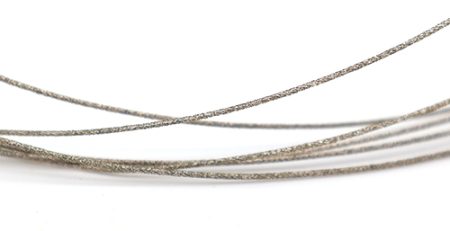
- The bonded-abrasive unidirectional annular (Schleife) diamond wire saw fixes diamond grains on the wire, enabling simple machine structure, high-speed one-direction wire movement and shaped cutting.
- Four documented advantages: narrow kerf and high yield (0.175-0.180 mm wires from Sumitomo Electric and Lid, 0.19 mm actual kerf in sodium glass); faster cutting because fixed abrasive needs no slurry entry; smooth gentle cutting without reciprocating grooves; und minimale Verschmutzung durch Wasserkühlmittel oder sogar Trockenschnitt.
- Offene Forschungslücken bleiben in der Drahtherstellung, Schneidmechanismen, Drahtversagensmodi, sowie bei Haltungs- und Bewegungssteuerung für Präzisionsformschnitte.
Zurzeit, Die Säge- und Schneidprozesse von harten und spröden Materialien sind von Problemen wie einer geringen Verarbeitungseffizienz geplagt, geringe Materialausbeute, Schlechte Oberflächenqualität und -integrität, hohe Werkzeugkosten, und Umweltverschmutzung. Beim Einsatz von Kreissägen zum Schneiden von Materialien wie Stein und Keramik, Die Sägeblätter müssen eine bestimmte Dicke besitzen, um die Steifigkeit zu gewährleisten. Daraus ergeben sich breite Schnittfugen, geringe Materialausbeute, und erhebliche Verschmutzung. Zusätzlich, Kreissägen sind nicht in der Lage, Formflächen zu bearbeiten, führt zu einer schlechteren Oberflächenqualität beim Schneiden keramischer Materialien. In der Halbleiterindustrie, führt der Einsatz freier abrasiver Drahtschnittmethoden zur Verarbeitung von Siliziumkristallen zu erheblichen Oberflächen- und Umweltkontaminationen durch Diamantschleifschlamm, wodurch die Kosten für nachfolgende Verarbeitung und Abfallbehandlung steigen.

(1) Schmale Schnittfuge, high material yield. By using high-strength steel wire as the base material, various wire saws with diameters below 1mm can be produced. Companies like Sumitomo Electric Industries and Lid in Japan have manufactured wire saws with average diameters ranging from 0.175 to 0.180mm using steel wires with diameters of 0.130 and 0.155mm as the base material, achieving an actual kerf loss of 0.19mm in sodium glass cutting experiments.
(2) Fast cutting speed, Hoher Wirkungsgrad. The bonded abrasive annular diamond wire saw features unidirectional movement of the wire saw during the cutting process, with the abrasive grains fixed on the wire saw, eliminating the difficulty of abrasive entry into long and deep kerfs. Compared to reciprocating structures and wire saws using free abrasives, it is easier to achieve higher cutting speeds, resulting in high processing efficiency.
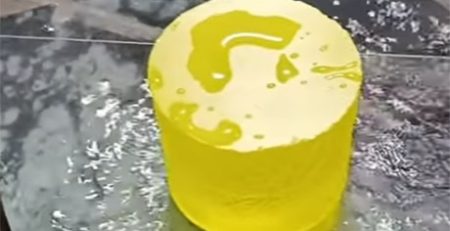
(3) Smooth cutting process, good slice surface quality. During the cutting process with a diamond wire saw, the cutting force is small and gentle, without the unique grooves generated on the workpiece surface due to reciprocating wire saw movement.
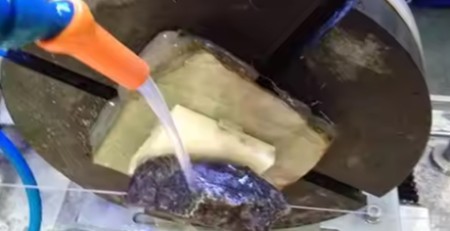
(4) Minimal environmental pollution. Bonded abrasive diamond wire saws typically use water as the standard coolant, and dry cutting methods can even be employed at lower wire speeds. This results in low or no need for wastewater treatment due to the use of bonded abrasives.

Ringsägen eignen sich für bestimmte Formen; Für flache Präzisionsarbeiten ist die Referenz precision cutting of alumina.
Häufig gestellte Fragen
Was ist eine ringförmige Diamantdrahtsäge?
Es handelt sich um eine gebundene Schleifdrahtsäge, bei der Diamantkörner auf einer Drahtschleife befestigt sind, die sich mit hoher Geschwindigkeit unidirektional bewegt. Die einfache Konstruktion ermöglicht hohe Drahtgeschwindigkeiten und geformtes Schneiden von harten, Spröde Materialien wie Keramik – eine Alternative zu herumgehenden frei abrasiven Drahtsägen.
Welche Vorteile hat eine gebundene abrasive Drahtsäge gegenüber frei abrasiver Säge?
Da die Diamantkörner am Draht fixiert sind, gibt es keine abrasive Schleife, die lange eindringen muss, tiefe Schnitte, daher sind höhere Schnittgeschwindigkeiten erreichbar. Es erzeugt auch eine schmale Schnittschnitte mit hohem Materialertrag, eine glatte Schnittfläche ohne rückwärtige Rillen, und deutlich weniger Kontamination.
Wie eng ist die Schnittschnitt einer Diamantdrahtsäge??
Hersteller wie Sumitomo Electric Industries und Lid in Japan haben Drahtsägen mit Durchschnitt 0.175-0.180 mm im Durchmesser auf Stahlkernen von 0.130-0.155 Mm, wobei in Natrium-Glasschneidexperimenten tatsächlich ein tatsächlicher Schnittschnitt von etwa 0.19 mm in Natriumglasschneideexperimenten.
Ist Diamantdrahtsägen umweltfreundlich?
Relativ ja. Gebundene-abrasive Diamantdrahtsägen verwenden typischerweise einfaches Wasser als Kühlmittel, und Trockenschneiden ist sogar bei niedrigeren Drahtgeschwindigkeiten möglich. Ohne frei abrasive Schlamm, ist kaum oder keine Abwasserbehandlung erforderlich – ein großer Unterschied zur Schlamm-basierten Siliziumwaferung.
Überprüft vom Ensoll-Ingenieurteam.