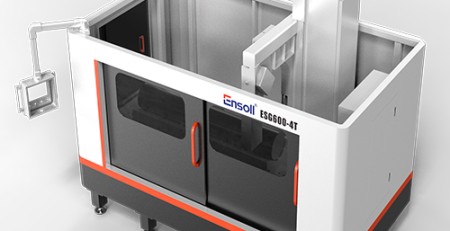
Mono-Silizium-Wafer-Schneiden mit Diamantdrahtsäge
Monokristallines Silizium ist die Grundlage der modernen Halbleiter- und Photovoltaikindustrie. Umwandlung von Siliziumbarren in funktionale Wafer, Präzises Schneiden ist unerlässlich. Unter verschiedenen Schneidtechnologien, Diamantdrahtsäge cutting has become the industry standard due to its efficiency, Präzision, und minimaler Materialverlust.
In diesem umfassenden Leitfaden, we will explore the monocrystalline silicon cutting process, Fokus auf Diamantdrahtsägen-Schneidemaschinen, ihre Arbeitsprinzipien, Vorteile, und Industrieanwendungen.
- Silicon wafer cutting turns a monocrystalline ingot into wafers; the three metrics that matter are TTV, Oberflächenrauheit, and sub-surface damage.
- Fixed-diamond wire sawing has largely replaced slurry sawing: enger Schnittspalt, cleaner process, more wafers per ingot.
- Wire diameter and tension stability drive both yield and how much downstream polishing is needed.
1. Verständnis von monokristallinem Silizium
Bevor wir in den Schneideprozess eintauchen, lassen Sie uns kurz über monokristallines Silizium sprechen und warum es spezielle Schneidetechniken benötigt.
1.1 Was ist Monokristallines Silizium? (Sie können auch den Link anklicken, um über Wikipedia weitere Details zu erfahren.)
 Monokristallines Silizium ist eine hochreine Form von Silizium mit einer einzigen, kontinuierlichen Kristallgitterstruktur. Es wird unter Verwendung der Czochralski- (CZ) Methode oder der Float-Zone- (FZ) Methode hergestellt, was zu zylindrischen Ingots führt.
1.2 Warum Präzisionsschneiden entscheidend ist
– Halbleiterindustrie: Siliziumwafer müssen ultraschöne Oberflächen haben(Rauheit auf Nanometerebene) für die Mikrochip-Herstellung.
-Photovoltaik-Industrie: Solarzellen erfordern dünne, einheitliche Wafer(typischerweise 160-180 µm) um die Effizienz zu maximieren.
– Minimaler Schnittverlust: Die Reduzierung von Materialverschwendung beim Schneiden verbessert die Kosten-effizienz.
Traditionelle Schneidmethoden wie ID-Sägen (Innendurchmesser-Sägen) und Mehrdraht-Schlammsägen wurden aufgrund überlegener Leistung durch Diamantdrahtsägen ersetzt.
2. Diamond Wire Saw Cutting Technology
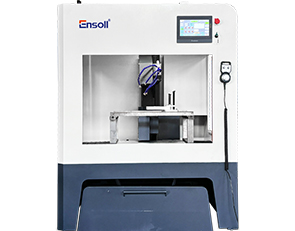
2.1 What is a Diamant-Drahtsäge-Schneidemaschine?
Video-Präsentation:
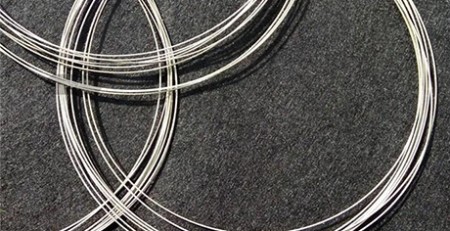
Ein Diamantdraht-Säge-Schneidemaschine uses a high-tensile steel wire embedded with diamond abrasive particles to slice through hard materials like silicon. The wire moves at high speeds (10-15 mm/min) while the workpiece is fed into it, enabling precision cutting with minimal kerf loss.
2.2Key Components of a Diamond Wire Saw Machine
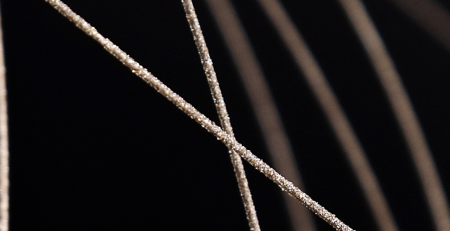
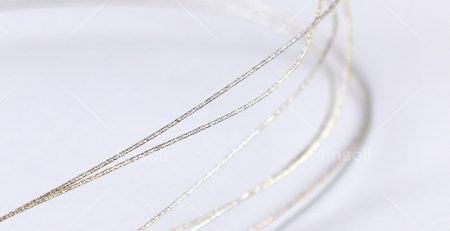
- Diamantdraht: A steel wire coated with synthetic diamond grit(30-100 µm in size) using electroplating or resin bonding.
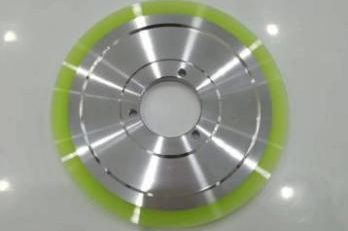
- Drahtführungssystem: Ensures consistent tension (20-60 N) and alignment.
- Kühlsystem: Prevents overheating and removes silicon debris (typically using PEG-based or water-soluble coolants).
- Motion Control System: Controls wire speed, Vorschubgeschwindigkeit, and cutting angle.
2.3 Wie das Schneiden mit der Diamantdrahtsäge funktioniert
- Wire Movement: The diamond wire runs in a continuous loop, driven by motorized pulleys.
- Schneidemechanismus: The diamond abrasive particles grind through silicon via micro-cutting and brittle fracture.
- Kühlmittelanwendung: A steady flow of coolant lubricates the cut, reduces thermal stress, and flushes away silicon slurry.
- Wafer Separation: The silicon ingot is sliced into wafers of precise thickness (zum Beispiel., 180µm for solar wafers).
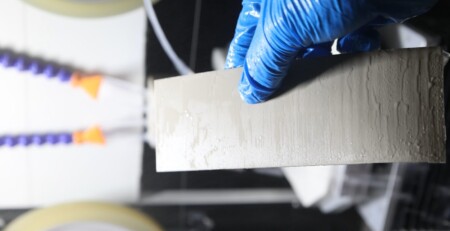
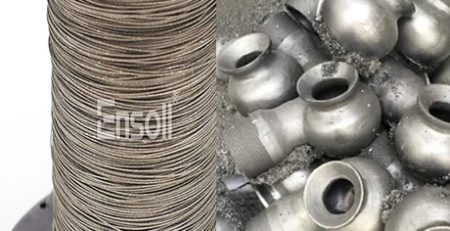
Material Cutting Showcase:
3.Vorteile des Diamantdrahtsägeschneidens
Compared to older methods like multi-wire slurry saws (MWSS), diamond wire saw offers:
3.1 Higher Cutting Speed & Effizienz
– Schnittgeschwindigkeiten bis zu 1,5x schneller als bei slurrybasierten Methoden.
– Mehrdrahtkonfigurationen ermöglichen gleichzeitiges Schneiden von Hunderten von Wafern.
3.2 Reduzierter Kerbverlust & Materialverschwendung
– Kerbbreite von nur 120-150 µm (vs. 180-220µm in Slurry-Sägen).
– Höherer Ertrag pro Einkristall, entscheidend für kostenempfindliche Solarproduktion.
3.3 Verbesserte Oberflächenqualität
– Geringerer Substratschaden (SSD) durch kontrollierte Schleifwirkung.
– Reduzierte Drahtmarkierungen und Welligkeit, Minimierung des Nachpolierens nach dem Schneiden.
3.4 Umwelt & Kostenvorteile
– Keine Entsorgungsprobleme von Slurry (im Gegensatz zu MWSS, das abrasive Slurry verwendet).
– Längere Lebensdauer der Drähte (bis zu 1,000 Schnitte pro Draht).
4. Herausforderungen & Lösungen beim Diamantdrahtsägeschneiden
Trotz ihrer Vorteile, Diamantdrahtsäge steht vor einigen Herausforderungen:

4.1 Drahtbruch & Verschleiß
– Ursache: Übermäßige Spannung, Abrasivverschleiß, oder Kühlmittelversagen.
– Solution: Echtzeit-Spannungsüberwachung**, optimierte Diamantkorngröße, und ordnungsgemäße Kühlmittelfiltration.
4.2 Oberflächenmikrorisse
– Ursache: Spröde Brüche beim Schneiden.
– Solution: Kontrollierte Zuführrate, Nachschneiden-Ätzung, oder Abglühen.
4.3 Drahtbogeneffekt
– Ursache: Ungleichmäßige Drahtspannung mit wellenförmigen Schnitten.
– Solution: Fortschrittliche Drahtführungssysteme mit dynamischer Spannungsregelung.
5.Anwendungen des Diamantdrahtsägeschneidens
5.1 Photovoltaisch (PV-) Industrie
– Solarwafer-Produktion (Mono PERC, TOPCon, HJT-Zellen).
– Dünnwafer-Schneiden (unter 150 μm für Next-Gen-Hocheffizienzzellen).
5.2 Halbleiterindustrie
– Siliziumwafer-Würfelschneiden für IC-Fertigung.
– Fortschrittliche Verpackung** (zum Beispiel., Wafer-Level-Packaging).
5.3 Weitere Anwendungen
– LED-Saphir-Substratschneiden.
– Bearbeitung harter Materialien (Sic, Quarz, Keramik).
6.Zukunftstrends beim Schneiden von Siliziumwafern
- Dünnere Wafer: Die Nachfrage nach Wafern unter 100 µm treibt Fortschritte bei ultra-präzisen Diamantdrahtsägen voran.
- KI & Automatisierung: Maschinelles Lernen zur Prozessoptimierung für höheren Ertrag.
- Hybride Schneidmethoden: Kombination von Laser-Vorritzen + Diamantdrahtsäge für ultra-dünne Wafer.
Schlussfolgerung
Das Schneiden mit Diamantdraht hat die Herstellung von monokristallinen Siliziumwafern revolutioniert, bietet überlegene Präzision, Effizienz, und Kosteneinsparungen gegenüber traditionellen Methoden. Da die Halbleiter- und Solarindustrie auf dünnere, größere Wafer setzt, endlos
wird sich die Diamantdrahtsägetechnologie weiterentwickeln, und ermöglicht Elektronik der nächsten Generation sowie Lösungen für erneuerbare Energien.
For manufacturers, Die Investition in fortschrittliche Diamantdrahtsägemaschinen ist entscheidend, um auf dem Hochtechnologiematerialmarkt wettbewerbsfähig zu bleiben.
Durch das Verständnis der Wissenschaft und Technik hinter dem Schneiden mit Diamantdraht, können Branchenfachleute ihre Prozesse für höhere Effizienz und niedrigere Produktionskosten optimieren.
Häufig gestellte Fragen
Wie werden Siliziumwafer aus einem Ingots geschnitten?
Der Ingots wird montiert und mit einem diamantbeschichteten Draht geschnitten. Modern lines use fixed-diamond wire with water-based coolant instead of loose abrasive slurry.
What is TTV in wafer cutting?
Total thickness variation across a single wafer. It decides how much lapping and polishing is needed afterwards, so it drives both yield and cost.
Why did diamond wire replace slurry sawing?
Narrower kerf (more wafers per ingot), weniger Materialverlust, a cleaner water-based process, and more consistent surface quality.
Was steuert Brüche beim Schneiden dünnerer Wafer?
Finer wire, tightly controlled tension, and a stable feed rate. Below standard thickness any tension fluctuation shows up directly as breakage.
Technische Inhalte geprüft vom Ensoll-Engineering-Team – einem Hersteller von Diamantdraht-Schleifen 10+ Jahre der Produktionserfahrung.