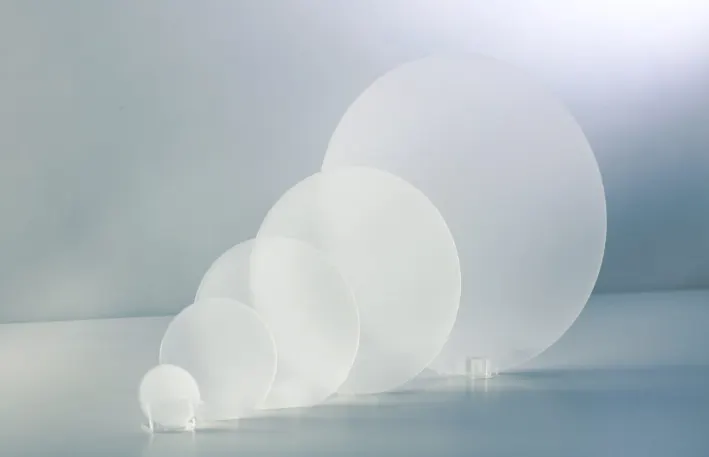
Sapphire substrates are critical components in LED manufacturing, optical devices, and semiconductor applications. However, cutting sapphire—a material with a Mohs hardness of 9—poses significant challenges. Traditional methods like blade sawing or laser cutting often lead to cracks, high material loss, and uneven surfaces.
Key Takeaways
Sapphire (Mohs 9) is both extremely hard and brittle: blade sawing and laser cutting often cause cracks, uneven surfaces, and up to 30% material loss.
A diamond wire loop can be as thin as 0.1 mm versus a 0.3 mm or wider blade kerf, so more wafers are recovered from every crystal ingot.
The low-force wire cut generates far less mechanical stress, preventing subsurface micro-cracks and leaving a smoother surface that needs less polishing.
Modern machines cut sapphire at 0.5-2 mm/min, and multi-wire systems can slice hundreds of wafers simultaneously.
Main beneficiaries: LED sapphire substrates, ultra-thin semiconductor wafers (down to about 100 micrometers), and optical windows and lenses.
Diamond wire loop cutting has emerged as the superior solution, offering higher precision, minimal kerf loss, and reduced subsurface damage. In this article, we explore how this advanced technology improves efficiency in sapphire substrate production.
Challenges in Sapphire Substrate Cutting
Before discussing diamond wire loops, it’s essential to understand the difficulties in processing sapphire:
Extreme Hardness – Sapphire is one of the hardest materials, making mechanical cutting difficult.
Brittleness – Improper cutting can cause micro-cracks, reducing substrate quality.
High Precision Requirements – LED and semiconductor industries demand ultra-thin wafers (as low as 100µm) with near-perfect surfaces.
Material Waste – Conventional methods lose up to 30% of the material, increasing costs.
Traditional methods like ID saws (inner diameter saws) and laser cutting struggle with these challenges, leading to higher rejection rates and production inefficiencies.
How Diamond Wire Loop Cutting Works
Application Lab
Send us your material — get a free test-cut report
Tell us the material, thickness and target tolerance. We cut a sample on our own diamond wire saw and return wire spec, feed rate, surface finish and cycle time.
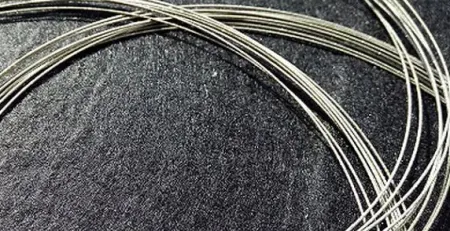
Diamond wire loop technology uses a thin, flexible wire embedded with diamond particles to slice through sapphire with minimal force. Here’s how it enhances efficiency:
1.Precision Cutting with Minimal Kerf Loss
– The wire diameter can be as thin as 0.1mm, significantly reducing material waste compared to blade saws (which have a kerf of 0.3mm or more).
– This allows more wafers per crystal ingot, lowering production costs.
✅ LED Manufacturing – Producing high-quality sapphire substrates for brighter, more efficient LEDs.
✅ Semiconductor Wafers – Enabling ultra-thin wafers for advanced electronics.
✅ Optical Components – Cutting sapphire windows and lenses with superior surface integrity.
Conclusion
Diamond wire loop cutting has revolutionized sapphire substrate processing by improving precision, reducing waste, and increasing production efficiency. As demand for high-performance LEDs and semiconductors grows, this technology will remain a critical tool for manufacturers seeking cost-effective, high-quality solutions.
Interested in optimizing your sapphire cutting process? Contact us today to learn how diamond wire loops can enhance your production line!
Frequently Asked Questions
Why is sapphire so difficult to cut?
Sapphire rates 9 on the Mohs hardness scale and is highly brittle, so conventional blade or laser cutting easily produces micro-cracks and high rejection rates. The LED and semiconductor industries also demand ultra-thin wafers with near-perfect surfaces, which leaves almost no margin for error.
How does a diamond wire loop reduce sapphire material waste?
The wire can be as thin as 0.1 mm, compared with a blade kerf of 0.3 mm or more. Conventional methods lose up to 30% of the ingot, while the narrow wire kerf converts more of each crystal into usable wafers and lowers production cost.
Does diamond wire loop cutting damage the sapphire surface?
No. Because the wire cuts with very low force, it generates less mechanical stress than abrasive saws, which prevents subsurface micro-cracks. The resulting surface is smoother and requires less polishing afterward.
Which industries use diamond-wire-cut sapphire substrates?
LED manufacturing uses them for brighter, more efficient chips; the semiconductor industry uses ultra-thin sapphire wafers for advanced electronics; and optics producers cut sapphire windows and lenses with superior surface integrity.
Diamond-Wire-loop cutting technology is an advanced cutting technology to replace the traditional free mortar cutting, which is widely used in... read more
The rapid evolution of 5G telecommunications, electric vehicle (EV) charging infrastructure, and high-frequency power supplies has placed a massive spotlight... read more
What is the difference between quartz glass and ordinary glass?
Key Takeaways
Hardness: quartz glass generally reaches Mohs 7, while ordinary glass... read more
Key Takeaways
Quartz glass is a single-component silica glass praised as the King of Glass; high-purity quartz glass transmits well across... read more
Key Takeaways
In semiconductor wafer preparation, single-crystal silicon ingots are processed into bare wafers with high surface accuracy for lithography.
The ingot... read more
Key Takeaways
High-purity quartz is the feedstock for semiconductor crucibles, PV ingot growth and optical components.
Purity sets the performance ceiling of... read more
Key Takeaways
Zirconia ceramics serve eight major application fields, from 3C electronics to metallurgy, thanks to their strength, toughness, wear resistance... read more