Ferritmaterialien sind überall in moderner Technologie zu finden. From the tiny magnetic components inside your smartphone to the powerful electromagnets in electric vehicle motors, ferrites play a critical role in our daily lives. Aber, machining these hard, brittle ceramic materials presents a significant challenge. Traditional cutting methods often lead to chipping, Risse bilden, and material waste.
Wesentliche Erkenntnisse
Ferrites are iron-oxide ceramic magnets — soft grades (MnZn, NiZn) for transformers and inductors, hard grades for speakers and motors — all hard (Mohs 5-7), brittle and low in tensile strength.
Conventional cutting fails on ferrite: Faseabsplitterungen, heat-induced cracking, rapid tool wear, wide-kerf material waste and heavy post-processing.
Diamond wire saw cutting uses distributed micro-grinding instead of shearing: keine Randabsplitterungen, minimaler Hitze, 0.2-0.6 mm-Kerf, Ra 0.4-1.6 micrometer finishes and ±0.01 mm CNC repeatability.
The endless (geschlossenem Kreislauf) wire configuration beats reciprocating saws for production: higher speed, smoother surfaces, less vibration and longer wire life.
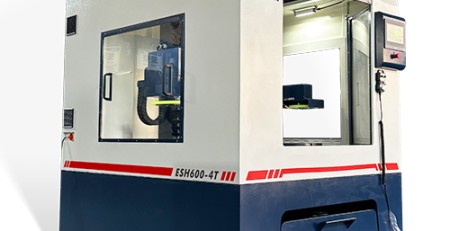
Enter theDiamantdrahtsäge—a precision cutting technology that is transforming how manufacturers process ferrite components. In diesem umfassenden Leitfaden, we will explore everything you need to know aboutDiamantdrahtsägecutting for ferrite, including how it works, why it outperforms conventional methods, and which applications benefit most from this innovative approach.
Whether you are a manufacturing engineer, a procurement specialist, or simply curious about advanced machining technologies, this guide will provide you with actionable insights and technical knowledge.
Ferrite is softer than the rare-earth grades, but the process lessons transfer directly fromwie man Neodym-Magnete schneidet— steady feed, generous coolant, and no heat build-up.
What Is Ferrite? Understanding the Material
Before diving into cutting techniques, it is essential to understand what ferrite is and why it requires specialized machining.
Definition and Composition
Ferrite is a class of ceramic material composed primarily of iron oxide (Fe₂O₃) combined with one or more additional metallic elements, such as manganese, Zink, Nickel, or cobalt. Unlike traditional metallic magnets, ferrites are non-conductive and highly resistant to corrosion.
Types of Ferrite
There are two main categories of ferrite used in industrial applications:
Weicher Ferrit
Soft ferrites are characterized by their ability to easily magnetize and demagnetize. They exhibit low coercivity, meaning they do not retain magnetism once the external magnetic field is removed. Common soft ferrites include:
– Manganese-zinc (MnZn) Ferrit
– Nickel-zinc (NiZn) Ferrit
These materials are widely used in transformer cores, Induktivitäten, and electromagnetic interference (EMI) suppression components.
Hard Ferrite (Permanent Magnet Ferrite)
Harte Ferrite, auch bekannt als Keramikmagneten, retain their magnetism after magnetization. They exhibit high coercivity and are resistant to demagnetization. Common applications include:
– Loudspeaker magnets
– DC motor magnets
– Magnetabscheider
– Refrigerator door gaskets
Key Properties of Ferrite
Understanding these properties explains why ferrite is both valuable and challenging to machine:
Property
Beschreibung
Hohe Härte
Typically 5–7 on the Mohs scale, making ferrite difficult to cut with conventional tools
High Brittleness
Almost no plastic deformation before fracture; prone to chipping and cracking
Low Tensile Strength
Cannot withstand high mechanical stress during cutting
Excellent Magnetic Properties
High electrical resistivity and low eddy current losses
Chemical Stability
Resistant to oxidation and corrosion
Thermal Stability
Maintains magnetic properties across a wide temperature range
Why Ferrite Is Difficult to Cut Using Conventional Methods
Traditional cutting techniques often fail to produce satisfactory results when working with ferrite. Hier ist der Grund:
1. Brittleness Leads to Chipping
Ferrite behaves like glass under mechanical stress. When a traditional blade or grinding wheel contacts the material, concentrated pressure at the cutting edge causes micro-fractures that propagate outward. The result is edge chipping—sometimes extending several millimeters into the workpiece.
2. Heat Generation Causes Cracking
High-speed cutting with abrasive wheels generates significant heat. Ferrite has poor thermal conductivity, meaning heat builds up locally. This thermal gradient creates internal stresses that can cause the material to crack, often ruining the entire component.
3. Tool Wear Is Excessive
Ferrite is harder than most metals. Traditional cutting tools, including carbide blades and diamond grinding wheels, wear rapidly when cutting ferrite. Frequent tool changes increase production costs and downtime.
4. Material Waste Is High
The wide kerf (cut width) of conventional blades removes significant material. When working with expensive ferrite components or rare geometries, this waste directly impacts profitability.
5. Post-Processing Requirements Are Extensive
Rough cuts from conventional methods require additional grinding and polishing steps to achieve acceptable surface quality. Each additional step adds time, cost, and the risk of further damage.
What Is a Diamond Wire Saw? A Technical Overview
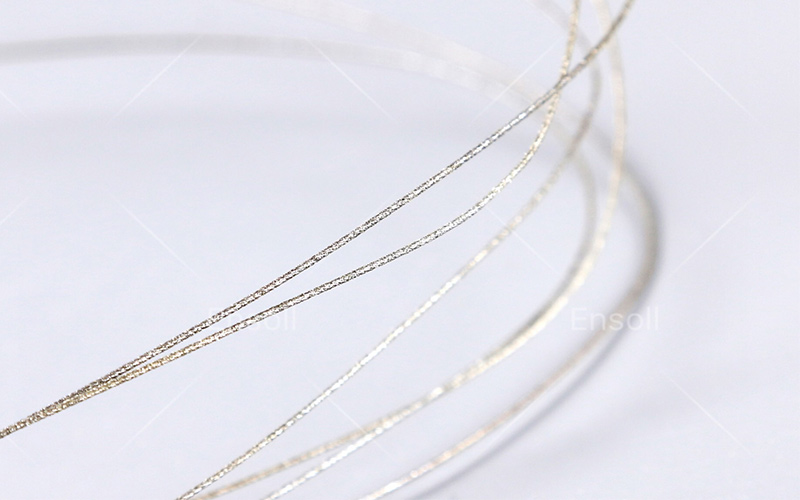
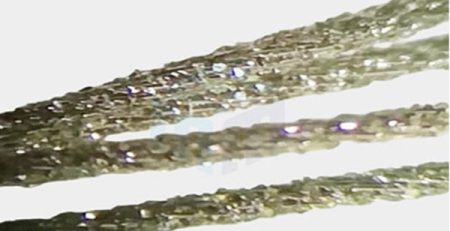
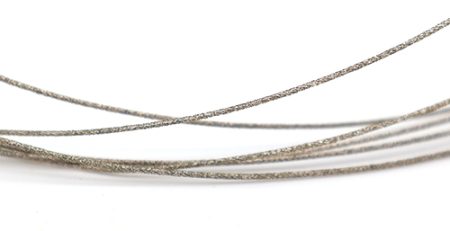
Ein Diamantdrahtsägeis a precision cutting tool that uses a thin steel wire embedded with industrial diamond particles to slice through hard materials. Unlike traditional saws that rely on blade teeth or abrasive discs, diamond wire saws cut through a grinding action—each diamond particle acts as a microscopic cutting tooth.
How a Diamond Wire Saw Works
The basic working principle involves four key elements:
The Diamond Wire
A high-strength steel wire, typically ranging from 0.2 mm auf 2.0 mm im Durchmesser, is coated with diamond grit through either electroplating or resin bonding. The diamond particles are uniformly distributed along the wire length.
High-Speed Rotation
The diamond wire is mounted on a set of pulleys and rotated at a typical speed of 4 mm/min, generally producing one slice per minute for efficient material removal.
Material Contact and Grinding
The rotating diamond wire is brought into contact with the ferrite workpiece. Each diamond particle grinds away microscopic particles of ferrite, creating a smooth, precise cut.
Cooling and Debris Removal
A coolant—typically water or a water-based solution—is continuously applied to the cutting zone. The coolant removes cutting
Types of Diamond Wire Saw Configurations
There are two primary configurations used for ferrite cutting:
Reciprocating (Open-Loop) Diamant-Drahtsäge
The wire moves back and forth in a reciprocating motion, similar to a traditional hand saw. While effective for small-scale or prototype work, this method is limited by speed and the directional changes that can cause vibration.
Endlos (Closed-Loop) Diamant-Drahtsäge
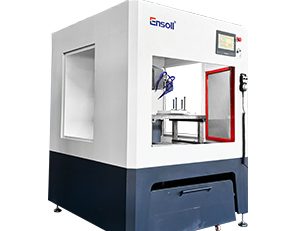
The wire ends are welded together to form a continuous loop. This endless design allows the wire to rotate in a single direction at high speeds without stopping or reversing. Endless diamond wire saws are preferred for production environments because they offer:
– Higher cutting speeds
– Smoother surface finishes
– Reduced vibration
– Longer wire life
Why Diamond Wire Saw Cutting Is Ideal for Ferrite
Diamond wire saw technology addresses virtually every challenge associated with conventional ferrite cutting. Here are the key advantages:
1. Zero Edge Chipping
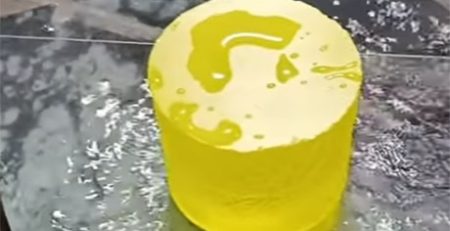
The most significant advantage of diamond wire saw cutting is the elimination of edge chipping. Because the wire uses a distributed grinding action rather than concentrated shearing force, mechanical stress is spread evenly across the cutting zone. Ferrite edges emerge clean and smooth, even at cut entry and exit points.
Real-world result: Manufacturers report chipping-free cuts on ferrite components as thin as 0.5 Mm.
Minimal Heat Generationg
Diamond wire saws generate surprisingly little heat during cutting. Several factors contribute to this:
– The diamond particles remove material in tiny increments
– High wire speed carries heat away from the cut zone
– Continuous coolant flow provides active cooling
For temperature-sensitive ferrite materials, this means no thermal cracking and no degradation of magnetic properties.
3. Extremely Thin Kerf
The kerf—the width of material removed as cut—is remarkably small with diamond wire. Typical wire diameters range from 0.2 mm auf 0.6 Mm, compared to 1.5 mm auf 3.0 mm for conventional abrasive blades.
The benefit: You can cut more parts from the same ferrite block, reducing material cost by 30–50%.
4. Excellent Surface Finish
Diamond wire saws produce surface finishes measured in microns of Ra (roughness average). Typical values range from Ra 0.4 µm to Ra 1.6 µm—often eliminating the need for subsequent grinding or polishing.
5. Consistent, Repeatable Results
CNC-controlled diamond wire saws follow programmed cutting paths with precision measured in ±0.01 mm. Once the optimal cutting parameters are established, every part comes out identical to the last.
6. Long Tool Life
A singleDiamantdraht-Schlaufecan cut for hours of continuous operation before the diamond grit wears out. When the wire does wear, replacement is quick and inexpensive.
7. No Material Contamination
Unlike abrasive slurry cutting, which can leave residue on the workpiece, diamond wire cutting uses clean water-based coolant. Ferrite components emerge free from contaminants that could affect subsequent processing or final performance.
8. Environmentally Friendly
Im Vergleich zu herkömmlichen Schneidmethoden, diamond wire saws are greener:
Diamond wire saw technology has fundamentally changed how manufacturers approach ferrite cutting. The combination of zero edge chipping, minimal heat generation, dünner Schnitt, and excellent surface finish makes it the ideal choice for processing these challenging ceramic materials.
Whether you are producing transformer cores, Dauermagnete, EMI suppression components, or custom ferrite parts for specialized applications, a diamond wire saw delivers results that conventional methods simply cannot match.
The initial investment in equipment is offset by reduced material waste, elimination of post-processing steps, and consistently high-quality output. As ferrite components continue to play an essential role in modern electronics, renewable energy, and electric vehicles, diamond wire saw cutting will remain a critical enabling technology.
Ready to improve your ferrite cutting process? Start by evaluating your typical part geometries, production volumes, and quality requirements. Then consult with diamond wire saw manufacturers to select the system that best fits your needs.
Have questions aboutDiamantdrahtsägecutting for ferrite or other hard materials?Contact our teamof precision machining specialists for expert guidance.
Häufig gestellte Fragen
What is the best way to cut ferrite?
Schneiden von Diamantdrahtsägen. The diamond-coated wire grinds the ceramic away with evenly distributed, low force, eliminating the edge chipping and thermal cracking that blades and grinding wheels cause. Endless-loop machines are preferred for production volumes.
Why is ferrite so difficult to machine?
Ferrite combines high hardness (Mohs 5-7) with glass-like brittleness and low tensile strength. Concentrated cutting pressure causes micro-fractures, its poor thermal conductivity lets heat build up and crack the part, and its hardness wears conventional tools rapidly.
Does diamond wire cutting damage ferrite’s magnetic properties?
Nein. Material is removed in tiny increments at high wire speed with continuous coolant flow, so very little heat enters the workpiece. There is no thermal cracking and no degradation of magnetic performance.
How much material can diamond wire save compared with blades?
Typically 30-50%. The kerf of a 0.2-0.6 mm diamond wire is far narrower than the 1.5-3.0 mm kerf of abrasive blades, so significantly more parts come out of the same ferrite block.
Technische Inhalte geprüft vom Ensoll-Engineering-Team – einem Hersteller von Diamantdraht-Schleifen 10+ Jahre der Produktionserfahrung.
Die Bearbeitung von optischem Glas erfordert Submikron-Präzision, um die Anforderungen von Industrien wie Luft- und Raumfahrt, Photonik, und Unterhaltungselektronik zu erfüllen. Mit mehr lesen
Wichtige Erkenntnisse
Diamantdrahtsägemaschinen verbinden präzises Schneiden mit umweltbewusstem Design: kein Schlamm, kein Öldunst und viel weniger... mehr lesen
Wichtige Erkenntnisse
Diamantdrahtsägen schneiden Wolframstangen mit einem Draht, der mit Diamantpartikeln besetzt ist - eine der wenigen praktischen.... mehr lesen
Wichtige Erkenntnisse
Eine Diamant-Drahtschleife ist eine kontinuierliche geschlossene Schleife aus Stahldraht, die mit Diamantabrasiv beschichtet ist, Schneiden in einem... mehr lesen
Im Bereich der modernen Materialwissenschaften, haben nur wenige Innovationen einen so tiefgreifenden Einfluss gehabt wie Neodym-Eisen-Bor (NdFeB) Dauermagnete.... mehr lesen
Wichtige Erkenntnisse
Diamantdrahtschneiden hat in realen Schneidfällen Präzision bis zu 1 mm gezeigt, und macht es zu einer bevorzugten Methode für... mehr lesen
Wichtige Erkenntnisse
Keramiken sind hart und spröde, damit haben herkömmliche Schneidwerkzeuge Schwierigkeiten, präzise, komplexe Bearbeitungen zu erzielen; Diamantgeschliffener Drahtschneiden... mehr lesen

 What Is Ferrite? Understanding the Material