Schneiden von optischem Glas: Diamantdrahtsäge vs. Laser
Die Bearbeitung von optischem Glas erfordert Submikron-Präzision, um die Anforderungen von Industrien wie Luft- und Raumfahrt, Photonik, und Unterhaltungselektronik zu erfüllen. Mit Endlose Diamantdrahtsägen und Laserschneiden sich als dominierende Technologien herausbilden, stehen Hersteller vor einer kritischen Wahl. Dieser Leitfaden analysiert beide Methoden anhand von 7 Schlüsselparametern, um Ihnen datenbasierte Entscheidungen zu ermöglichen.
- Diamantdrahtsägen entfernen Material durch Diamantkorn-Abrieb (Draht 0.1-0.3 Mm, 5-30 M/s) und halten +/-0.02-0.03 mm Toleranz; Laserschneiden verdampft Material und hält typischerweise +/-0.05 Mm.
- Die Schnittqualität bevorzugt die Drahtsäge: unter 10 Mikrometer Kantenabplatzung und Ra 0.2-0.5 Mikrometer, gegenüber einem 20-50 Mikrometer wärmebeeinflussten Bereich und Ra 0.5-2 Mikrometer für Laser.
- Effizienz bevorzugt den Laser: 40-60 Wafer/Stunde mit 5-10 Minuten Einrichtung gegenüber 20-30 Wafer/Stunde und 15-30 Minuten für die Drahtsäge – aber der Laserfugenschnitt ist schmaler bei 0.05-0.1 mm gegenüber 0.15-0.3 Mm.
- Kostenprofil: Drahtsäge 50.000–150.000 $ Investition mit 0,10 $/Meter Verbrauchsmaterial und geringer Wartung; Laser 100.000–300.000 $ mit 20 $/Stunde Gasunterstützung und höherer Optikwartung.
- Faustregel: Drahtsäge für Glas dicker als 3 Mm, optische Kantenqualität unter Ra 0.5 Mikrometer- und hitzeempfindliche Beschichtungen; Laser für Dünnglas-Prototyping und komplexe Konturen.

1. Endloser Diamantdrahtsägen-Schnitt
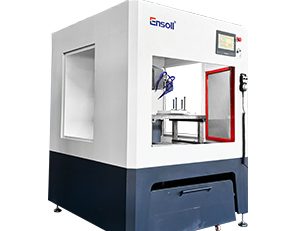
Ein geschlossenes System unter Verwendung eines diamantbeschichteten Drahtes (typischerweise 0,1-0,3 mm Durchmesser) laufend bei 5-30 M/s. Die abrasive Wirkung liefert:
– Materialabtragungsmechanismus: Mikrorisse durch Diamantkorn-Abrieb
– Typische Toleranz: ±0,03 mm für Standard-Schnitte, ±0,02 mm mit fortgeschrittener Steuerung
– Am besten geeignet für: Dicke Optisches Glas (>1Mm), gekrümmte Schnitte, und spröde Materialien wie SCHOTT B270 .
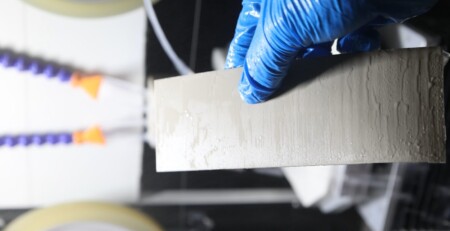
Schneideanzeige:
2. Laserschneiden
Ein berührungsloses Verfahren unter Verwendung fokussierter Laserstrahlen (normalerweise CO₂- oder Ultrakurzpulslaser):
– Materialabtragungsmechanismus: Verdampfung/Schmelzen durch lokale Erwärmung
– Typische Toleranz: ±0,05 mm für Standard-Systeme
– Am besten geeignet für: Dünnglas (<3Mm), komplexe Geometrien, und schnelles Prototyping
Direkter Vergleich
1. Schnittqualität
| Parameter | Endlos-Diamant-Drahtsäge | Laserschneiden |
| Kantenabplatzungen | <10µm bei optimierter Vorschubgeschwindigkeit | 20-50µm thermisch beeinträchtigte Zone |
| Oberflächenrauheit | Ra 0,2-0,5µm | Ra 0,5-2 µm |
| Unterflächenbeschädigung | Minimale Mikrorisse | Potenzielle Mikrorisse |
Wichtige Erkenntnis: Für Kameraobjektive und Prismen, die optische Oberflächenqualität erfordern, Drahtsägen bieten überlegene Kantenstabilität.
2. Materialvielfalt
– Drahtsägen bearbeiten:
– Gläser mit hoher Härte (zum Beispiel., Corning Gorilla Glass 3)
– Verbundwerkstoffe (Glaskeramiken wie Zerodur)
– Temperaturempfindliche Beschichtungen
– Laser haben Schwierigkeiten mit:
– Dickes Borosilikat (>5Mm) aufgrund von Wärmeakkumulation
– UV-durchlässige Gläser, die zu thermischen Spannungen neigen
- Produktionseffizienz
| Metrisch | Drahtsäge (300mm/s) | Laser (500mm/s) |
| Durchsatz | 20-30 Wafer/Stunde | 40-60 Wafer/Stunde |
| Rüstzeit | 15-30 Protokoll | 5-10 Protokoll |
| Schnittfuge Breite | 0.15-0.3Mm | 0.05-0.1Mm |
Kompromiss: Laser bieten schnellere Bearbeitung, verschwenden aber mehr Material durch breitere Schnittfugen.
5 Entscheidungsfaktoren
1. Teildicke
– Wähle Drahtsäge wenn:
Schneiden >3mm optisches Glas (zum Beispiel., Teleskopspiegel)
Schlüsselwort-Tipp: “dick optischer Glasschnitt Lösung”
2. Toleranzanforderungen
Drahtsägen halten engere Toleranzen für:
– Prismwinkelkontrolle (±15 Bogensekunden)
– Wafer-Optik-Uniformität
3. Kostenüberlegungen
| Kostenfaktor | Drahtsäge | Laser |
| Anfangsinvestition | $50K-150.000 | $100K-300.000 |
| Verbrauchsmaterialien | $0.10/Diamantdraht pro Meter | $20/Gasunterstützung pro Stunde |
| Wartung | Geringer (mechanische Teile) | Höher (Reinigung der Optik) |
- Thermische Empfindlichkeit
Risiken beim Laserschneiden:
– Spannungs-Birefringenz in polarisierenden Elementen
– Verzerrung des Glühpunkts in Phosphatgläsern
5. Nachbearbeitungsbedarf
Drahtgesägte Teile benötigen oft:
– 25% weniger Polierzeit im Vergleich zu. lasergeschnittenen Oberflächen
– Keine Spannungsentlastung durch Glühbehandlung
Schlussfolgerung: Wann jede Methode wählen
Endloser Diamantdrahtsägemethode wählen, wenn:
✓ Schneiddicke >3Mm
✓ Optische Kanten benötigt werden (Ra<0.5μm)
✓ Wärmeempfindliche Beschichtungen verarbeitet werden müssen
Laserschneiden wählen, wenn:
✓ Schnellprototyping von dünnem Glas
✓ Komplexe Konturen <0.1mm-Kerf
✓ Budget höhere Betriebskosten erlaubt
Profi-Tipp: Fordern Sie Musterschnitte von Lieferanten an—vergleichen Sie die Kantengüte unter 200x Mikroskopie, um die Angaben zu überprüfen.
Häufig gestellte Fragen
Should I choose a diamond wire saw or laser for optical glass cutting?
Choose the wire saw when cutting glass thicker than 3 Mm, when you need optical-grade edges (Ra unter 0.5 Mikrometer), or when processing heat-sensitive coatings and hard glasses like Corning Gorilla Glass 3. Choose laser for rapid prototyping of thin glass under 3 mm and complex contours needing a kerf below 0.1 Mm.
Beschädigt Laserschneiden optisches Glas??
Es kann. The localized heating creates a 20-50 micrometer thermal affected zone, risks micro-fractures below the surface, and can cause stress birefringence in polarizing elements or annealing-point distortion in phosphate glasses. Wire saw cutting is a cold abrasive process and avoids these thermal risks.
Which method costs more, wire saw or laser?
Laser costs more on both fronts: $100K-300K initial investment versus $50K-150K for a wire saw, plus about $20 per hour in gas assist versus roughly $0.10 per meter of diamond wire. Laser systems also demand more maintenance, mainly optics cleaning.
Which method is more precise?
Die Diamantdrahtsäge: +/-0.03 mm standard and +/-0.02 mm with advanced controls, gegenüber +/-0.05 mm for standard laser systems. Wire saws also hold prism angle control within +/-15 arcseconds, which is why they dominate prisms and wafer-level optics.
Überprüft vom Ensoll-Ingenieurteam.