Recycling von Saphir-Schnittabfällen: Forschung
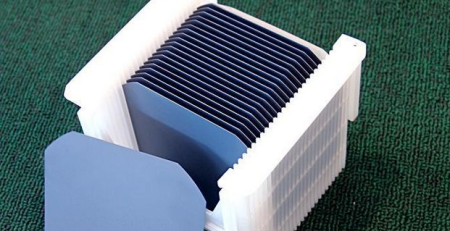
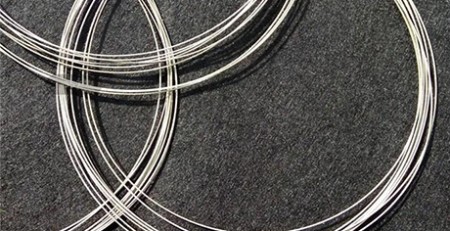
- Sapphire wafers are about 0.2 mm dick — in etwa so dick wie der Durchmesser des Diamantdrahts — also ungefähr 40-50% of every ingot becomes cutting-waste powder washed away by coolant, and most of it has historically been landfilled.
- Analysis of washed, dried and sieved diamond-wire cutting waste shows alpha-alumina as the main component, with nickel (0.70%) and diamond (0.164%) as the main impurities.
- Ultrasound acid leaching beats conventional acid leaching for nickel removal: nickel falls to 0.009% at a 99.67% leaching ratio, and nickel sulfate crystals are recovered at 95.32% via extraction, back-extraction and crystallization.
- Burning the leached waste in oxygen removes the residual diamond from 0.164% An 0.00062% (99.62% removal), following a reaction-controlled shrinking core model.
- The purified alpha-Al2O3 reaches 99.99% purity — basically meeting the requirement for reproducing sapphire single crystal, turning a pollutant into a resource.
In den letzten Jahren,mit der Entwicklung der wissenschaftlichen Technologie,Saphirwafer sind in der LED- und Elektronikindustrie weit verbreitet. Saphirbarren kann nicht direkt auf das LED-Feld aufgetragen werden, bis er in einen Saphirwafer geschnitten wird. Die Dicke des Wafers beträgt ca. 0,2 mm,nahe am Durchmesser von Diamantdraht,which means about 40%~50%sapphire ingot materials are transformed into powder washed away by the cooling liquid.
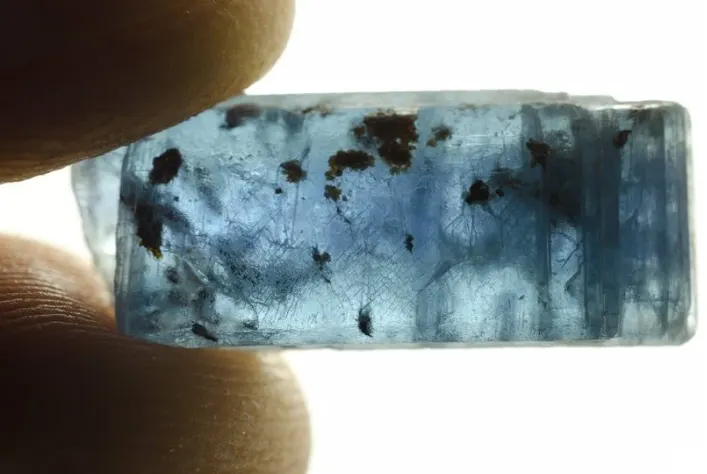
Erstens,the analysis of the cutting waste after washing,drying and sieving shown that the main component of the cutting waste is alpha alumina with nickel and diamond as main impurities,where the contents of impurity nickel and diamond were 0.70%and 0.1 64%,respectively.Then,the efficient conditions of conventional acid leaching and ultrasound acid leaching of nickel were determined.Under these conditions,the content of nickel reduced
from 0.70%to 0.0 1 2%and 0.009%with 98.25%and 99.67%leaching ratio,respectively.As ist zu erkennen, dass die Ultraschall-Säurelaugung besser ist als die herkömmliche Säureauslaugung. Kinetische Analyse der Ultraschall-Säurelaugung und der konventionellen Säurelaugung zeigte, dass der Prozess, bei dem Ni mit Säure reagiert, durch chemische reaction.By die optimale Bedingungen für Extraktion und Baci-Extraktion gesteuert wird,die gewonnene Lösung wurde verdampft und kristallisiert, um Nickelsulfatkristalle mit einer Rückgewinnungsrate von 95,32 % zu erhalten.
Häufig gestellte Fragen
Why should sapphire cutting waste be recycled?
Because sapphire wafers (~0.2 mm) are nearly as thin as the diamond wire itself, 40-50% of each expensive ingot turns into waste powder during slicing. This waste was mostly dumped or landfilled, wasting a valuable resource and polluting the environment, so recovering the alpha-alumina for new crystal growth brings major economic and environmental benefits.
Welche Verunreinigungen befinden sich im Abfall von Saphirdrahtschneiden?
Nach dem Waschen, Trocknen und Sieben, besteht der Abfall hauptsächlich aus Alpha-Aluminiumoxid mit zwei Hauptverunreinigungen: Nickel bei 0.70% und Diamant bei 0.164%, beide werden durch den Drahtsägevorgang selbst eingeführt.
Wie wird Nickel aus Saphir-Schneidabfall entfernt?
Durch Säureauslaugung, und ultraschallunterstützte Auslaugung übertrifft die herkömmliche Methode: Nickelgehalt sinkt von 0.70% An 0.009% at a 99.67% leaching ratio, gegenüber 0.012% und 98.25% bei herkömmlicher Auslaugung. Die zurückgewonnene Lösung liefert Nickelsulfatkristalle bei einer 95.32% Rückgewinnungsrate durch Extraktion, Rückextraktion, Verdampfung und Kristallisation.
Kann gereinigter Saphir-Schneidabfall wieder verwendet werden, um neuen Saphir zu züchten?
Ja. Nachdem das Auslaugen das Nickel entfernt und optimiertes Sauerstoffbrennen den Diamanten entfernt hat (bis auf 0.00062%, ein 99.62% Entfernungsrate), erreicht die Reinheit des Alpha-Al2O3 99.99% — im Wesentlichen die Reinheitsanforderung für die Reproduktion von Saphir-Einkristallbarren erfüllend.
Überprüft vom Ensoll-Ingenieurteam.