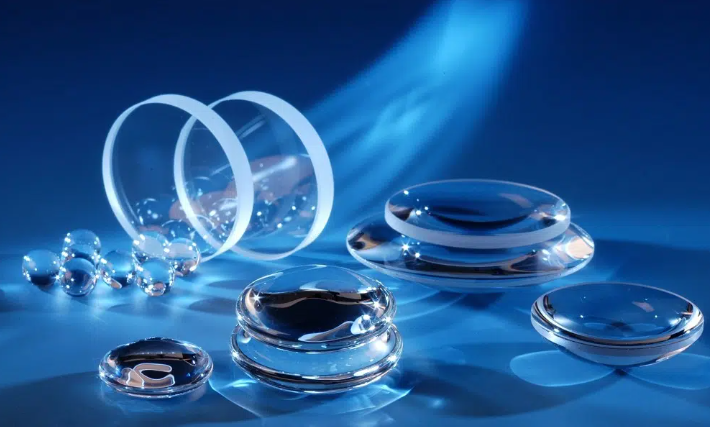
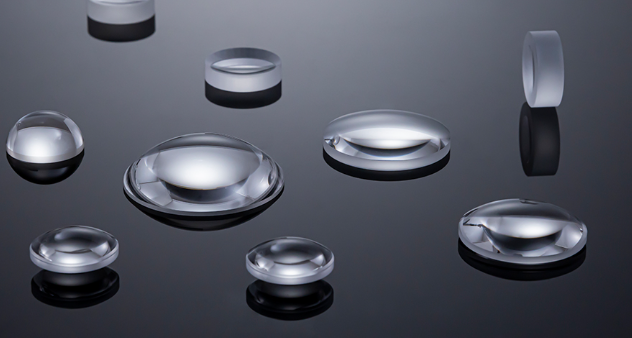
Optical glass is engineered for lenses, prismes et filtres avec un indice de réfraction précisément contrôlé, dispersion and low impurity levels — a different material class from regular structural glass.
Its defining characteristics are high transparency across a broad spectrum, controlled dispersion for correcting chromatic aberration, a low thermal expansion coefficient, and resistance to humidity and chemicals.
The three main cutting routes compare clearly: coupe de fil diamanté (précision, trait fin, clean edges), laser cutting (fast on thin glass but leaves a heat-affected zone), and mechanical sawing (cheap but rough and wasteful).
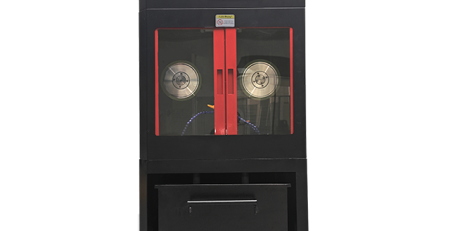
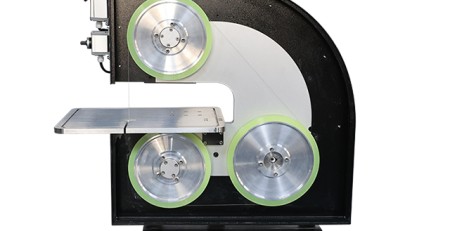
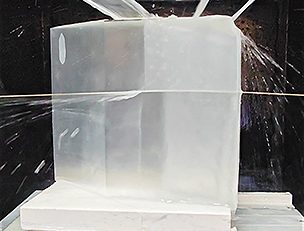
Diamond wire cutting is the preferred choice for optical glass: unmatched precision for intricate components, high-volume efficiency, minimal waste of expensive material, and clean cuts that often skip secondary finishing.
Aperçu:
Verre optique, Un type de verre spécialisé avec des propriétés optiques exceptionnelles, se trouve à l’avant-garde de la technologie moderne et de l’innovation, playing a pivotal role in a myriad of industries. Its unique characteristics have revolutionized fields ranging from telecommunications to medical imaging, making it an indispensable material in today’s world of precision optics.
In the following sections of this guide, we will delve deeper into the concept of optical glass, exploring its unique properties and the cutting-edge techniques used to shape and refine this remarkable material.
Understanding the Concept of Optical Glass:
1. Definition of Optical Glass:
Optical glass is a specialized type of glass engineered for use in optical systems, such as lenses, Prismes, and filters. Unlike regular glass, optical glass is meticulously crafted to exhibit specific optical properties that are essential for manipulating light in precise ways. These properties enable optical glass to play a fundamental role in a wide range of optical instruments and devices.
2. Significance in Optics:
Optical glass is the backbone of modern optics, serving as the building blocks for various optical components that form the basis of advanced imaging systems, Télescopes, microscopes, cameras, and other optical instruments. Its exceptional clarity, uniformity, and refractive index make optical glass indispensable in achieving sharp images, correcting aberrations, and controlling light transmission in optical systems.
3. Distinction from Regular Glass:
One of the key differences between optical glass and regular glass lies in their composition and manufacturing processes. Optical glass is formulated with high precision to have specific refractive indices, dispersion properties, and low impurities to ensure minimal light absorption and precise light manipulation. Regular glass, D’un autre côté, is primarily designed for structural purposes and lacks the optical purity required for advanced optical applications.
4. Unique Properties of Optical Glass:
Optical glass exhibits several unique properties that make it ideal for optical applications. These properties include high transmittance of light across a broad spectrum, low thermal expansion coefficient to maintain optical performance under temperature variations, high chemical resistance to withstand harsh environments, and exceptional homogeneity to ensure consistent optical characteristics across the material. These properties collectively contribute to the exceptional performance and reliability of optical glass in diverse optical systems.
5. Versatility in Optical Applications:
Due to its tailored optical properties, optical glass finds extensive use in a myriad of applications, ranging from precision optics in scientific research to medical imaging, telecommunications, astronomy, et électronique grand public. Its versatility and adaptability to various optical requirements make optical glass a cornerstone of innovation and technological advancement in the field of optics.
Characteristics of Optical Glass:
Optical glass possesses a unique set of characteristics that make it indispensable in the field of optics. Let’s delve into the key attributes that define optical glass and elucidate how each contributes to its effectiveness in diverse optical systems:
1.Transparency:
Optical glass is renowned for its exceptional transparency, allowing light to pass through with minimal absorption or scattering. This property is vital for maintaining the fidelity of images transmitted through optical components.
The high transparency of optical glass ensures that minimal light energy is lost during transmission, resulting in sharp and clear images.
2.Refractive Index:
The refractive index of optical glass determines how light propagates through the material. Different types of optical glass have varying refractive indices, which impact the bending of light rays as they pass through the glass.
Precise control over the refractive index of optical glass enables lens designers to manipulate light paths, correct aberrations, and achieve desired optical effects.
3.Dispersion:
Dispersion refers to the separation of light into its component colors as it passes through a medium. Optical glass exhibits controlled dispersion properties, allowing for the correction of chromatic aberrations in optical systems.
By carefully selecting optical glass with specific dispersion characteristics, designers can ensure that different wavelengths of light converge at the same focal point, enhancing image quality and color accuracy.
4.Propriétés thermiques:
The thermal properties of optical glass are crucial for maintaining optical performance across a range of temperatures. Optical glass is engineered to have low coefficients of thermal expansion, reducing the risk of distortion or damage under thermal stress.
These thermal properties ensure that optical components retain their shape and optical properties even when subjected to temperature variations, making optical glass suitable for a wide range of operating conditions.
Resistance to Environmental Factors:
Optical glass is designed to withstand environmental factors such as humidity, temperature fluctuations, and chemical exposure. Its robust nature ensures long-term stability and performance reliability in diverse settings.
The resistance of optical glass to environmental factors minimizes the need for frequent maintenance or replacements, making it a cost-effective and durable choice for optical systems.
Advantages of Diamond Wire Cutting for Optical Glass:
Précision: Diamond wire cutting utilizes a thin wire embedded with diamond particles to make precise cuts in optical glass. La dureté des diamants permet une coupe complexe et précise, Garantir des écarts minimaux par rapport aux dimensions souhaitées.
Efficacité: Cette méthode offre des vitesses de coupe et une efficacité élevées, enabling rapid production of intricate shapes and designs in optical glass. L’action de coupe continue du fil diamanté permet d’obtenir des bords lisses et des résultats précis.
Perte de matière minimale: La découpe au fil diamanté produit un gaspillage de matériau minimal grâce à sa faible largeur de trait de scie. This results in cost savings and maximizes the utilization of the expensive optical glass material.
Découpe laser:
Précision: Laser cutting is known for its precision and ability to create complex patterns in optical glass. Le faisceau laser focalisé permet des détails fins et des coupes complexes.
Vitesse: La découpe laser peut être un processus rapide, particularly for thin optical glass materials. Il offre des délais d’exécution rapides pour les projets de coupe.
Zone affectée par la chaleur: L’un des inconvénients de la découpe laser est la possibilité d’une zone affectée par la chaleur autour de la zone de coupe, which can lead to thermal stress and potential damage to the optical properties of the glass.
Méthodes traditionnelles:
Versatilité: Traditional mechanical cutting methods involve the use of tools like saws or blades to cut optical glass. Bien que polyvalent, Ces méthodes peuvent ne pas offrir le même niveau de précision que la découpe au fil diamanté ou la découpe laser.
Coût: La découpe mécanique peut être rentable pour des tâches de coupe plus simples, mais peut entraîner plus de gaspillage de matériau et des arêtes plus rugueuses par rapport aux techniques de coupe plus avancées.
Advantages of Diamond Wire Cutting for Optical Glass:
Précision supérieure: La coupe au fil diamanté offre une précision inégalée, making it ideal for intricate optical components and precision parts.
Efficacité: L’efficacité de la découpe au fil diamanté permet une production en grand volume avec une qualité et une précision constantes.
Coupes nettes: Les coupes nettes produites par la découpe au fil diamanté minimisent le besoin de processus de finition supplémentaires, Économie de temps et de ressources.
En conclusion:
While various cutting methods are available for optical glass, diamond wire cutting stands out as the preferred choice due to its precision, efficacité, et perte de matière minimale. By leveraging the advantages of diamond wire cutting, manufacturers can achieve superior quality and accuracy in cutting optical glass components, meeting the demands of modern optical applications with excellence. Once the blank is specified, the yield question becomes one of process: voir découpe optique du verrefor the parameters that matter.
Questions fréquemment posées
Qu’est-ce que le verre optique ??
Optical glass is a specialized glass engineered for use in optical systems such as lenses, prisms and filters. It is formulated with high precision to achieve specific refractive indices, dispersion properties and very low impurities, enabling accurate manipulation of light that regular glass cannot deliver.
What is the difference between optical glass and regular glass?
Optical glass is manufactured for optical purity — controlled refractive index, controlled dispersion, minimal light absorption and high homogeneity. Regular glass is designed mainly for structural purposes and lacks the optical purity required for imaging and precision optical applications.
What is the best method for cutting optical glass?
Découpe au fil diamanté. A thin wire embedded with diamond particles makes precise cuts with a very narrow kerf, producing smooth edges at high speed with minimal material loss. Laser cutting is fast on thin glass but creates a heat-affected zone, and mechanical sawing leaves rougher edges.
Does laser cutting damage optical glass?
It can. Laser cutting creates a heat-affected zone around the cut, which introduces thermal stress and can alter the optical properties of the glass near the edge. For precision optical components, a cold abrasive process such as diamond wire cutting avoids that risk.
Nous sommes un fabricant leader en Chine spécialisé dans la machine de découpe à la scie à fil diamantée. Avec notre propre recherche et développement.. Lire la suite
Abstrait: Cette fiche de référence répertorie la fenêtre de processus validée dans le PMI d'Ensoll
(polymethacrylimide) structural foam slicing test on an ESH600-4T horizontal
Lire la suite
Points clés
Les tuyaux en acier ressort sont durs et résistants, donc le choix de la méthode de coupe a un impact majeur sur la qualité de la coupe, burr... Lire la suite
Key Takeaways
Alumina ceramics are composed primarily of aluminum oxide (Al2O3) and are classified into grades by purity; they combine exceptional... Lire la suite
Abstrait:
Cette étude étudie l’impact de différents liants à base de résine sur les performances de coupe des boucles de fil diamanté. Échantillons de dureté durcis à la résine.. Lire la suite
Le paysage mondial de la fabrication dans 2026 est défini par un paradoxe: les matériaux deviennent simultanément plus solides, plus légers, et plus.... Lire la suite
Points clés
La découpe en boucle avec fil de diamant guide un fil enduit de diamant enroulé en boucle continue sur la surface de la lentille, sculpture complexe.... Lire la suite
Introduction à la coupe des matériaux magnétiques
Les matériaux magnétiques comme le néodyme (NdFeB), Samarium cobalt (SmCo), ferrite, et l'alnico nécessitent un équipement de découpe spécialisé pour.... Lire la suite
Points Clés
Une scie à fil en boucle diamantée coupe avec un fil continu revêtu de diamant passant sur des poulies tendues — les diamants agissent.... Lire la suite