Usinage de verre sans fissures: Scie à fil diamanté
- Optical glass is brittle and sensitive to thermal shock; les fissures commencent généralement au niveau du bord de sortie de la coupe.
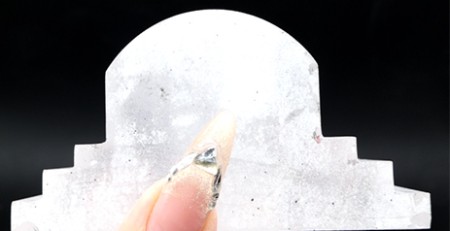
- L'usinage au fil diamanté maintient la force de coupe faible et constante, producing crack-free edges.
- Coolant and feed control matter far more than cutting speed.
Why Crack-Free Cutting Matters in Optical Glass Machining
Verre optique, such as SCHOTT B270, N-BK7, and fused silica, is widely used in high-precision applications like camera lenses, laser optics, medical imaging, et composants aéronautiques. Toutefois, traditional cutting methods—such as diamond blade sawing, laser cutting, or ultrasonic machining—often introduce micro-cracks, subsurface damage, or thermal stress. These defects degrade optical performance, increase polishing costs, and lead to higher rejection rates.
To achieve true crack-free optical glass machining, manufacturers must adopt advanced cutting technologies that minimize mechanical and thermal damage. This is where diamond wire saw cutting machines excel, offering unparalleled precision and edge quality.
Comment les machines de découpe à fil diamanté assurent des résultats sans fissures
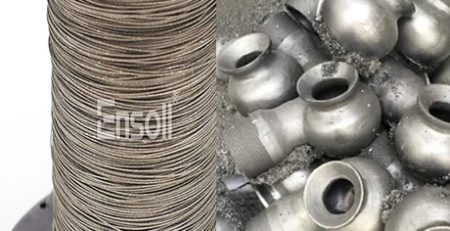
Contrairement aux méthodes conventionnelles, Machines de découpe de scie à fil diamanté utiliser un fil fin, revêtu de diamant (typiquement de 0,1 à 0,3 mm de diamètre) fonctionnant à grande vitesse sous tension contrôlée. Ce mécanisme de coupe unique offre plusieurs avantages clés pour le verre optique:
1. Dommages sous-surface ultra-faibles
– Les lames diamant traditionnelles créent des micro-fractures en raison de la coupe à fort impact.
– La découpe laser génère des zones affectées par la chaleur (HAZ), entraînant des fissures dues aux contraintes.
– Les scies à fil diamanté utilisent une action abrasive douce, produisant des fissures sous-surface quasi nulles — crucial pour l'optique haute performance.
2. Finition de surface supérieure (Ra < 0.2µm)
– Le fil diamant à grain fin assure un bord parfaitement miroir, réduisant le besoin de polissage intensif.
– Idéal pour les lentilles, Prismes, and precision optics where surface roughness must be minimized.
3. No Thermal Distortion (Processus de coupe à froid)
– Laser and waterjet cutting generate heat, risking stress birefringence and material warping.
– Diamond wire saws operate at room temperature, preserving the glass’s structural integrity.
4. Perte de trait de scie minimale (As Low as 0.15mm)
– Saves expensive verre optique material, improving yield and reducing costs.
– Perfect for wafer-level optics and micro-optics arrays where material conservation is crucial.
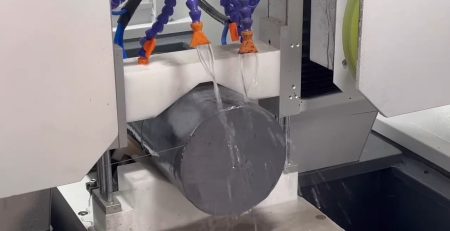
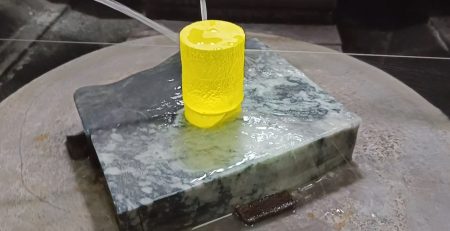
Cutting video display:
Applications of Diamond Wire Saws in Optical Glass Machining
- Camera Lenses & Prisms
– Requires chip-free edges to prevent light scattering.
– Reduces post-polishing time by 30–50%, lowering production costs.
- Telescope Mirrors & High-Precision Optics
– Maintains tight tolerances (±0,02 millimètre ) for SCHOTT Zerodur and other low-expansion glass.
– Ensures long-term durability with no hidden cracks.
- Semi-conducteur & Medical Optics
– Kerf widths as narrow as 0.15mm maximize material utilization.
– No thermal damage means higher reliability for critical components
Why Choose Our Diamond Wire Saw Cutting Machine?
When investing in crack-free optical glass machining, our diamond wire saw cutting machine stands out with:
✔ CNC Precision Control – Ensures repeatable, high-accuracy cuts.
✔ Advanced Coolant System – Prevents glass chipping and extends wire life.
✔ Automation Compatibility – Ideal for high-volume production.
✔ Customizable Wire Speeds – Optimized for different glass types (B270, N-BK7, silice fondue).
Conclusion: Upgrade to Crack-Free Optical Glass Cutting
For manufacturers of precision optics, diamond wire saw cutting machines deliver:
✅ No subsurface cracks – Stronger, more reliable components.
✅ Superior surface finish – Less polishing, faster production.
✅ Material savings – Narrow kerf reduces waste.
✅ No thermal damage – Preserves optical clarity.
Interested in achieving flawless optical glass cuts? [Contact us today for a free cutting test] and experience the difference of true crack-free machining!
Questions fréquemment posées
How do you cut optical glass without cracking it?
Faible, steady cutting force with continuous coolant. Diamond wire machining avoids the point loading that starts cracks.
Pourquoi le verre optique se fissure-t-il lorsqu'il est usiné?
Concentrated stress and local heating. Brittle materials fail at the point of highest tension — usually the exit edge.
Une scie à fil diamantée est-elle meilleure qu'une lame pour le verre optique?
Pour les travaux de précision, oui: Pas d’écaillage, no thermal shock, and a much narrower kerf.
La découpe du verre optique nécessite-t-elle un liquide de refroidissement?
Oui. Water-based coolant removes heat and swarf; dry cutting risks micro-cracks that only appear later.
Contenu technique examiné par l'équipe d'ingénierie d'Ensoll — un fabricant de boucles de fil diamanté avec 10+ des années d'expérience en production.