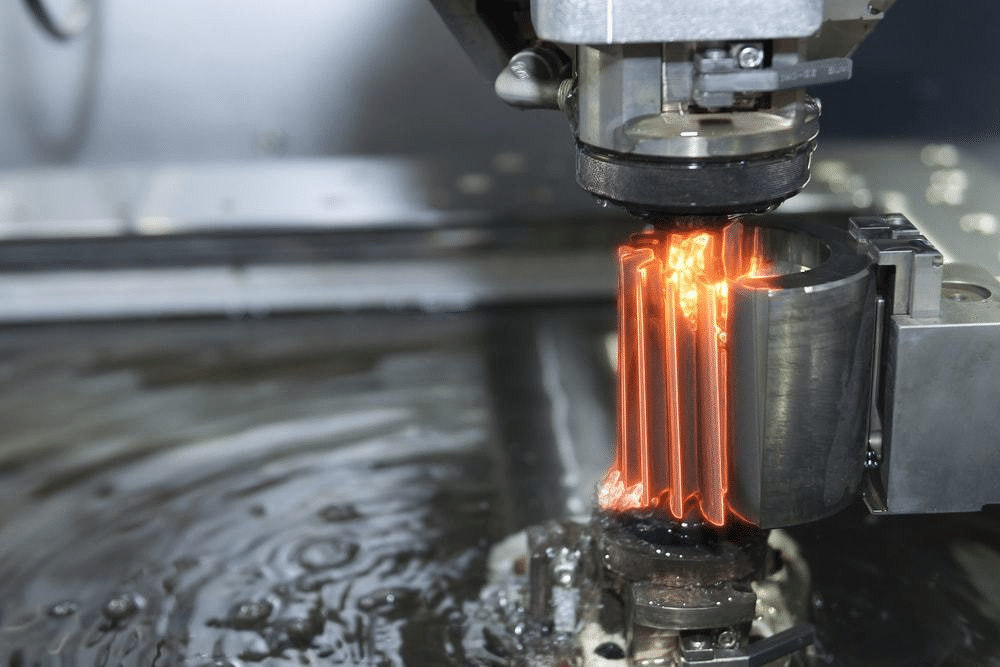
Wire EDM cuts electrically conductive materials using spark erosion, donc la dureté du matériau est sans importance – even hardened tool steel and tungsten carbide can be cut.
The process is non-contact and produces zero mechanical stress, enabling complex geometries, sharp corners and fine details.
Wire EDM delivers excellent surface finish and tight tolerances, but is limited to conductive materials and is relatively slow.
For non-conductive hard materials such as ceramics, glass and sapphire, diamond wire loop cutting is the complementary technology of choice.
In the world of high-precision manufacturing, there are materials so hard that traditional steel drill bits and carbide cutters simply cannot touch them. When aerospace engineers need to slice through titanium or semiconductor manufacturers need to create microscopic components in hardened steel, they turn to a process that feels like science fiction: Usinage par électroérosion (EDM).
Spécifiquement, the Wire EDM (WEDM) machine has become the gold standard for “impossible” cuts. Dans ce guide, we will break down what an EDM wire cut machine is, how it works, and why it remains a cornerstone of industrial innovation alongside modern diamond wire technologies.
2. The Science: How Does the “Spark” Work?
The process of Wire EDM relies on the principles of erosion through electricity. Here is the step-by-step breakdown of what happens inside the machine:
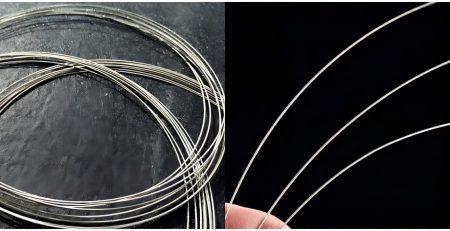
The Electrode: A thin wire (usually brass, cuivre, or coated molybdenum), acting as one electrode, is fed from a supply spool through the workpiece.
The Dielectric Fluid: The entire cutting area is submerged in or flushed with deionized water (the dielectric fluid). This fluid acts as an insulator until a specific voltage is reached, et ensuite il agit comme un conducteur.
L'Étincelle: La machine génère des impulsions électriques à haute fréquence entre le fil et la pièce à usiner. Lorsque l'écart est assez petit, une étincelle saute, créant un “canal de plasma” qui atteint des températures de 8 000°C à 12 000°C.
L'Érosion: Cette chaleur intense fait fondre et vaporise une quantité microscopique du métal. Le fluide diélectrique chasse ensuite immédiatement ces minuscules particules et refroidit la zone.
L'Alimentation Continue: Comme le fil lui-même est érodé par les étincelles, il se déplace constamment d'une bobine à une autre, assurant qu'une “surface de coupe” toujours fraîche est présente.
3. Avantages clés de la découpe EDM par fil
Pourquoi les fabricants choisissent-ils l'EDM plutôt que l'usinage traditionnel ou la découpe au jet d'eau?
Un. La dureté est sans importance
Dans l'usinage traditionnel, the tool must be harder than the material it is cutting. In EDM, the only requirement is that the material must be electrically conductive. You can cut hardened tool steel, carbure de tungstène, and titanium as easily as you can cut aluminum.
B. Complex Geometries & Sharp Corners
Because the wire can be as thin as 0.02mm, EDM can produce internal corners with almost zero radius. It allows for the creation of intricate shapes, thin walls, and complex “keyway” slots that are physically impossible for a rotating round drill bit.
C. Zero Mechanical Stress
Since the wire never actually touches the part, there are no mechanical cutting forces. This means you can machine extremely delicate or thin-walled parts without the risk of bending, distorting, or vibrating the material.
D. Exceptional Surface Finish
Wire EDM is known for producing a mirror-like finish. Because it is a thermal erosion process rather than a mechanical tearing process, the resulting surface is incredibly smooth, often eliminating the need for secondary polishing.
4. EDM vs. Sciage à fil diamanté: Which One Do You Need?
Dans 2026, many of our clients at Ensoll ask about the difference between Wire EDM and our Scie à fil diamanté Technologie. While both use a “un fil” to cut, they serve different purposes:
Caractéristique
Wire EDM Machine
Ensoll Diamond Wire Saw
Material Requirement
Must be Conductive (Métal)
Can be Non-Conductive (Céramique, Verre, Silicium)
Vitesse de coupe
Relatively Slow (Precision focus)
High Velocity (Efficiency focus)
Mechanism
Electrical Erosion (Spark)
Mechanical Micro-Grinding (Diamonds)
Best Use Case
Mold making, tiny aerospace parts
Les tranches de semi-conducteur, Sic, Céramique industrielle
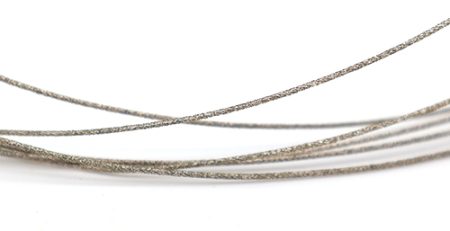
If you are cutting non-conductive materials like Silicon Carbide (Sic) or Technical Ceramics, EDM will not work. In those cases, the Ensoll Diamond Wire Loop is the industry-standard solution.
5. Applications of EDM Wire Cut Machines
Wire EDM is utilized in any industry where “failure is not an option” and precision is paramount:
Aérospatiale: Creating cooling holes in turbine blades and intricate engine components.
Dispositifs médicaux: Slicing tiny, delicate surgical instruments and implants from biocompatible metals.
Tool and Die Making: Creating the hardened steel molds used to mass-produce plastic parts (like the casing of your smartphone).
Automobile: Producing high-precision gears and prototype parts for Electric Vehicle (VE) powertrains.
6. Maintenance and Operational Efficiency in 2026
To keep an EDM machine running at peak performance, operators focus on three main factors:
Tension du fil: Just like Ensoll’s diamond wires, EDM wires must be kept at a constant tension to prevent “wire lag,” which can cause inaccuracies in the center of a thick cut.
Water Conductivity: L'eau déminéralisée doit être filtrée et sa conductivité surveillée en permanence. Si l'eau est trop “sale,” les étincelles deviendront incontrôlables.
Réglages du générateur: Moderne 2026 Les machines EDM utilisent des générateurs d'énergie pilotés par IA qui ajustent la fréquence des étincelles en temps réel pour prévenir la rupture du fil tout en maximisant la vitesse.
Conclusion: L'ère de la réalisation de précision
La machine de découpe par fil EDM reste une merveille de l'ingénierie moderne. En utilisant l'électricité pour contourner les limites de la dureté physique, elle nous permet de construire le monde complexe, à haute performance dans lequel nous vivons aujourd'hui.
Que vous utilisiez l'usinage par décharge électrique pour des moules métalliques conducteurs ou les boucles de fil en diamant d'Ensoll pour des plaquettes de semi-conducteurs avancées, l'objectif est le même: Précision Redéfinie.
Questions fréquemment posées
Qu'est-ce que la découpe par fil EDM et comment ça fonctionne?
EDM à fil (Usinage par électroérosion) utilise un fil fin, electrically charged wire as an electrode. A controlled series of sparks between the wire and the workpiece erodes the material along the programmed path, without any physical contact.
What materials can be cut with wire EDM?
Any electrically conductive material, regardless of hardness: tool steel, inox, titane, carbure de tungstène, Inconel and other superalloys. Non-conductive materials like ceramics, glass and most stones cannot be cut by EDM.
What are the main advantages of wire EDM?
Hardness is irrelevant, there is zero mechanical cutting force, it produces complex shapes with sharp internal corners, and it achieves excellent surface finish and micron-level tolerances.
Wire EDM vs diamond wire cutting: which should I choose?
Choose wire EDM for conductive metals when you need intricate contours and ultra-fine finish. Choisissez la découpe par fil diamanté en boucle pour les matériaux durs et fragiles non conducteurs (silicium, céramique, verre, saphir, aimants) ou lorsque vous avez besoin d'une coupe droite plus rapide avec une perte de matériau faible.
Points clés
Un semi-conducteur est un matériau ayant des propriétés entre un isolant et un conducteur, contrôlable par dopage et champs électriques.
Compréhension.... Lire la suite
Dans le monde sophistiqué de la fabrication de semi-conducteurs, le parcours d'un lingot de silicium brut à un circuit intégré haute performance est... Lire la suite
Dans le monde très précis de la fabrication de semi-conducteurs, La découpe par fil diamanté en boucle a émergé comme une technologie transformative pour les plaquettes... Lire la suite
1.Qu’est-ce qu’une boucle de fil de diamant?
Boucle de fil diamanté, également connues sous le nom de scies à fil diamanté, sont des outils de coupe qui se composent de... Lire la suite
Avec le développement rapide des énergies propres, L’objectif de parité réseau pour la production d’énergie photovoltaïque est également imminent. Pendant que... Lire la suite
Dans le paysage de la fabrication industrielle moderne, la capacité à séparer proprement les matériaux est un préalable fondamental pour le traitement ultérieur... Lire la suite
1.Qu'est-ce que les Matériaux Magnétiques?
Les matériaux magnétiques sont une classe fondamentale de substances définie par leur capacité à générer un champ magnétique... Lire la suite
Points clés
Les scies à fil diamanté coupent les tiges de tungstène en utilisant un fil incorporant des particules de diamant - one of the few practical... Lire la suite
Dans le monde de la découpe de précision, La technologie de la scie à fil diamant se distingue comme une méthode révolutionnaire qui a transformé la façon dont... Lire la suite
Points clés
Verre de quartz (silice fondue) est prisé pour sa clarté exceptionnelle, sa haute résistance thermique et son inertie chimique, ce qui le rend essentiel dans... Lire la suite