Boucle de fil de diamant: La nouvelle norme industrielle
Dans l'univers de la fabrication avancée, la capacité de couper à travers des substrats exceptionnellement durs et fragiles avec une précision sub-micronique est un facteur de différenciation majeur. Alors que des matériaux comme le carbure de silicium, saphir, et les céramiques industrielles avancées deviennent fondamentaux pour l'électronique 5G, Véhicules électriques, et l'ingénierie aérospatiale, les méthodes de coupe traditionnelles atteignent leurs limites physiques.
La réponse de l'industrie à ce défi est le boucle de fil de diamant. Fonctionnant comme le cœur haute performance des systèmes de coupe modernes, Cette boucle abrasive sans fin transforme la manière dont les usines et les laboratoires de recherche abordent la découpe de précision.
L'anatomie d'une boucle de fil diamant
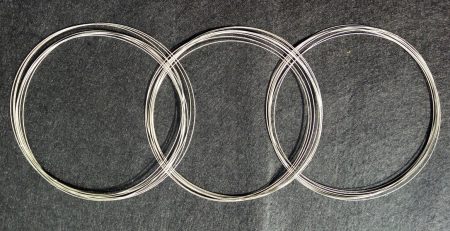
À la base, Une boucle de fil diamant est une merveille d'ingénierie conçue pour la gestion continue, de la friction à grande vitesse. Elle se compose d'un fil de noyau à haute tension qui est soudé avec précision en un anneau sans couture, sans fin. La surface extérieure est incrustée de cristaux de diamant microscopiques en utilisant des technologies sophistiquées de placage électrolytique ou de brasage sous vide.
Parce que le diamant se situe au sommet absolu de l'échelle de dureté de Mohs, une boucle de fil diamanté possède la capacité unique de trancher à travers tout matériau plus tendre que lui-même. Contrairement aux scies à mouvement alternatif traditionnelles qui doivent s'arrêter et inverser la direction—introduisant vibration et usure inégale—la rotation continue unidirectionnelle de la boucle permet des vitesses linéaires ultra-élevées, souvent supérieurs 30 À 60 mètres par seconde. Ce mouvement constant, fluide permet un enlèvement rapide, sans vibration de matériau.
Une dynamique parfaite: Le consommable et la machine
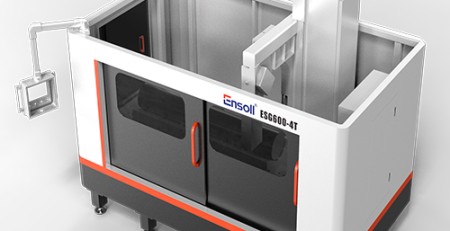
Pour apprécier pleinement cette technologie, il faut reconnaître qu'une boucle de fil diamanté ne peut pas fonctionner isolément; c'est un élément critique, consommable hautement spécialisé conçu pour fonctionner en parfaite harmonie avec un machine de découpe de scie à fil diamanté.
La machine de découpe agit comme le squelette rigide, exosquelette de haute précision. Il fournit les contrôles de tension précis, les roues motrices à grande vitesse, et les vitesses d'avance programmables nécessaires pour guider la boucle à travers la pièce à usiner. Lorsque ce consommable premium est associé à une plateforme de machine avancée, il offre une série d'avantages opérationnels transformateurs:
1. Vraie mécanique de coupe à froid
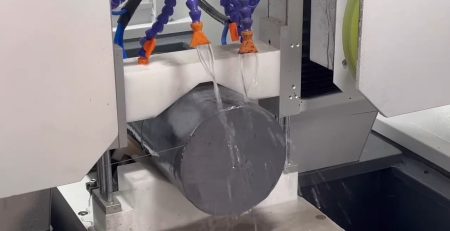
La découpe laser traditionnelle ou le meulage intensif génère une chaleur localisée intense, ce qui provoque des micro-fractures, des contraintes thermiques, et une distorsion structurelle dans les wafers sensibles. La machine de découpe à fil diamanté en boucle utilise un processus mécanique de micro-meulage. Soutenu par un système de refroidissement intégré qui évacue les débris, il atteint une “découpe à froid” qui préserve parfaitement la structure cristalline du matériau brut.
2. Unprecedented Surface Smoothness
The combination of a highly stable machine spindle and the uniform grit distribution of the loop results in an immaculate surface finish. It regularly achieves a surface roughness profile of less than $0.2\ \mu\text{m}$. For semiconductor and optical component manufacturers, this means the sliced wafer is already near-flat, significantly reducing or entirely eliminating the time and cost spent on secondary lapping and polishing.
3. Micro-Precision Tolerances
Industrial-grade cutting systems utilizing a diamond wire loop maintain tight positioning tolerances between $\pm0.02\ \text{mm}$ and $\pm0.05\ \text{mm}$. This level of repeatability ensures that every single slice, from the first to the one-thousandth, is completely uniform.
Maximizing ROI Through Ultra-Low Kerf Loss
In high-value material processing, material waste is the enemy of profitability. When slicing an expensive ingot of Silicon Carbide or a rare meteorite sample, the width of the cut—known as the kerf—represents pure material turned into useless dust.
Because a diamond wire loop boasts exceptional tensile strength, manufacturers can utilize incredibly thin wire core diameters. Slicing with a thinner wire directly minimizes kerf loss. By saving fractions of a millimeter on every single cut, a factory can extract significantly more usable wafers or blanks out of a single ingot, directly boosting yield percentages and lowering raw material procurement costs.
Versatility Across the Material Spectrum
While designed to conquer the hardest substances on earth, Le domaine d'application de la boucle de fil diamanté s'étend largement aux composites spécialisés et aux matériaux mous. Elle est très recherchée dans plusieurs secteurs pour le traitement:
- Électronique avancée: Découpe du quartz, nitrure de gallium, et des fenêtres en saphir.
- Optique de précision: Réalisation de coupes sans défaut dans le verre optique, les cristaux, et les milieux laser.
- Géologie et Aérospatiale: Sectionnement de météorites fragiles et d'échantillons minéraux rares sans altérer leur composition.
Fabrication industrielle: Découpe propre des matériaux magnétiques, anodes en graphite, céramiques techniques, et même pneus en caoutchouc épais ou matériaux isolants multicouches.
Critères de sélection cruciaux pour les ingénieurs et opérateurs
Pour maximiser la durée de vie de ce consommable vital et obtenir le meilleur débit possible, les opérateurs doivent évaluer attentivement les paramètres spécifiques de leur application lors du choix d'une boucle de fil diamanté:
Diamètre du fil & Longueur: Les diamètres fins maximisent les économies de matériau, tandis que les diamètres plus épais supportent des vitesses d'alimentation agressives. La longueur doit correspondre parfaitement à la configuration de la roue de la machine pour maintenir une tension de ligne stable.
Dureté du matériau: La taille, la concentration, et la méthode de liaison du grain de diamant sur la boucle doivent être adaptées à la densité physique de la pièce.
Compatibilité environnementale: La boucle et le système de machine doivent être choisis en fonction de si le matériau nécessite une coupe à sec (comme certaines céramiques poreuses ou le graphite) ou à coupe humide (qui utilise des liquides de refroidissement à base d'eau ou d'huile pour une gestion thermique maximale).
Conclusion
La boucle de fil diamant représente un immense progrès dans l'évolution de la fabrication de précision. En servant de consommable continu, à grande vitesse qui transforme les capacités des machines modernes de sciage à fil diamanté, it provides businesses with the ultimate tool to reduce waste, eliminate thermal damage, and achieve microscopic accuracy. Whether for an elite university research lab or a high-throughput semiconductor foundry, integrating this technology is an indispensable step toward optimizing material yields and conquering the challenges of hard-material processing.