
Diamond wire cutting for sintered NdFeB, SmCo and bonded magnets — cutting a brittle, corrosion-sensitive material without cracking it or degrading its magnetic properties.
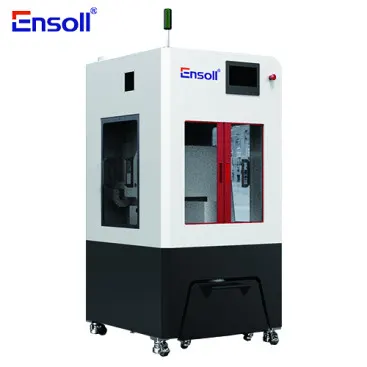
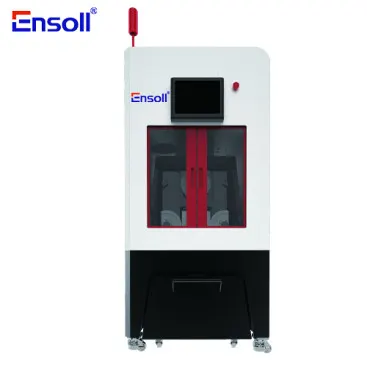
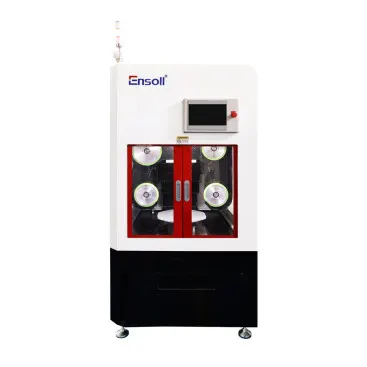
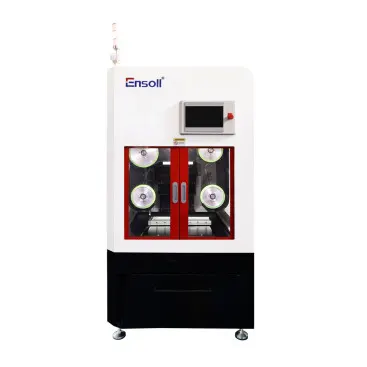
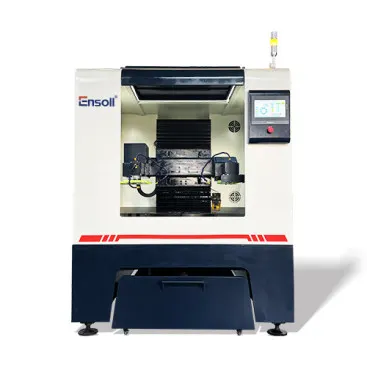
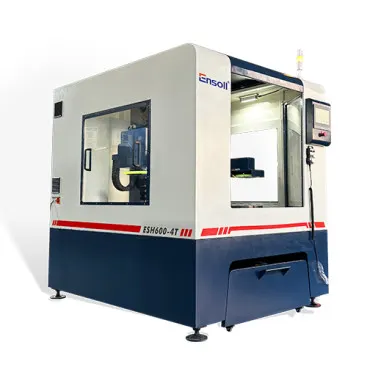
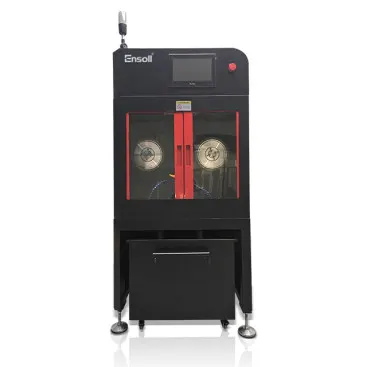
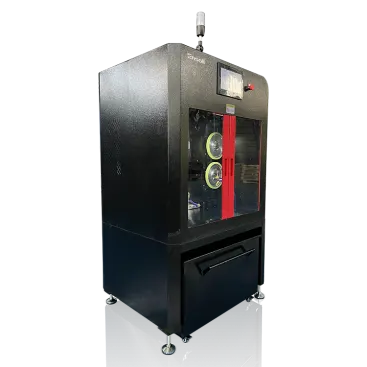
NdFeB is brittle, and it is brittle in a specific way
Sintered neodymium magnets have very high hardness and very low fracture toughness. They behave like a ceramic: no plastic deformation, no warning, and a chip that runs along the grain boundary. Wire cutting suits them because it applies low, constant force across a narrow kerf instead of the impact loading of a blade.
Why not EDM or grinding
EDM works and is common, but it is slow on large sections and it leaves a recast layer that has to be removed. Grinding generates heat that can partially demagnetise the surface layer if cooling is inadequate. Wire cutting sits between them: faster than EDM on thick sections, cooler than grinding, and it does not need a conductive path.
Parameter ranges
| Material | Wire Ø | Abrasive | Feed | Watch for |
|---|---|---|---|---|
| Sintered NdFeB (N35–N52) | 0.25–0.40 mm | D126 | 1–4 mm/min | Edge chipping, corner spalling |
| SmCo | 0.25–0.40 mm | D126 | 0.8–3 mm/分 | More brittle than NdFeB at corners |
| Bonded / polymer magnet | 0.30–0.50 mm | D64–D126 | 2–8 mm/min | Binder smear at high feed |
| Ni-Cu-Ni coated stock | 0.25–0.40 mm | D126 | 1–3 mm/分 | Coating delamination at the cut edge |
Protecting the magnet, not just the cut
Two things degrade a magnet during machining, and neither is visible on the cut face:
- Heat — NdFeB loses coercivity as temperature rises, and the loss becomes permanent above the material's maximum operating temperature. Flood cooling is not optional.
- Corrosion — uncoated NdFeB oxidises readily. Water-based coolant on a bare cut face starts the process immediately. Either cut coated stock, or plan a re-coat, or use an inhibited coolant and dry the part promptly.
Chipping at corners
Nearly all rejections on wire-cut magnets are corner chips. The cause is the exit geometry: at a corner the wire is simultaneously leaving two faces. Fix with a support block behind the exit face and a feed ramp-down over the last 2 mm — not with a change of wire.
Frequently asked questions
Does cutting affect the magnetic properties?
The bulk properties are unaffected as long as the part stays below its maximum operating temperature. The cut face can lose some coercivity in a thin surface layer if cooling is poor; that layer is usually removed by the subsequent coating step.
Can I cut a magnet that is already magnetised?
はい, but the chips will stick to the wire, the guides and the machine. Most shops demagnetise, cut, then re-magnetise — the handling alone justifies it.
Why does the cut face rust within a day?
Bare NdFeB oxidises in humid air. If the part is not going straight to coating, dry it and store it dry, or use an inhibited coolant. This is a logistics problem more often than a cutting problem.