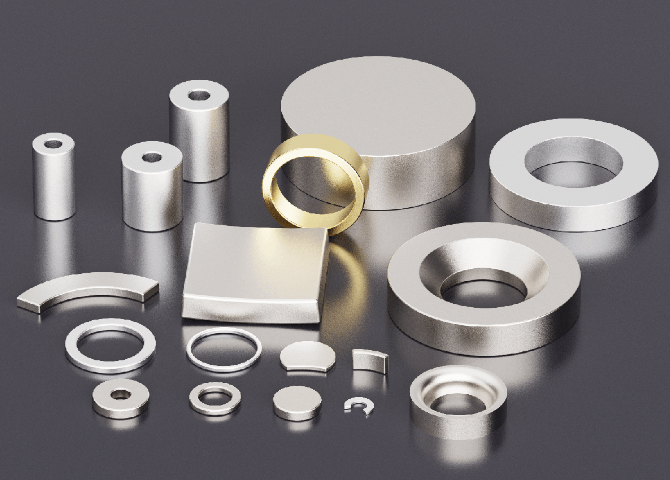
NdFeB magnets are built from three elements with distinct roles: o neodímio fornece a força magnética, o ferro estabiliza a estrutura e os domínios, e o boro aumenta a coercividade contra a desmagnetização.
a sua relação resistência-tamanho faz deles o íman padrão para motores e geradores elétricos, separadores magnéticos, equipamentos de áudio e sistemas de ressonância magnética.
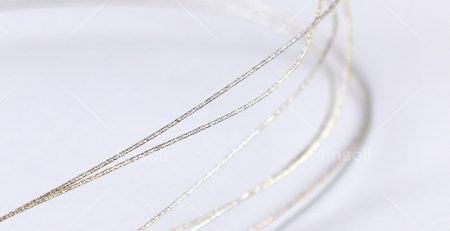
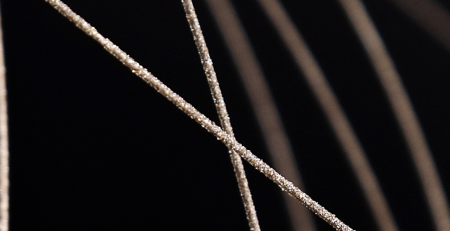
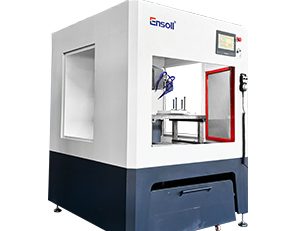
a produção é exigente: o neodímio é uma terra rara escassa, a liga é quebradiça (moldada por metalurgia em pós e sinterização ou cortada com um laço de fio de diamante), e o teor de ferro torna obrigatória a proteção contra corrosão.
Nickel or epoxy coatings solve the corrosion problem, while the magnet’s own strength complicates handling — tooling and assembly must account for powerful attraction to steel.
No domínio da tecnologia e engenharia modernas, Os ímãs desempenham um papel crucial em várias aplicações. Among the many types of magnets, one stands out for its remarkable strength and versatility: NdFeB, short for Neodymium Iron Boron. Nesta postagem do blog, we will delve into the fascinating world of NdFeB magnets, explorando a sua composição, propriedades, and wide-ranging applications.
NdFeB magnets, also known as neodymium iron boron magnets, are composed of a unique combination of elements that contribute to their exceptional magnetic properties. The composition of NdFeB magnets consists of three main elements: neodímio (Nd), ferro (Fe), e boro (B).
Neodímio:
A rare earth element, is the key ingredient that provides NdFeB magnets with their remarkable strength. It possesses a high magnetic moment, meaning it has a strong magnetic field. This characteristic allows NdFeB magnets to generate powerful magnetic forces.
Ferro:
Another essential component, contributes to the stability and structure of NdFeB magnets. It helps to maintain the magnet’s magnetic properties over a wide range of temperatures. Iron also aids in aligning the magnetic domains within the magnet, improving its overall magnetic performance.
Boron:
the third element in the composition, plays a crucial role in enhancing the magnetic properties of NdFeB magnets. It helps to increase the coercivity, which is the ability of a magnet to resist demagnetization. The addition of boron allows NdFeB magnets to maintain their magnetization even in the presence of external magnetic fields.
It is worth noting that the composition of NdFeB magnets can vary depending on the specific application and desired magnetic properties. Different ratios of neodymium, ferro, e boro, along with the addition of other elements or alloys, can be used to fine-tune the magnet’s characteristics to meet specific requirements.
Versatile Applications:
The unique properties of NdFeB magnets make them indispensable in various industries and technologies. Some notable applications include:
Electric Motors and Generators: NdFeB magnets are extensively used in electric motors and generators due to their high magnetic efficiency. They enable motors to operate at higher speeds while maintaining compact sizes, making them essential components in electric vehicles, turbinas eólicas, and industrial machinery.
Magnetic Separators: NdFeB magnets are employed in magnetic separation processes to separate and remove ferrous contaminants from materials such as minerals, plásticos, and food products. Their strong magnetic fields ensure efficient and precise separation.
Audio Equipment: NdFeB magnets are commonly found in speakers and headphones, delivering clear and powerful sound reproduction. Their small size and robust magnetic field enable the production of compact and high-fidelity audio devices.
Magnetic Resonance Imaging (MRI): NdFeB magnets are utilized in MRI machines to generate strong magnetic fields for medical imaging. Their superior magnetic properties contribute to accurate and detailed imaging results.
Manufacturing Challenges:
Despite their exceptional magnetic properties, the manufacturing of NdFeB magnets presents certain challenges that need to be addressed. These challenges arise from both the composition of the magnets and the properties of the individual elements involved.
One of the primary challenges in the manufacturing of NdFeB magnets is the sourcing and extraction of neodymium, which is a rare earth element. Neodymium reserves are limited, and their extraction involves complex and environmentally sensitive processes. The demand for neodymium in various industries, including the production of NdFeB magnets, necessitates responsible sourcing practices and efforts to minimize environmental impact.
Além disso, the production of NdFeB magnets involves handling and processing brittle materials. Neodymium and boron are particularly brittle elements, making the manufacturing process delicate and requiring careful handling to prevent damage to the magnets. Specialized techniques, such as powder metallurgy and sintering, are employed to shape and form the magnets into their desired configurations.Alternatively, NdFeB magnets can be cut into desired shapes usingLoop de fio de diamante
Another challenge is the susceptibility of NdFeB magnets to corrosion. Ferro, one of the main components of NdFeB magnets, is prone to oxidation when exposed to moisture and certain environments. To mitigate this issue, protective coatings or plating, such as nickel or epoxy, are applied to the magnets to enhance their resistance to corrosion and improve their overall durability.
The high magnetic strength of NdFeB magnets also poses challenges during the manufacturing process. The magnets can attract and cling to metal surfaces, making handling and assembly more complex. Specialized tools and equipment, as well as careful magnetization procedures, are required to ensure precise magnet placement and prevent unintended magnet interactions.
Conclusão:
NdFeB magnets have revolutionized various industries with their extraordinary magnetic properties. Their immense strength, coupled with versatility, has made them indispensable in applications ranging from electric motors and generators to audio equipment and medical imaging. À medida que a tecnologia continua a avançar, NdFeB magnets will undoubtedly play an increasingly vital role in shaping our modern world
Perguntas Frequentes
What are NdFeB magnets made of?
Three main elements: neodímio, which provides the high magnetic moment behind their strength; ferro, which stabilizes the structure and aligns magnetic domains; e boro, which raises coercivity so the magnet resists demagnetization. Ratios and alloying additions are tuned per application.
Última análise: Setembro 2026
Why are NdFeB magnets so strong?
Neodymium has a very high magnetic moment, and the Nd-Fe-B crystal structure aligns that moment efficiently. The result is the highest strength-to-size ratio of any commercial permanent magnet, which is why they dominate compact motors, headphones and MRI hardware.
Why do NdFeB magnets need a coating?
Their high iron content oxidizes readily in moist environments. Protective plating such as nickel, or epoxy coatings, prevents corrosion and preserves both the magnet’s structure and its magnetic performance over time.
How are NdFeB magnets shaped and cut?
Blanks are formed by powder metallurgy and sintering because the alloy is too brittle for conventional machining. Finished shapes are then cut with a diamond wire loop, which slices the hard, brittle material cleanly without cracking or heat damage.
O silício monocristalino é a base das modernas indústrias de semicondutores e fotovoltaicos. Transformar lingotes de silício em wafers funcionais, corte de precisão... leia mais
Principais Conclusões
Ferrite (cerâmica) são óxido de ferro sinterizado com carbonato de estrôncio ou bário: baratos, resistentes à corrosão e estáveis até 250... leia mais
Principais Conclusões
As serras de fio de diamante cortam hastes de tungsténio usando um fio embebido com partículas de diamante - uma das poucas práticas... leia mais
Introdução:
Fio diamantado é uma ferramenta de corte inovadora que revolucionou várias indústrias com a sua precisão e eficácia. Neste arte.... leia mais
Principais Conclusões
O corte de precisão é fundamental na fabricação de semicondutores porque os danos por corte propagam-se para todos os processos posteriores.
Diferentes materiais semicondutores necessitam de diferentes.... leia mais
Corte de laço de arame como uma nova tecnologia de corte usando processamento de corte de laço de arame revestido de diamante:
Vantagens do corte de laço de fio diamantado:
Alto... leia mais
Principais Conclusões
Máquinas de corte com serra de fio de diamante combinam corte de precisão com design ecológico: sem pasta de corte, sem névoa de óleo e muito menos.. leia mais