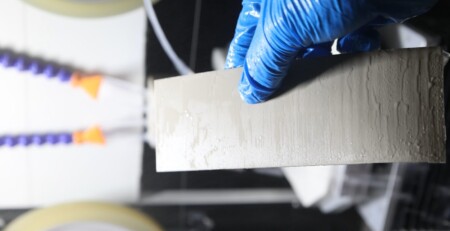
Diamond wire loops represent a pinnacle of precision in the realm of cutting tools, leveraging the extraordinary hardness of diamonds to slice through materials with unparalleled accuracy. Understanding the nuances between swinging and non-swinging diamond wire loops sheds light on the intricate mechanics of these cutting-edge tools.
Introduction to Diamond Wire Loops
Diamond wire loops, at their core, consist of a thin wire embedded with diamond crystals, capable of cutting through a myriad of materials ranging from stone to metal with exceptional precision. Their applications span diverse industries, from construction and mining to semiconductor manufacturing, where intricate cuts are paramount.
Roles and Distinctions of Swinging and Non-Swinging Diamond Wire Loops
The fundamental disparity between swinging and non-swinging diamond wire loops lies in their cutting techniques. Non-swinging loops operate in a linear fashion, maintaining a fixed orientation during the cutting process. Conversely, swinging loops introduce a dynamic oscillation, reducing the contact area between the wire and the workpiece, thereby enhancing cutting efficiency.
Swinging Diamond Wire Loops
Swinging diamond wire loops revolutionize the cutting process by incorporating oscillatory motion into the otherwise static operation. This oscillation can take two primary forms: swinging of the diamond wire itself or rotation of the workpiece. The former method involves the differential movement of the working wheels at the ends of the diamond wire, while the latter, known as point rotation cutting, entails rotating the workpiece on a turntable while the diamond wire remains stationary.
The advantage of swinging diamond wire loops becomes particularly evident when cutting materials of higher hardness. By minimizing the contact area between the diamond wire and the workpiece, swinging loops mitigate wear and tear on the wire, especially in scenarios where the material’s hardness poses a risk of frequent wire
In conclusion The swinging and non-swinging variants of diamond wire loops each have their unique strengths and applications. While swinging loops excel in enhancing cutting efficiency and reducing wear in high-hardness materials, non-swinging loops are better equipped for cutting various two-dimensional shapes.
Through a deeper understanding of swinging and non-swinging diamond wire loops, the cutting-edge capabilities of these tools can be harnessed effectively across a range of industries, ushering in a new era of precision cutting technology.
In the realm of modern materials science, few innovations have had as profound an impact as neodymium-iron-boron (NdFeB) permanent magnets.... read more
Introduction to KDP Crystals
KDP crystals have a large nonlinear optical coefficient and a high laser damage threshold, making them important... read more
In the demanding world of advanced semiconductors, where performance and efficiency are paramount, one material stands as a critical enabler:... read more
Key Takeaways
Optical glass is engineered for lenses, prisms and filters with precisely controlled refractive index, dispersion and low impurity levels... read more