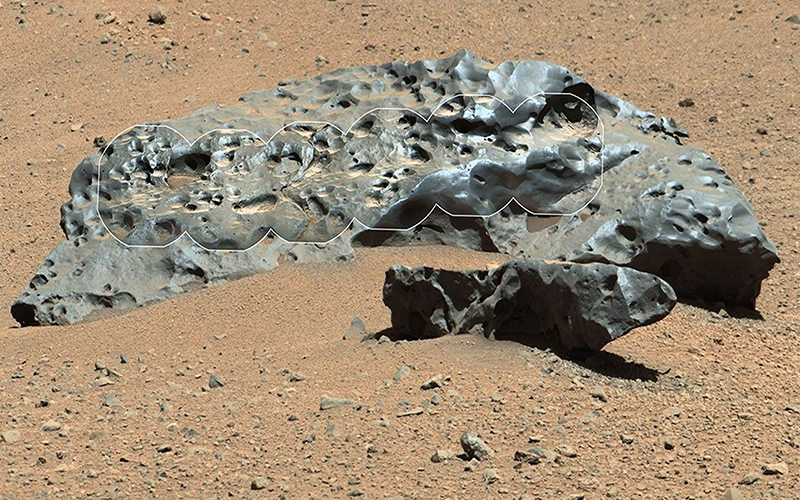
Meteorites are among the most valuable materials on Earth—not in terms of monetary value alone, but for the scientific secrets they hold. These extraterrestrial rocks carry clues about the formation of our solar system, the composition of distant asteroids, and even the origins of life itself. However, working with meteorites presents a unique challenge: they are rare, scientifically precious, and often structurally complex. Cutting them properly requires a tool that balances precision, minimal material loss, and sample integrity.
Last reviewed: September 2026
The diamond wire loop—also known as an endless diamond wire saw—has emerged as the preferred cutting solution for meteorite preparation. This article explores why this technology is ideal for cutting meteorites, which types benefit most, and how it compares to traditional methods.
Meteorite is unpredictable, but the low-force approach is the same one described in how to cut jade.
What is a Diamond Wire Loop?
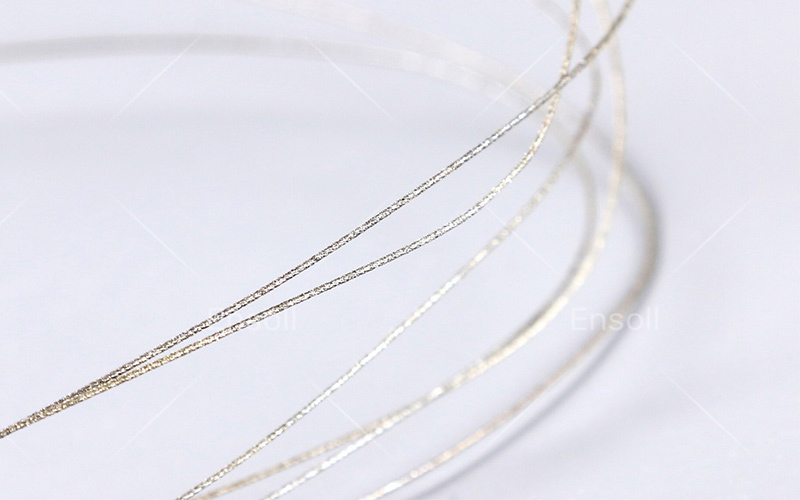
A diamond wire loop is a continuous, endless wire coated with diamond particles. Unlike traditional wire saws that use a long wire spooling back and forth, the loop design allows for continuous one-direction cutting, which improves efficiency and surface quality. The wire diameter can be as fine as 0.25mm to 0.6mm, enabling extremely narrow kerfs (cut widths) and minimal material loss.
These diamond-coated loops are mounted on specialized cutting machines that control wire tension, speed, and feed rate. The cutting action is a grinding process—diamond particles abrade the material rather than shearing or tearing it—which is critical for brittle or heterogeneous samples.
Meteorites are not homogeneous. They fall into three main categories, each with distinct physical properties:
Meteorite Type
Composition
Cutting Challenge
Iron Meteorites
Iron-nickel alloy (hard, metallic)
High hardness; heat generation can alter metallurgical structure
Stony-Iron Meteorites
Silicate minerals + metal matrix (e.g., Pallasites)
Brittle silicates bonded to ductile metal—risk of interface cracking
Stony Meteorites (Chondrites, Achondrites)
Silicate minerals, some with chondrules
Porous, friable, prone to crumbling or fracturing
Traditional cutting methods—such as abrasive saws, band saws, or even laser cutters—often introduce heat-affected zones, microfractures, or contamination. For iron meteorites, excessive heat can alter the Widmanstätten pattern, a crystalline structure valuable for classification. For carbonaceous chondrites (which contain organic compounds and pre-solar grains), heat or fluid contamination can destroy irreplaceable scientific information.
Advantages of Diamond Wire Loop for Meteorite Cutting
1. Minimal Material Loss (Narrow Kerf)
Meteorites are irreplaceable. Every gram lost during cutting is a permanent loss to science. Diamond wire loops produce a kerf as narrow as 0.3–0.6mm, significantly less than traditional saw blades (which can remove 1.5–3mm of material). For a rare lunar meteorite or Martian sample, this difference preserves substantial volume for analysis.
2. Cold Cutting Process (No Heat-Affected Zone)
The diamond grinding action generates minimal heat compared to friction-based cutting. Because the wire is continuously moving and only a small contact area engages the sample, heat dissipates quickly. This cold cutting property preserves:
– Metallurgical structures in iron meteorites (e.g., Widmanstätten patterns)
– Organic compounds in carbonaceous chondrites
– Delicate mineral interfaces in stony-iron meteorites
3. Low Vibration and Mechanical Stress
Meteorites—especially chondrites and achondrites—can be friable (easily crumbled). The steady, smooth motion of a diamond wire loop transmits far less vibration than a reciprocating saw or abrasive wheel. This reduces the risk of:
– Fracturing along pre-existing cracks
– Dislodging chondrules or inclusions
– Creating unintended cleavage planes
4. Compatibility with All Meteorite Types
The diamond wire loop is exceptionally versatile. Whether cutting a dense iron meteorite, a brittle chondrite, or a heterogeneous pallasite, the same basic setup works with adjustments to speed and tension. Manufacturers specifically list “meteorites” as a core application alongside ceramics, silicon, glass, and precious stones.
5. Clean Cutting Environment
Diamond wire loops can be used dry or with minimal coolant. This is critical for scientific samples where:
– Water or oil could leach soluble elements
– Cutting fluids could contaminate isotopic analyses
– Drying samples after wet cutting could introduce cracking
Some setups incorporate vacuum collection of cutting dust, which can itself be retained for analysis.
Which Meteorites Benefit Most from Diamond Wire Loop Cutting?
While the diamond wire loop works well for all meteorite types, certain categories derive exceptional benefit:
Maximizes material preservation; avoids heat damage
High
Iron meteorites (for Widmanstätten display)
Cold cutting preserves etching response
High
Pallasites (olivine + metal)
Prevents interface separation
Standard
Ordinary Chondrites
Reduces crumbling; clean surfaces
Practical Considerations for Laboratory Use
When implementing diamond wire loop cutting for meteorites, several factors should be considered:
– Small diameter (0.25–0.45mm) : For precious small samples or thin sections
– Larger diameter (0.6mm) : For larger iron meteorites or faster cutting
Speed and Feed Rate
– Slower speeds for brittle, friable samples
– Higher tension for dense metallic meteorites
– Always start conservatively and adjust based on results
Sample Mounting
Secure the meteorite firmly to a vibration-free work surface. For irregularly shaped specimens, custom fixtures or embedding in a low-melting-point alloy may be appropriate.
Comparison: Diamond Wire Loop vs. Alternative Methods
Method
Kerf Width
Heat Risk
Vibration
Material Loss
Best For
Diamond Wire Loop
0.3–0.6mm
Minimal
Low
Minimal
All meteorites
Abrasive Saw (Tile Saw)
1.5–2.5mm
High
High
High
Rough cutting only
Band Saw (with diamond blade)
1.0–1.5mm
Moderate
Moderate
Moderate
Iron meteorites only
Laser Cutting
0.2–0.5mm
Very High
None
Minimal
Not recommended (heat damage)
Real-World Applications
The value of diamond wire loop cutting is already recognized in both commercial and scientific settings:
– Museum specimen preparation: The Smithsonian Institution has used wire saw technology for cutting large iron meteorites like Mundrabilla (6.1 tonnes), though historical methods used steel wire with abrasive slurry—modern diamond loops are far more efficient.
– Research laboratories: Facilities preparing lunar samples (e.g., Chang’E-5 returned samples) employ diamond wire cutting to minimize sample loss and contamination.
– Collector and enthusiast use: Smaller diamond wire loops can be attached to hand-held drills or benchtop machines, making precision cutting accessible to serious collectors.
Conclusion
For anyone working with meteorites—whether in a world-class research laboratory, a university geology department, or a serious private collection—the diamond wire loop represents the gold standard for cutting precision. Its combination of minimal kerf, cold operation, low vibration, and material versatility directly addresses the core challenges of meteorite preparation: preserving scientific value while enabling access to internal structures.
As planetary science continues to advance, and as missions return increasingly precious samples from asteroids, Mars, and the Moon, the demand for gentle, precise cutting tools will only grow. The diamond wire loop is not merely a tool for today—it is an enabler of tomorrow’s discoveries, allowing us to unlock the secrets of the cosmos one clean cut at a time.
Monocrystalline silicon is the foundation of modern semiconductor and photovoltaic industries. To transform silicon ingots into functional wafers, precision cutting... read more
The settings for single-direction cutting and bi-directional cutting are specific cutting programs employed by single wire diamond wire saws... read more
Key Takeaways
A single-crystal silicon ingot goes through cropping, diameter grinding, slicing, edge chamfering, lapping and polishing before it is ready... read more
The global transition toward clean energy and advanced computing has placed unprecedented pressure on the supply chains of the photovoltaic... read more
For millennia, the hidden beauty of agate and chalcedony has captivated artisans. These mesmerizing quartz varieties, formed in the hollows... read more
As a leading global manufacturer of industrial tools and equipment, our company takes great pride in our state-of-the-art production facilities... read more
Key Takeaways
Ceramics are hard and brittle, so conventional cutting tools struggle to achieve precise, intricate machining; diamond looped wire cutting... read more