What Is Crystal Quartz? The Complete Guide
When you hear the word “crystal,” what comes to mind? A sparkling gemstone dangling from a necklace? A precise oscillator inside a wristwatch? Or perhaps a mystical sphere used for healing? All of these are correct—because they all point to one substance: crystal quartz.
- Crystal quartz is crystalline silicon dioxide (SiO2) built from a continuous framework of Si-O tetrahedra; the pure colorless form is rock crystal, distinct from cryptocrystalline varieties like agate and jasper.
- Trace elements and natural irradiation create the colored varieties: amethyst (iron), citrine, rose quartz (titanium/iron/manganese), smoky quartz (irradiated aluminum) and milky quartz (fluid inclusions).
- Quartz is piezoelectric — a watch crystal vibrates at exactly 32,768 Hz — making it essential for oscillators, filters, GPS, medical ultrasound and UV optics, far beyond jewelry.
- Value spans from under $1 per carat for common rock crystal to $100+ per carat for top-grade rutilated quartz.
- Cutting quartz (Mohs 7, brittle, anisotropic) favors the diamond wire loop: a 0.2-0.6 mm kerf, no edge chipping or heat damage, Ra 0.4-1.6 micrometers, at typical feeds of 2-6 mm/min.
Crystal quartz is the most abundant mineral on Earth’s surface, yet its combination of beauty, durability, and unique physical properties makes it anything but ordinary. From ancient civilizations who believed it was permanent ice frozen by the gods, to modern electronics manufacturers who rely on its piezoelectric precision, crystal quartz has remained invaluable for thousands of years.
In this guide, we will explore everything you need to know: what is crystal quartz, what is rock crystal quartz, the many varieties of quartz, what crystal quartz is used for, whether quartz crystal is a gemstone, how much one quartz is worth, and finally—how modern manufacturers cut this hard material with diamond wire loop technology.
For the industrial grades that feed semiconductor and PV production, see high purity quartz.
What Is Crystal Quartz? A Scientific Definition?
 At its simplest, crystal quartz is a crystalline form of silicon dioxide (SiO₂) . The atoms are arranged in a continuous framework of tetrahedra—each silicon atom bonded to four oxygen atoms. This repeating, ordered structure is what gives quartz its characteristic hexagonal prism shape with pointed pyramidal terminations.
The term “crystal quartz” typically refers to macrocrystalline quartz—meaning the individual crystals are large enough to see with the naked eye. This distinguishes it from cryptocrystalline varieties like agate or jasper, where the crystal structure is microscopic.
Pure crystal quartz is completely colorless and transparent. This specific variety has a special name: rock crystal quartz. The ancient Greeks called it krystallos, meaning “ice,” because they believed it was water that had frozen so deeply it could never thaw.
So, to answer the foundational question: what is rock crystal quartz? It is simply the transparent, colorless form of crystalline silicon dioxide—the purest expression of quartz without any impurities or inclusions.
The Many Varieties of Quartz
While rock crystal is the purest form, quartz is far from a one-color mineral. Trace elements and natural irradiation create an astonishing spectrum of varieties. Understanding these helps answer later questions about value and gemstone status.
 Pure, Colorless Varieties
– Rock Crystal – Completely transparent and colorless. The baseline from which all other varieties deviate.
Colored Macrocrystalline Quartz
| Variety | Color | Cause of Color |
| Amethyst | Purple to violet | Iron impurities with natural irradiation |
| Citrine | Yellow to orange | Iron (or heat-treated amethyst) |
| Rose Quartz | Pale pink | Trace amounts of titanium, iron, or manganese |
| Smoky Quartz | Brown to black | Natural irradiation of aluminum impurities |
| Milky Quartz | White, opaque | Microscopic fluid or gas inclusions |
| Prasiolite | Green | Heat-treated amethyst (rare in nature) |
Cryptocrystalline Quartz (Microcrystalline)
– Chalcedony – Waxy luster, translucent
– Agate – Banded chalcedony
– Jasper – Opaque, often red or brown
– Onyx – Black and white banded chalcedony
– Carnelian – Red to orange chalcedony
Special Structural Varieties
– Tiger’s Eye – Fibrous quartz with chatoyancy (the cat’s-eye effect)
– Aventurine – Quartz with included mica or hematite, producing sparkle
– Rutilated Quartz – Rock crystal containing needle-like rutile crystals
Each variety has its own market, value, and applications. But all share the same fundamental SiO₂ chemistry and hexagonal crystal system.
Is Quartz Crystal a Gemstone?
This is an excellent question, and the answer requires a distinction between technical and commercial definitions.
Technically, yes. A gemstone is any mineral or organic material that is cut, polished, and used for adornment or decoration. Quartz crystal meets this definition completely. In fact, amethyst has been classified as a precious gemstone for centuries—it was once ranked alongside diamond, ruby, sapphire, and emerald before large deposits were discovered in Brazil.
Commercially, it depends on the variety. The gemstone market divides quartz into three tiers:
- Precious (historically) – Amethyst and citrine were once considered precious. Today, they are semi-precious due to abundant supply.
- Semi-precious – Most colored quartz varieties (rose quartz, smoky quartz, amethyst) fall here.
- Decorative – Milky quartz and rock crystal (unless exceptionally clear) are often used for carvings, spheres, and pyramids rather than faceted gemstones.
One key point: rock crystal quartz is absolutely a gemstone when it is transparent, inclusion-free, and polished. However, because it is common, its price is low compared to other gemstones—which leads directly to our next question.
How Much Is 1 Quartz Worth?
This is the question most people ask after learning about quartz. The honest answer: it varies enormously, from less than $1 to thousands of dollars.
Here is a realistic breakdown for 1 carat (0.2 grams) or 1 kilogram, depending on what “1 quartz” means.
Price by Variety (Per Carat for Faceted Gemstones)
| Variety | Low Grade (USD/carat) | High Grade (USD/carat) |
| Rock crystal (clear) | 0.10–0.10–0.50 | 1–1–5 |
| Amethyst (purple) | 0.20–0.20–1 | 5–5–30 |
| Citrine (yellow) | 0.15–0.15–0.80 | 3–3–20 |
| Rose quartz | 0.10–0.10–0.40 | 1–1–8 |
| Smoky quartz | 0.10–0.10–0.50 | 2–2–15 |
| Rutilated quartz | 1–1–5 | 20–20–100+ |
| Prasiolite (green) | 1–1–3 | 10–10–40 |
What Is Crystal Quartz Used For?
The applications of crystal quartz span science, industry, jewelry, and spirituality. No other mineral has such a diverse range of uses.
Electronics and Timekeeping (The Most Technologically Important Use)
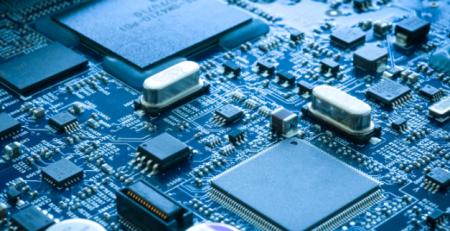
Quartz is piezoelectric—when mechanically compressed, it generates an electric voltage. Conversely, applying an electric field causes it to vibrate at an extremely precise frequency. This property allows quartz crystals to act as oscillators and filters.
Every quartz watch uses a tiny tuning-fork-shaped crystal cut from synthetic quartz. When powered by the battery, it vibrates at exactly 32,768 times per second. The watch circuit counts these vibrations to keep time with an accuracy of ±15 seconds per month—far better than any mechanical movement.
Beyond watches, quartz oscillators are found in:
– Smartphones and computers (clock generators)
– Radio transmitters and receivers (frequency stabilization)
– GPS devices
– Medical ultrasound equipment
– Pressure sensors
Optical Components
Pure, synthetic quartz transmits ultraviolet light better than glass. It is used for:
– UV spectroscopy cuvettes
– High-power laser windows
– Microscope objectives (for UV imaging)
– Telescope corrector plates
Jewelry and Decoration
As established above, quartz is a legitimate gemstone. It is cut as:
– Faceted gemstones for rings and earrings
– Cabochons for pendants
– Beads for necklaces
– Carved figurines, spheres, and obelisks
Metaphysical and Healing Practices
Many people believe quartz crystals amplify energy, focus intention, or promote healing. Whether or not one subscribes to these beliefs, the market for “healing crystals” is substantial. Rock crystal is typically used for “cleansing” and “charging” other stones, while amethyst is associated with calm, and rose quartz with love.
Industrial Abrasives and Glassmaking
Crushed quartz is used as:
– An abrasive in sandblasting and stone cutting
– A flux in metallurgy
– The primary raw material for glass and ceramic glazes
– A filler in paints, plastics, and rubber
How to Cut Crystal Quartz: The Diamond Wire Loop Solution
Now we come to a critical manufacturing challenge. Whether for electronics, optical components, or gemstone shaping, crystal quartz must often be cut into precise shapes. But quartz is hard—7 on the Mohs scale, harder than glass or steel. It is also brittle and prone to chipping, cracking, or generating subsurface damage during cutting.
Traditional cutting methods each have serious drawbacks:
– Diamond abrasive wheels – Wide kerf (material loss), significant vibration, edge chipping, and heat generation.
– Waterjet cutting – Can cause edge delamination and requires high pressure that may fracture thin sections.
– Laser cutting – Creates a heat-affected zone (HAZ) with microcracks and melted surfaces; unsuitable for optical or electronic applications.
– EDM (electrical discharge machining) – Only works on conductive materials; quartz is an electrical insulator.
The Proven Solution: Diamond Wire Loop Cutting
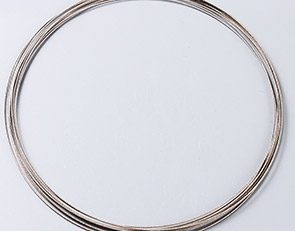
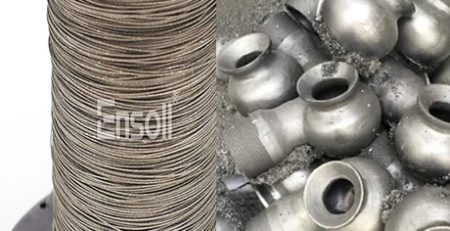
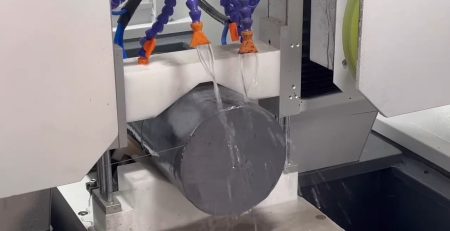
A diamond wire loop is a continuous, flexible steel wire electroplated with industrial diamond grit. The loop rotates in a single direction at high speed (typically 4–15 meters per second), and the diamond particles grind through quartz like a precision saw—without the limitations of traditional methods.
Why diamond wire loop is ideal for cutting crystal quartz:

| Feature | Benefit for Quartz |
| Thin kerf (0.2–0.6 mm) | Minimal material loss. When cutting a $500 quartz crystal, every millimeter of saved material increases yield. |
| Zero edge chipping | The continuous grinding action distributes stress evenly, eliminating the edge spalling common with saw blades. |
| No heat damage | Coolant (deionized water or oil) continuously flushes the cut zone, preventing thermal microcracks or piezoelectric damage. |
| Excellent surface finish (Ra 0.4–1.6 µm) | Many quartz components require no post-cut grinding or polishing—saving time and cost. |
| Ability to cut complex shapes | CNC-controlled wire loops can cut circles, arcs, slots, and custom contours without tool changes. |
| Cuts any orientation | Quartz is anisotropic (properties vary with crystal direction). Diamond wire cuts equally well along or across the optical axis. |
Practical Applications for Cut Quartz
– Electronics – Slicing synthetic quartz wafers into tiny oscillators or filter blanks.
– Optics – Cutting UV-grade quartz into rectangular windows or cylindrical rods.
– Gemstones – Shaping rough rock crystal or amethyst into faceted preforms before polishing.
– Metaphysical products – Cutting quartz points, spheres, and wands from larger rough crystals.
Tips for Maximum Yield When Cutting Quartz
- Select the right wire diameter – 0.4 mm for general cutting; 0.2 mm for thin wafers or delicate crystals.
- Optimize feed rate – Typically 2–6 mm/min for quartz. Too fast causes chipping; too slow wastes time without improving quality.
- Use clean coolant – Deionized water prevents contamination of optical or electronic surfaces.
- Inspect the wire regularly – Replace when cutting speed drops significantly or surface finish degrades.
- Secure the crystal firmly – Quartz is brittle; any vibration during cutting can cause fracture.
By adopting diamond wire loop cutting, manufacturers of quartz components—whether for Swiss watches, medical lasers, or gemstone jewelry—can dramatically reduce waste, eliminate secondary finishing, and cut complex shapes that were previously impossible or too expensive.
Conclusion
Crystal quartz is far more than a pretty stone. It is a scientific marvel (piezoelectricity), an industrial workhorse (oscillators and optics), a legitimate gemstone (amethyst, citrine, rock crystal), and a spiritual symbol. Its value ranges from pennies per carat for common milky quartz to thousands of dollars for exceptional master crystals.
Frequently Asked Questions
What is crystal quartz?
Crystal quartz is the macrocrystalline form of silicon dioxide (SiO2), where individual crystals are large enough to see with the naked eye. Its atoms form a continuous tetrahedral framework that produces the characteristic hexagonal prism shape. The pure, colorless, transparent variety is called rock crystal.
Is quartz crystal a gemstone?
Technically yes — it is cut, polished and used for adornment, which is the definition of a gemstone. Commercially most varieties (amethyst, citrine, rose quartz, smoky quartz) are classed as semi-precious because supply is abundant, while milky quartz and ordinary rock crystal are used mainly for carvings and decorative objects.
What is crystal quartz used for?
Its most important use is electronics: piezoelectric quartz oscillators keep time in watches and stabilize frequencies in phones, computers, GPS and radio equipment. It also serves UV optics, jewelry and decorative carvings, metaphysical products, and — crushed — as an abrasive and glassmaking raw material.
What is the best way to cut quartz crystal?
Diamond wire loop cutting. The thin diamond-coated wire gives a 0.2-0.6 mm kerf with minimal material loss, zero edge chipping, no heat damage thanks to continuous coolant, and surface finishes of Ra 0.4-1.6 micrometers. It also cuts complex contours and works equally well along or across the crystal’s optical axis.
Reviewed by the Ensoll engineering team.