Ferrit (Keramik) Magneten sind gesintertes Eisenoxid mit Strontium- oder Bariumcarbonat: günstig, korrosionsbeständig und stabil bis 250 °C, aber hart und spröde – daher entscheidet die Schneidemethode direkt über den Ertrag.
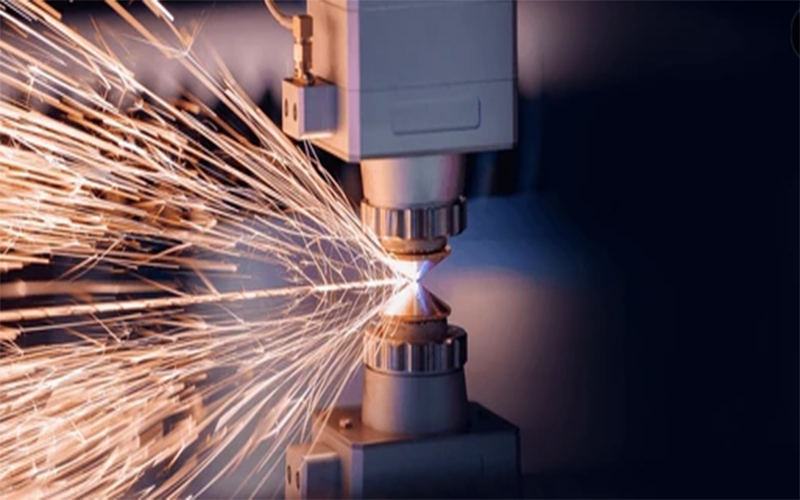
Schleifen hinterlässt 50-100 mikrometergroße Mikro-Risse und läuft langsam; Laser erzeugt eine wärmebeeinflusste Zone, die die magnetischen Eigenschaften verändert; Wasserstrahl hinterlässt Ra >3 mikrometergroße Kanten, die poliert werden müssen.
Diamantdrahtsägen-Schneiden ist am besten geeignet: ein 0.1-0.3 mm diamantbeschichteter Draht liefert gratfreie Kanten (Ra <0.5 Mikrometer), keine Hitzeschäden, Toleranzen ±0,02 mm und Schnittbreite unter 0.2 Mm.
Ungefähr 80% der japanischen Ferrithersteller verwenden bereits Diamantdrahtsägen, die Schneideproduktionskosten um etwa 30% gegenüber Schleifen bei Hochvolumenproduktion.
1. Was sind Ferritmagneten?
Ferritmagneten, auch bekannt als Keramikmagneten, sind eine Art Permanentmagnet, der hauptsächlich aus Eisenoxid besteht (Fe₂O₃) kombiniert mit Strontium- oder Bariumcarbonat. Sie werden bei hohen Temperaturen gesintert, um ein hartes, sprödes Keramikmaterial mit moderater magnetischer Stärke zu bilden (0.2–0,4 Tesla).
Haupteigenschaften
– Kostengünstig: Günstiger als Seltene-Erden-Magnete (NdFeB/SmCo)
– Hohe Resistivität: Geringe elektrische Leitfähigkeit reduziert Wirbelstromverluste
– Temperaturstabilität: Leistung bis zu 250°C aufrechterhalten
– Korrosionsbeständigkeit: Benötigt keine Beschichtung wie NdFeB
Anträge
– Elektronik: Lautsprecher, Sensoren, und Mikrowellengeräte
– Automobil: ABS-Sensoren, Bauteile für Elektromotoren
– Industrie: Magnetabscheider, Haltesysteme
Aufgrund ihrer Sprödigkeit, erfordern Ferritmagnete spezielle Schneidmethoden, um Absplitterungen und Risse zu vermeiden.
2.Wie werden Ferritmagnete verarbeitet?
Ferritmagnete werden durch Sintern hergestellt, wodurch Blöcke oder Scheiben entstehen, die in präzise Formen geschnitten werden müssen. Gängige Bearbeitungsmethoden umfassen:
– Vorteile: Keine mechanische Kraft, Gut für dünne Platten (<3Mm)
– Nachteile:
– Wärmebeeinflusste Zone (Wärmeeinflusszone) Verändert magnetische Eigenschaften
– Begrenzt auf gerade Schnitte (Komplexe Formen schwierig)
C. Wasserstrahlschneiden
– Hochdruck-Abrasivwasser (Granat/SiC)
– Vorteile: Keine thermischen Schäden, Vielseitig für dicke Materialien
– Nachteile:
– Raue Kanten (Ra >3μm) Erfordert Nachpolieren
– Hohe Betriebskosten (Abrasivverbrauch)
Diamantdrahtsäge Schneiden (Beste Lösung)
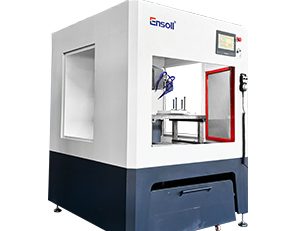
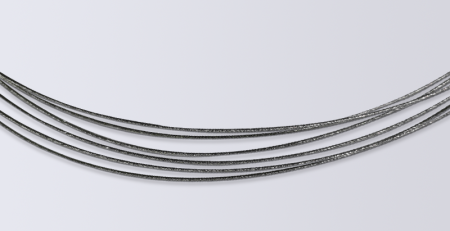
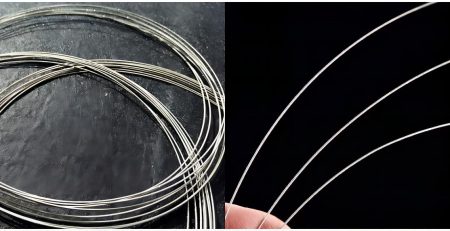
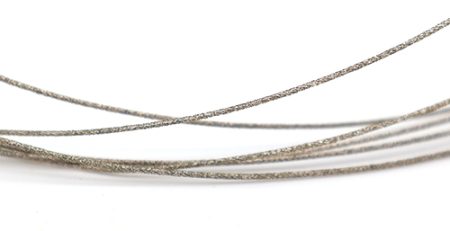
Das Diamantdraht-Säge-Schneidemaschine Verwendet einen dünnen, diamantbeschichteter Draht verwendet (Ø0,1–0,3mm) Um Ferrit mit minimalem Schnittverlust zu schneiden.
Warum es überlegen ist
✔ Spänefreies Schneiden – keine Kantenausbrüche (Ra <0.5μm)
✔ Kalter Prozess – kein thermischer Stress oder HAZ
✔ Hohe Präzision – Toleranzen ±0,02mm
✔ Materialeinsparung – Schnittbreite <0.2Mm (vs. 1mm beim Schleifen)
Wie es funktioniert
Drahtbewegung: Kontinuierliche Schleife bei 10–60 m/min
Kühlmittel: Verhindert Überhitzung (deionisiertes Wasser + Zusätze)
– Ideal für Anwendungen, die spiegelähnliche Kanten erfordern
2. Verbesserte Harzgebundene Diamantdrahtschleife
– Entwickelt für verlängerte Lebensdauer
– Optimiert für das Schneiden dickerer Materialabschnitte
– Erhält die Schnittpräzision bei längerer Nutzung
Anwendungen in der Produktion
– Lautsprecher-Magnete: Glattkanten verbessern die Klangqualität
– Sensorkomponenten: Präzisionsschlitze für Hall-Effekt-Bauteile
– Maßgefertigte Formen: Trapez-/Bogen-Ausschnitte für Motoren
Schlussfolgerung
Ferritmagnete erfordern präzises Schneiden, um die Leistung zu erhalten. Während Schleif- und Lasermethoden Einschränkungen haben, liefert Diamantdraht-Sägemaschinen die beste Balance zwischen Genauigkeit, Oberflächenqualität, und Kosten-effizienz.
Für Hersteller, die ferritfreie Bauteile ohne Fehler anstreben, führt das Upgrade auf Diamantdrahttechnologie zu weniger Abfall 20% und steigert die Produktivität um das 3-fache.
Benötigen Sie eine Schneidlösung? [Kontaktieren Sie uns] für einen kostenlosen Muster-Test mit Ihrem Ferritmaterial! Im Vergleich zu wie man Neodym-Magnete schneidet, ermöglicht Ferrit eine höhere Vorschubrate, aber Abplatzungen an der Austrittskante sind immer noch der zu beachtende Defekt.
Häufig gestellte Fragen
Was ist der beste Weg, Ferritmagnete zu schneiden?
Schneiden von Diamantdrahtsägen. Der dünne diamantbeschichtete Draht (0.1-0.3 Mm) schleift das spröde Keramikmaterial mit sehr geringer Kraft, und erzeugt spanfreie Kanten bei Ra unter 0.5 Mikrometer und Toleranzen um ±0,02 mm – ohne die Mikrorisse beim Schleifen oder die Hitzeschäden beim Laserschneiden.
Warum splittern Ferritmagnete beim Schneiden??
Ferrit ist eine gesinterte Keramik mit sehr niedriger Zugfestigkeit. Starre Blätter und Schleifscheiben konzentrieren die mechanische Spannung an der Schneidkante, und das Material bricht, wenn das Werkzeug herauskommt. Geringkraft-Mikroschleifen mit einem Diamantdraht eliminiert diesen Fehlermodus weitgehend.
Kann man Ferritmagnete laserschneiden?
Nur dünne Platten (unter etwa herum 3 Mm) und nur für gerade Schnitte. Die wärmebeeinflusste Zone des Lasers verändert die magnetischen Eigenschaften nahe dem Schnitt, daher wird für Produktionsteile ein kaltes Verfahren wie das Schneiden von Diamantdrahtsägen bevorzugt.
Beeinflusst das Schneiden die magnetische Leistung von Ferrit??
Ja, wenn der Prozess Wärme oder Stress hinzufügt. Laser- und Heißschleifen können die Eigenschaften in der Nähe des Schnitts verändern; Diamantdrahtsägen schneiden ist ein Kalt-, kühlmittelgesteuerter Prozess, so behält das Ferrit seine spezifizierte Leistung ohne wärmebeeinflussten Bereich.
In der Welt der Edelstein- und Hartstoffbearbeitung, Präzision ist nicht nur ein Luxus – sie ist eine absolute Notwendigkeit. Seit Jahrhunderten,... mehr lesen
Wichtige Erkenntnisse
Diamantdrahtsägemaschinen verbinden präzises Schneiden mit umweltbewusstem Design: kein Schlamm, kein Öldunst und viel weniger... mehr lesen
In der Welt der fortschrittlichen Materialien, Schneiden Siliziumcarbid (Sic) stellt einzigartige Herausforderungen dar, die spezialisierte Lösungen erfordern. Als ein... mehr lesen
Wichtige Erkenntnisse
Draht-EDM schneidet elektrisch leitfähige Materialien unter Verwendung von Funkenerosion, daher ist die Materialhärte unerheblich - selbst gehärteter Werkzeugstahl... mehr lesen
Diamant-Drahtschlaufen stellen eine Spitze der Präzision im Bereich der Schneidwerkzeuge dar, unter Ausnutzung der außergewöhnlichen Härte von... mehr lesen
Wichtige Erkenntnisse
Kompakte einkernige Diamantdrahtschleifenmaschinen wie die ESV-3S bringen das Schneiden von Solarzellen in Reichweite von Laboren und... mehr lesen
Im Bereich der modernen Materialwissenschaften, haben nur wenige Innovationen einen so tiefgreifenden Einfluss gehabt wie Neodym-Eisen-Bor (NdFeB) Dauermagnete.... mehr lesen
Seit Jahrhunderten, Jade wurde wegen ihrer Schönheit geschätzt, Haltbarkeit, und kulturellen Bedeutung, insbesondere in der asiatischen Kunst und im Schmuck. Aber,... mehr lesen
In der Landschaft der modernen industriellen Fertigung, die Fähigkeit, Materialien sauber zu trennen, ist eine grundlegende Voraussetzung für die nachfolgende Verarbeitung... mehr lesen