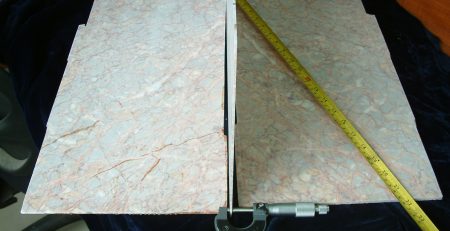
Sierra de hilo de diamante: Corte de precisión de jade
Durante siglos, el jade ha sido venerado por su belleza, durabilidad, y su importancia cultural, particularmente en el arte y la joyería asiática. Sin embargo, este valioso material duro y frágil presenta desafíos significativos en su procesamiento debido a su excepcional dureza y susceptibilidad a agrietarse bajo estrés. Los métodos tradicionales de talla de jade a menudo resultaban en un desperdicio importante de material y limitaciones en la complejidad del diseño. The advent of sierra de alambre de diamante technology has revolutionized jade processing, introduciendo niveles sin precedentes de precisión, eficacia, y conservación del material a este antiguo arte.
- A diamond wire saw cuts jade with a continuous loop of high-tensile steel or tungsten core wire coated with diamond particles, each particle acting as an individual cutting point.
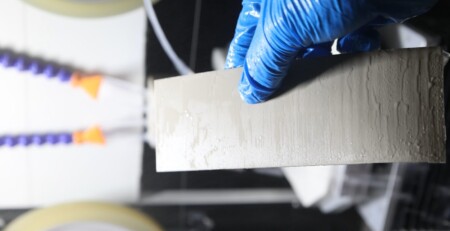
- Surface finishes of 0.1-0.8 micrometers Ra are typical on jade, often eliminating secondary finishing operations entirely.
- The kerf is only 120-200 micrometers versus 500-2000 micrometers for conventional jade cutting, a decisive saving on premium-priced rough.
- Controlled, continuous material removal avoids the impact and vibration that propagate jade’s microscopic fractures into catastrophic cracks.
- Key process parameters: tensión del alambre de 100-140 N, progressive feed rates of 2-10 mm/min, and adaptive cooling with real-time monitoring.
The global market for processed jade and other precious stones continues to grow, driven by increasing demand in jewelry, luxury goods, and artistic applications. This expansion has intensified the need for advanced processing technologies that can enhance yield while reducing production costs. Sierra de hilo diamantado cutting represents the forefront of this technological evolution, offering jade artisans and manufacturers capabilities that were previously unimaginable with conventional processing methods.
The full jade process, including slab orientation and polishing notes, is in how to cut jade.
What is a Diamond Wire Saw?
A diamond wire saw is an advanced cutting tool that utilizes a continuous loop of wire embedded with synthetic diamond particles as the primary cutting medium . Unlike conventional cutting methods that rely on solid blades or abrasive discs, diamond wire saws employ a flexible, continuous wire that moves at controlled speeds while maintaining precise tension. The fundamental construction consists of a high-tensile strength core wire, typically manufactured from premium steel alloys or tungsten, coated with precisely sized and distributed diamond particles through sophisticated electroplating or resin bonding processes .
Key Components and Operational Mechanism
The diamond wire saw system comprises several critical components that work in harmony to achieve optimal cutting performance:
– Hilo impregnado de diamante: The core cutting element featuring precisely engineered diamond distribution and advanced bonding technology
– Sistema de guía de precisión: Sophisticated pulley and roller mechanisms that maintain exact wire alignment and optimal tension
– Sistemas de control avanzados: Control Numérico por Computadora (CNC) Tecnología que gestiona los parámetros de corte con precisión excepcional
– Sistema de suministro de refrigerante: Integrated cooling mechanisms that manage temperature and ensure efficient debris removal
– Tension control mechanism: Automated systems maintaining consistent wire tautness throughout the cutting process
The operational mechanism involves the continuous movement of diamond-impregnated wire at controlled velocities while maintaining precise tension parameters . As the wire engages with the workpiece material, each diamond particle functions as an individual cutting point, creating micro-fractures and removing material through a combination of brittle fracture propagation and fine abrasion. This process is continuously supported by advanced cooling systems that serve the dual purpose of temperature management and efficient debris evacuation from the cutting zone.
Diamond Wire Saw Applications in Jade Processing
Rough Jade Block Slabbing
The initial processing of raw jade blocks represents one of the most challenging applications, where diamond wire saw technology demonstrates exceptional capabilities:
– Large specimen processing: Diamond wire systems efficiently handle jade blocks of substantial dimensions, overcoming the material’s irregular hardness and internal stresses
– Optimal orientation cutting: The technology enables precise cutting along preferred crystallographic orientations to maximize aesthetic qualities
– Flaw avoidance: Superior control allows operators to navigate around internal imperfections and inclusions
– Consistent thickness maintenance: Automated systems ensure uniform slab dimensions throughout production runs
Precision Component Manufacturing
Beyond basic slabbing operations, diamond wire cutting enables sophisticated jade component production:
– Standardized blank preparation: Creating uniformly sized jade blanks for jewelry manufacturing
– Complex geometric cutting: Achieving intricate shapes and patterns through advanced CNC guidance
– Ultra-thin section production: Processing delicate jade slices for inlay applications and decorative elements
– Prototype development: Facilitating rapid iteration for custom jade product designs
Technical Advantages for Jade Cutting Applications
Superior Surface Quality and Integrity
Diamond wire saw cutting produces exceptional surface finishes on jade materials, logrando típicamente valores de rugosidad entre 0.1-0.8 micrometers Ra depending on the specific jade type and cutting parameters . Esta calidad de superficie reduce o elimina significativamente la necesidad de operaciones de acabado secundarias, optimizando los procesos de fabricación y reduciendo los costos de producción. The mechanical cutting action preserves material microstructure and prevents the formation of subsurface damage common with traditional impact-based carving tools.
Pérdida mínima de ranura y conservación de material
The narrow cutting width of diamond wire saws, generalmente en un rango de 120-200 micrómetros, represents a substantial improvement over conventional jade cutting methods that may produce kerf losses of 500-2000 micrómetros . This material conservation proves particularly valuable when processing high-quality jade, donde la reducción del ancho de ranura se traduce directamente en ahorros significativos de costos y en una mayor eficiencia de utilización del material. The economic impact becomes especially pronounced when working with rare jade varieties commanding premium prices.
Reduced Mechanical Stress and Cracking
Unlike traditional jade processing methods that impose significant impact and vibrational stresses, diamond wire sawing operates through controlled, continuous material removal . This characteristic proves crucial for preventing crack propagation in jade materials, which often contain microscopic fractures and internal stress concentrations. The technology’s ability to maintain consistent cutting forces minimizes the risk of catastrophic failure during processing, particularly valuable when working with large, valuable jade specimens.
Processing Parameters and Optimization Strategies
Critical Cutting Parameters
Successful jade processing with diamond wire technology requires careful optimization of several key parameters:
Wire Speed and Tension Control
Optimal cutting performance depends on precise management of wire dynamics:
– Linear speed optimization: Typical operational ranges of 4mm/min depending on jade hardness
– Tension management: Maintaining 100-140N tension for stable cutting performance
– Vibration minimization: Advanced damping systems for surface quality preservation
– Wire longevity optimization: Balancing speed and tension to maximize wire service life
Feed Rate and Cooling Strategies
Material removal efficiency depends on coordinated parameter control:
– Progressive feed rates: Típicamente 2-10 mm/min based on jade characteristics
– Adaptive cooling application: Managing temperature while preserving jade integrity
– Debris removal efficiency: Ensuring clean cutting paths for consistent quality
– Process monitoring: Real-time parameter adjustment based on cutting conditions
Jade-Specific Processing Considerations
– Nephrite jade processing: Addressing the material’s interlocking fibrous structure
– Jadeite variations: Adapting to the wide hardness range within jadeite categories
– Color zone management: Navigating differential hardness in -colored specimens
– Inclusion accommodation: Adjusting parameters around imperfections and fractures
Economic and Environmental Benefits
The implementation of diamond wire saw technology delivers substantial economic advantages for jade processing operations:
Operational Efficiency Improvements
– Tiempo de procesamiento reducido: High cutting speeds combined with -wire capability significantly decrease production cycles
– Optimización del trabajo: Reduced manual intervention requirements through automation
– Eficiencia energética: Lower power consumption per unit volume of material processed
– Tooling cost reduction: Extended wire life compared to conventional cutting tools
Environmental Advantages
Diamond wire cutting technology offers significant environmental benefits compared to traditional jade processing methods:
Reduced waste generation: Minimal kerf loss and improved yield decrease material sent to landfills
– Elimination of slurry waste: Dry processing options avoid contaminated coolant disposal issues
– Eficiencia energética: Lower power requirements reduce carbon footprint per unit processed
– Noise reduction: Quieter operation improves working conditions and environmental impact
– Dust control: Integrated systems contain particulate matter more effectively than traditional methods
Conclusión: Transforming Jade Processing Through Advanced Technology
Diamond wire saw technology represents a transformative advancement in jade processing capabilities, Ofreciendo una precisión sin precedentes, eficacia, and material conservation for this challenging material. As global jade markets continue to evolve and material costs increase, the importance of sophisticated processing technologies like diamond wire sawing will continue to grow.
Preguntas Frecuentes
Por qué es difícil cortar el jade?
Jade combines exceptional toughness with a susceptibility to cracking under stress. It often contains microscopic fractures and internal stress concentrations, so the impact and vibration of traditional carving tools can propagate hidden cracks and destroy valuable specimens, while also wasting material through wide cuts.
What surface finish can a diamond wire saw achieve on jade?
Depending on the jade type and cutting parameters, diamond wire sawing typically achieves roughness values between 0.1 y 0.8 micrometers Ra. This quality significantly reduces or eliminates secondary finishing, streamlining production and lowering costs.
How much material does a diamond wire saw save when cutting jade?
The cutting width of a diamond wire saw is typically 120-200 micrómetros, compared with 500-2000 micrometers for conventional jade cutting methods. When processing rare, premium-priced jade varieties, this narrow kerf translates directly into significant cost savings and higher material utilization.
What are the key parameters for cutting jade with a diamond wire saw?
Four matter most: wire tension held at 100-140 N for stable cutting; progressive feed rates of 2-10 mm/min matched to the jade’s characteristics; adaptive cooling that manages temperature without harming the stone; and real-time process monitoring for parameter adjustment. Nephrite’s fibrous structure and jadeite’s wide hardness range each require specific adaptation.
Can a diamond wire saw cut around flaws and color zones in jade?
Sí. The superior control of diamond wire systems lets operators navigate around internal imperfections and inclusions, cut along preferred crystallographic orientations to maximize aesthetic qualities, and manage the differential hardness found in color-zoned specimens.
Revisado por el equipo de ingeniería de Ensoll.