Bucles de alambre de diamante representan un pináculo de precisión en el ámbito de las herramientas de corte, leveraging the extraordinary hardness of diamonds to slice through materials with unparalleled accuracy. Understanding the nuances between swinging and non-swinging diamond wire loops sheds light on the intricate mechanics of these cutting-edge tools.
Introduction to Diamond Wire Loops
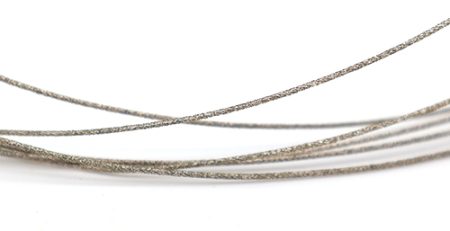
Bucles de alambre de diamante, at their core, consist of a thin wire embedded with diamond crystals, capable of cutting through a myriad of materials ranging from stone to metal with exceptional precision. Their applications span diverse industries, from construction and mining to semiconductor manufacturing, where intricate cuts are paramount.
Roles and Distinctions of Swinging and Non-Swinging Diamond Wire Loops
The fundamental disparity between swinging and non-swinging diamond wire loops lies in their cutting techniques. Non-swinging loops operate in a linear fashion, maintaining a fixed orientation during the cutting process. Por el contrario, swinging loops introduce a dynamic oscillation, reducing the contact area between the wire and the workpiece, thereby enhancing cutting efficiency.
Swinging Diamond Wire Loops
Swinging diamond wire loops revolutionize the cutting process by incorporating oscillatory motion into the otherwise static operation. This oscillation can take two primary forms: swinging of the diamond wire itself or rotation of the workpiece. The former method involves the differential movement of the working wheels at the ends of the diamond wire, while the latter, known as point rotation cutting, entails rotating the workpiece on a turntable while the diamond wire remains stationary.
The advantage of swinging diamond wire loops becomes particularly evident when cutting materials of higher hardness. By minimizing the contact area between the diamond wire and the workpiece, swinging loops mitigate wear and tear on the wire, especially in scenarios where the material’s hardness poses a risk of frequent wire
En conclusión The swinging and non-swinging variants of diamond wire loops each have their unique strengths and applications. While swinging loops excel in enhancing cutting efficiency and reducing wear in high-hardness materials, non-swinging loops are better equipped for cutting various two-dimensional shapes.
Through a deeper understanding of swinging and non-swinging diamond wire loops, the cutting-edge capabilities of these tools can be harnessed effectively across a range of industries, ushering in a new era of precision cutting technology.
Los zafiros están hechos de óxido de aluminio (Al2O3) con elementos traza que crean sus colores. Aprenda cómo el lazo de hilo de diamante permite precisión,... leer más
Última revisión: Septiembre 2026
Puntos clave
El grafito es blando pero frágil y abrasivo — desafila las cuchillas rápidamente y produce polvo conductor,... leer más
Puntos clave
Las sierras de lazo de alambre de diamante cortan una gama excepcionalmente amplia de materiales compuestos metálicos y no metálicos, desde cerámica y vidrio... leer más
Puntos clave
Los fabricantes de PV necesitan más obleas por lingote a un costo cada vez menor, exactamente lo que proporciona el corte con bucle de alambre de diamante.
Estrecho... leer más
Puntos clave
Los lazos de alambre de diamante se deslizan a través del vidrio con una superficie de corte recubierta de diamante, permitiendo a los artesanos esculpir botellas de cerveza en diseños intrincados... leer más
En el panorama de la manufactura industrial moderna, La capacidad de separar materiales de manera limpia es un requisito fundamental para el procesamiento posterior.. leer más
Puntos clave
Las cerámicas de alúmina están compuestas principalmente de óxido de aluminio (Al2O3) y se clasifican en grados según su pureza; combinan excepcional.... leer más
Conclusiones clave
Las sierras de alambre de diamante cortan varillas de tungsteno utilizando un alambre incrustado con partículas de diamante - una de las pocas prácticas.... leer más