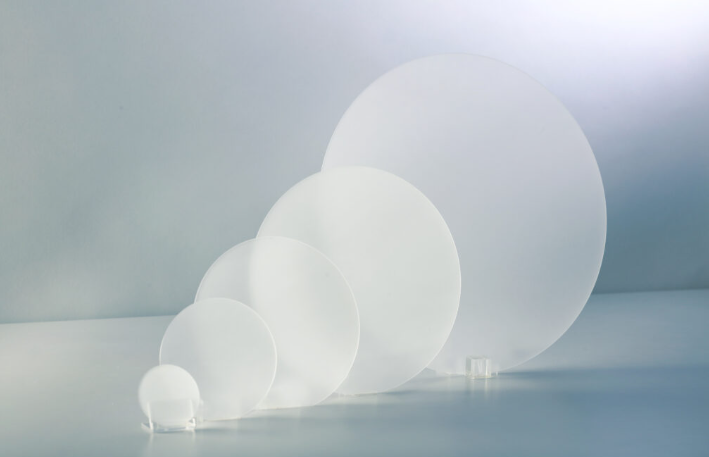
Los sustratos de zafiro son componentes críticos en la fabricación de LED, dispositivos ópticos, y aplicaciones de semiconductores. Sin embargo, cutting sapphire—a material with a Mohs hardness of 9—poses significant challenges. Traditional methods like blade sawing or laser cutting often lead to cracks, high material loss, and uneven surfaces.
Puntos clave
Zafiro (Mohs 9) is both extremely hard and brittle: blade sawing and laser cutting often cause cracks, uneven surfaces, and up to 30% pérdida de material.
A diamond wire loop can be as thin as 0.1 mm versus a 0.3 mm or wider blade kerf, so more wafers are recovered from every crystal ingot.
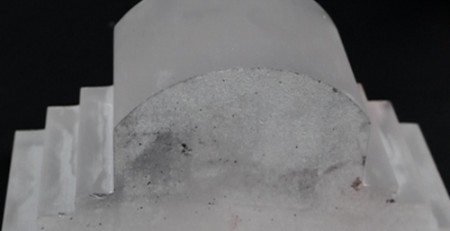
The low-force wire cut generates far less mechanical stress, preventing subsurface micro-cracks and leaving a smoother surface that needs less polishing.
Modern machines cut sapphire at 0.5-2 mm/min, and multi-wire systems can slice hundreds of wafers simultaneously.
Main beneficiaries: LED sapphire substrates, ultra-thin semiconductor wafers (down to about 100 micrómetros), and optical windows and lenses.
Bucle de alambre de diamantecutting has emerged as the superior solution, offering higher precision, mínima pérdida de kerf, and reduced subsurface damage. En este artículo, we explore how this advanced technology improves efficiency in sapphire substrate production.
Challenges in Sapphire Substrate Cutting
Before discussing diamond wire loops, it’s essential to understand the difficulties in processing sapphire:
Extreme Hardness – Sapphire is one of the hardest materials, making mechanical cutting difficult.
Brittleness – Improper cutting can cause micro-cracks, reducing substrate quality.
High Precision Requirements – LED and semiconductor industries demand ultra-thin wafers (as low as 100µm) with near-perfect surfaces.
Material Waste – Conventional methods lose up to 30% of the material, increasing costs.
Traditional methods like ID saws (sierras de diámetro interno) and laser cutting struggle with these challenges, leading to higher rejection rates and production inefficiencies.
Cómo funciona el corte con lazo de alambre de diamante
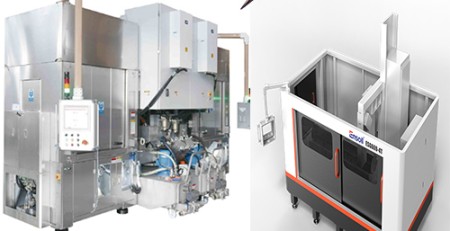
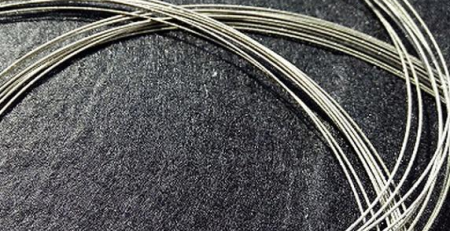
Diamond wire loop technology uses a thin, flexible wire embedded with diamond particles to slice through sapphire with minimal force. Here’s how it enhances efficiency:
1.Precision Cutting with Minimal Kerf Loss
– The wire diameter can be as thin as 0.1mm, significantly reducing material waste compared to blade saws (which have a kerf of 0.3mm or more).
– This allows more wafers per crystal ingot, lowering production costs.
✅ LED Manufacturing – Producing high-quality sapphire substrates for brighter, more efficient LEDs.
✅ Semiconductor Wafers – Enabling ultra-thin wafers for advanced electronics.
✅ Optical Components – Cutting sapphire windows and lenses with superior surface integrity.
Conclusión
Diamond wire loop cutting has revolutionized sapphire substrate processing by improving precision, reducing waste, and increasing production efficiency. As demand for high-performance LEDs and semiconductors grows, this technology will remain a critical tool for manufacturers seeking cost-effective, high-quality solutions.
Interested in optimizing yourcorte de zafiroprocess? Contact us today to learn how diamond wire loops can enhance your production line!
Preguntas Frecuentes
Why is sapphire so difficult to cut?
Sapphire rates 9 on the Mohs hardness scale and is highly brittle, so conventional blade or laser cutting easily produces micro-cracks and high rejection rates. The LED and semiconductor industries also demand ultra-thin wafers with near-perfect surfaces, which leaves almost no margin for error.
How does a diamond wire loop reduce sapphire material waste?
The wire can be as thin as 0.1 milímetro, compared with a blade kerf of 0.3 mm or more. Conventional methods lose up to 30% of the ingot, while the narrow wire kerf converts more of each crystal into usable wafers and lowers production cost.
Does diamond wire loop cutting damage the sapphire surface?
No. Because the wire cuts with very low force, it generates less mechanical stress than abrasive saws, which prevents subsurface micro-cracks. The resulting surface is smoother and requires less polishing afterward.
Which industries use diamond-wire-cut sapphire substrates?
LED manufacturing uses them for brighter, more efficient chips; the semiconductor industry uses ultra-thin sapphire wafers for advanced electronics; and optics producers cut sapphire windows and lenses with superior surface integrity.
Conclusiones clave
Una sierra de hilo de diamante de un solo brazo lleva un hilo de diamante en un brazo: flexible para pequeños lotes y trabajo de múltiples especificaciones,... leer más
El auge de obleas de silicio en la industria fotovoltaica
Puntos Clave
Los objetivos de neutralidad de carbono en todo el mundo han hecho que la energía fotovoltaica sea la fuente de más rápido crecimiento de.... leer más
Traditional solar cell production process
Key Takeaways
Traditional solar cell production starts with silicon wafer manufacturing and proceeds through texturing, difusión, etching,... leer más
Clasificación de nuevos materiales cerámicos funcionales
Nuevos funcionales cerámico los materiales son materiales dieléctricos con propiedades eléctricas, magnético, óptico, acústico, termal, mecánico,... leer más
Conclusiones clave
La cerámica de alúmina es la cerámica avanzada de precisión más común, valoradas por su aislamiento eléctrico, Alta conductividad térmica, resistencia química, resistencia al desgaste.... leer más
La tecnología de corte de bucle de alambre de diamante es una tecnología de corte avanzada que reemplaza el corte tradicional con mortero libre, que es ampliamente utilizado en... leer más
En el panorama de la fabricación moderna, la demanda de componentes de alto rendimiento ha llevado a la adopción generalizada de materiales duros y frágiles.... leer más
Puntos clave
El cuarzo de alta pureza es la materia prima para crisoles de semiconductores, Crecimiento de lingotes fotovoltaicos y componentes ópticos.
La pureza establece el techo de rendimiento de... leer más
Puntos Clave
El vidrio de cuarzo es un vidrio de sílice de un solo componente, elogiado como el Rey del Vidrio; el vidrio de cuarzo de alta pureza transmite bien a través de... leer más