Aimants Alnico: Magnétisme Haute Performance Expliqué
Lorsque les gens pensent à des aimants puissants, néodyme (terre rare) vient souvent à l'esprit en premier. But long before neodymium dominated the market, there was Alnico—a magnet alloy that remains irreplaceable in high-temperature and precision applications. From electric guitar pickups to vintage sensors and aerospace components, Alnico magnets continue to play a vital role in modern engineering.
- Alnico (aluminum-nickel-cobalt-iron) was the strongest permanent magnet before rare earths, and remains irreplaceable in high-temperature service — it operates up to 550 degC and keeps over 90% of its flux at 500 degC.
- Its special traits: high residual induction (jusqu’à 1.35 T), natural corrosion resistance, less than 1% magnetic aging per decade, and the unique ability to be re-magnetized after partial demagnetization.
- Its weakness is low coercivity (30-150 kA/m), which is why Alnico parts are designed long and slender; the alloy is also hard (45-50 HRC) and brittle to machine.
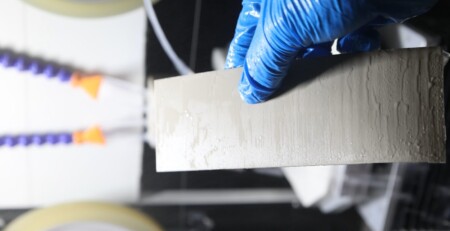
- Diamond wire loop cutting delivers zero edge chipping, a thin 0.2-0.6 mm kerf that saves expensive cobalt, pas de dommages thermiques, and an Ra 0.4-1.6 micrometer finish.
Dans ce guide complet, nous explorerons tout ce que vous devez savoir: what is an Alnico magnet, is Alnico a magnetic material, what are Alnico magnets made of, what is special about Alnico magnets, and finally—how to machine this hard, brittle alloy with minimal waste using boucle de fil de diamant Technique de coupe.
Alnico predates the rare-earth grades and is far more forgiving than comment couper les aimants en néodyme, but the same low-force principle applies.
What Is an Alnico Magnet?

An Alnico magnet is a type of permanent magnet made primarily from three key elements: Al (aluminium), Ni (nickel), and Co (cobalt). The name “Alnico” is a direct abbreviation of these three components. Developed in the 1930s, Alnico was the strongest permanent magnet available until the advent of rare-earth magnets in the 1970s.
Alnico magnets are known for their excellent temperature stability—they can operate at temperatures up to 550°C (1022°F) without significant loss of magnetic strength. They also exhibit high residual induction (Br) and good resistance to demagnetization, though their coercivity (resistance to being demagnetized) is lower than that of ceramic or neodymium magnets.
Aujourd'hui, Alnico magnets are produced in two common forms:
– Cast Alnico – Made by pouring molten alloy into sand or shell molds. Offers the highest magnetic output.
– Sintered Alnico – Made by pressing fine metal powder into a die and then heating. Provides tighter dimensional tolerances but slightly lower magnetic properties.
Is Alnico a Magnetic Material?
Oui, absolutely. Alnico is not only a magnetic material—it is one of the most important permanent magnetic materials in industrial history. To answer the question precisely: Alnico is a ferromagnetic material, meaning its atomic magnetic moments align spontaneously in the same direction, producing a strong external magnetic field.
Unlike soft magnetic materials (like iron or silicon steel), which lose their magnetism the moment an external field is removed, Alnico retains a significant portion of its magnetization. This makes it suitable for applications requiring a persistent, stable magnetic field without continuous power input.
Toutefois, Alnico has a unique characteristic: its coercivity is relatively low (typically 30–150 kA/m). This means that although it is a permanent magnet, il peut être partiellement démagnétisé s'il est soumis à de forts champs magnétiques opposés. Les concepteurs compensent souvent en utilisant des formes plus longues, minces qui minimisent le champ de démagnétisation interne.
De quoi sont faits les aimants Alnico?

La composition des aimants Alnico varie selon la qualité, mais la formulation standard comprend:
– Aluminium (Al) – 8–12%
– Nickel (Ni) – 15–26%
– Cobalt (Co) – 5–40%
– Iron (Fe) – Balance (typicalement 30–60%)
– Cuivre (Cu) – 3–4% (dans certaines qualités, pour améliorer la coercivité)
– Titane (Ti) – 0–8% (ajouté pour augmenter encore la coercivité)
Les qualités commerciales les plus courantes sont Alnico 2 (faible coercivité, high residual induction), Alnico 5 (la qualité moulée la plus utilisée, avec une excellente puissance magnétique), et Alnico 8 (haute coercivité, contenant souvent du titane).
Pour produire un aimant Alnico, les fabricants fondent ces métaux dans un four à induction, then cast or sinter them. After forming, the magnets undergo a specialized heat treatment in a magnetic field. During cooling, the magnetic field aligns the crystal structure, creating a preferred magnetization direction. This process, called “magnetic annealing,” is what gives Alnico its high residual induction.
What Is Special About Alnico Magnets?
Several properties make Alnico magnets unique and valuable despite the rise of neodymium and samarium-cobalt magnets.
1. Exceptional Temperature Stability
Alnico magnets maintain over 90% of their magnetic flux up to 500°C. À l’inverse,, neodymium magnets begin to irreversibly lose strength above 80–150°C. For applications like automotive sensors, aircraft instrumentation, and industrial tachometers exposed to high heat, Alnico remains the only viable choice.
2. High Residual Induction (Br)
Les aimants Alnico peuvent atteindre une densité de flux résiduelle allant jusqu'à 1.35 Tesla (pour l'Alnico 5). Ceci est comparable à de nombreux aimants en terres rares. Toutefois, en raison de leur coercivité plus faible, ils sont généralement utilisés dans des circuits magnétiques fermés où l'aimant n'est pas exposé à de forts champs opposés.
3. Excellente résistance à la corrosion
Contrairement aux aimants en néodyme, qui nécessitent un revêtement en nickel ou en époxy pour prévenir la rouille, L'Alnico ne contient pas d'éléments de terres rares facilement oxydables. Il résiste naturellement à la corrosion atmosphérique, éliminant le besoin de revêtements protecteurs dans la plupart des environnements.
4. Magnetisme stable dans le temps
Les aimants Alnico présentent un vieillissement magnétique extrêmement faible—moins de 1% perte par décennie. Une fois aimantés, ils restent stables pendant des décennies, ce qui les rend idéaux pour les appareils de mesure, boussoles, et aimants de référence.
5. Propriété unique rechargeable
Si un aimant Alnico est partiellement démagnétisé, il peut être entièrement restauré à sa force d'origine en le plaçant dans un dispositif de magnétisation puissant. Cela n'est pas possible avec les aimants en céramique ou en terres rares.
6. Son distinctif dans les applications audio
Les musiciens et les ingénieurs du son apprécient les aimants Alnico pour les micros de guitare électrique et les microphones à bobine mobile. La coercivité légèrement inférieure produit une compression plus douce, plus caractéristique “vintage” par rapport aux aimants en céramique. Les micros de guitare emblématiques comme le PAF (Demande de brevet en instance) humbucker utilise l'Alnico 2, 3, et 5.
Applications des aimants Alnico
En raison de ces propriétés spéciales, Aimants Alnico (En savoir plus sur les connaissances professionnelles)se trouvent dans:
– Micros de guitare électrique – Reproduction du son vintage
– Capteurs automobiles – Capteurs de vitesse et de position sous le capot (haute chaleur)
– Aerospace instruments – Magnetic compasses and tachometers
– Magnetos – Ignition systems for small aircraft and racing engines
– Microphones – Classic ribbon and dynamic designs
– Measuring instruments – Permanent magnet moving-coil (PMMC) meters
– Magnetic separators – Low-intensity applications
How to Cut Alnico Magnets with Minimal Waste (La technologie de boucle de fil de diamant)
One challenge that manufacturers face with Alnico is post-casting machining. Alnico is both hard (45–50 HRC) et fragile, especially in cast form. Traditional cutting methods—abrasive saws, waterjet, ou GED (Usinage par électroérosion)—all have drawbacks:
– Abrasive wheels – Cause chipping, rough surface finish, and wide kerf (perte de matériau)
– Waterjet – Can cause edge delamination and requires extensive cleanup
– EDM – Slow, expensive, and leaves a recast layer that may affect magnetic performance
La solution: Découpe de boucle de fil diamanté
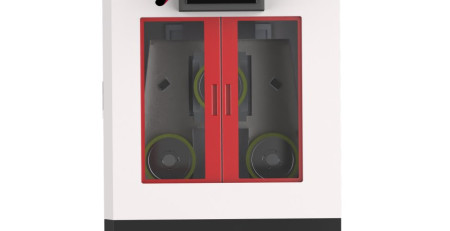
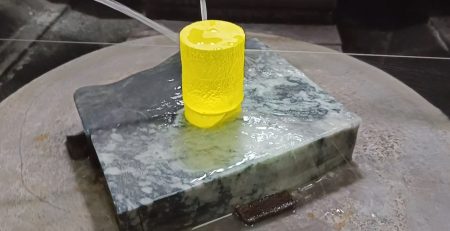
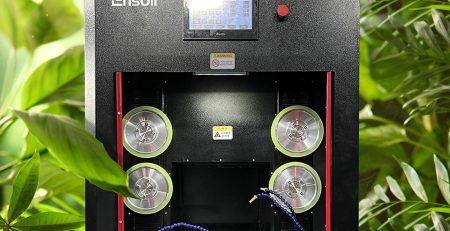
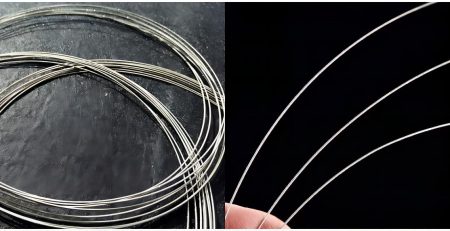
Une boucle de fil diamantée consiste en un fil en acier inoxydable continu électrodéposé avec des grains de diamant industriel. La boucle tourne dans une direction à grande vitesse (typiquement 4 mm/min), meulage à travers des matériaux durs comme l'Alnico avec précision et gaspillage minimal.
Pourquoi la boucle de fil diamanté est idéale pour les aimants Alnico:
| Avantage | Avantage pour Alnico |
| Zéro éclat de bord | Les fines particules de diamant répartissent le stress uniformément, éliminant les fissures et l'écaillage des bords courants avec les lames de scie. |
| Fente mince (0.2–0,6 mm) | Une coupe étroite signifie moins de matériau transformé en poussière — critique lorsque l'Alnico contient du cobalt coûteux (jusqu’à 40%). |
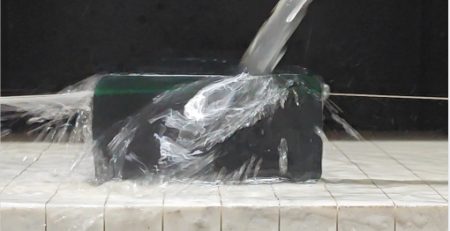
| Pas de dommages thermiques | Liquide de refroidissement (eau ou huile) lave en continu la zone de coupe, empêchant la démagnétisation thermique ou les microfissures. |
| Excellente finition de surface (Ra 0,4–1,6 µm) | De nombreuses pièces Alnico ne nécessitent aucun meulage secondaire après la coupe. |
| Capacité à couper des formes complexes | Les boucles de fil diamant contrôlées par CNC peuvent couper des cercles, des arcs, des rainures, et des contours personnalisés sans changement d'outil. |
Conclusion
Les aimants Alnico sont loin d'être obsolètes. Leur stabilité exceptionnelle à la température, high residual induction, résistance à la corrosion, et leurs propriétés magnétiques uniques les maintiennent pertinents dans des applications exigeantes allant des micros de guitare aux capteurs aérospatiaux. Pour répondre aux questions clés: Alnico est absolument un matériau magnétique, il est fabriqué à partir d'aluminium, nickel, cobalt, fer, et parfois de cuivre ou de titane, et ce qui est spécial, c'est sa capacité à fonctionner de manière fiable à des températures extrêmes et pendant des décennies d'utilisation.
Toutefois, Couper de l'Alnico reste un défi de fabrication en raison de sa dureté et de sa fragilité. La technologie des boucles de fil diamant résout ce problème en évitant tout éclat, perte minimale de matière, aucun dommage thermique, et en produisant une surface lisse. Que vous produisiez de l'Alnico de forme personnalisée 5 pickup magnets or high-coercivity Alnico 8 sensor components, un scie à boucle à fil diamanté is the optimal tool for precision and waste reduction.
Questions fréquemment posées
What are Alnico magnets made of?
Primarily aluminum (8-12%), nickel (15-26%), cobalt (5-40%) and iron (30-60%), with copper or titanium added in some grades to raise coercivity. Common commercial grades are Alnico 2, Alnico 5 et Alnico 8.
What is special about Alnico magnets?
Exceptional temperature stability (working up to 550 degC), high residual induction, natural corrosion resistance without coatings, extremely low magnetic aging, and the ability to be fully re-magnetized after partial demagnetization — a unique trait among permanent magnets.
Alnico vs neodymium magnets — which is better?
It depends on the application. Neodymium is far stronger at room temperature, but Alnico keeps its strength at temperatures where neodymium irreversibly fails (above 80-150 degC). For high-heat sensors, instruments and guitar pickups, Alnico est le meilleur choix.
Les aimants Alnico peuvent-ils être usinés ou coupés?
Oui, mais l'alliage est dur et fragile, donc les scies abrasives l'ébrèchent et l'EDM laisse une couche recuite. La coupe à fil diamanté est la méthode préférée: absence d'éclats sur les bords, une fine gorge qui économise du cobalt coûteux, aucun dommage thermique, et une finition qui nécessite souvent aucun meulage secondaire.
Contenu technique examiné par l'équipe d'ingénierie d'Ensoll — un fabricant de boucles de fil diamanté avec 10+ des années d'expérience en production.