Fil de diamant en boucle dans la fabrication avancée
Dans le paysage de la fabrication industrielle moderne, la capacité à séparer proprement les matériaux est une condition préalable fondamentale pour les étapes de traitement ultérieures. À mesure que les applications en ingénierie évoluent, les matériaux utilisés deviennent de plus en plus complexes — allant de structures cristallines ultra-dures à des composites très abrasifs et à des substrats stratifiés fragiles. Les scies abrasives traditionnelles et les méthodes de coupe thermique échouent souvent face à ces compositions avancées, introduisant souvent des défauts structurels ou un gaspillage de matière inacceptable.
Pour surmonter ces obstacles de fabrication, industries worldwide have turned to the combination of high-performance diamond wire saw cutting machines and their essential, high-speed consumable: la boucle de fil diamant. By understanding the specific interaction between this endless abrasive loop and various material classes, production facilities can optimize their separation processes for maximum structural integrity.
—
The Universal Cutting Mechanism: Micro-Abrasive Friction
The operational success of the boucle de fil de diamant across vastly different material types lies in its fundamental physics. Rather than utilizing a sharp, wedge-like edge to shear through material (as seen in traditional metal saw blades) or relying on localized thermal energy to melt a path (as seen in laser or plasma cutting), the loop operates via a continuous micro-abrasive grinding process.
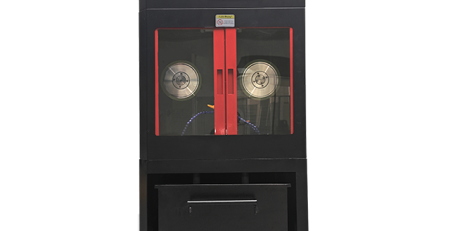
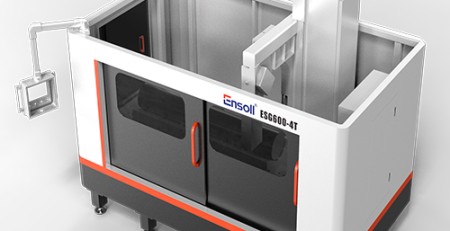
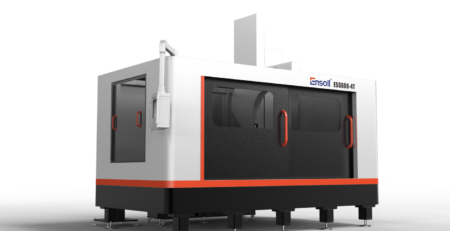
Because microscopic diamond particles are securely bonded to an endless, high-tensile steel core, the loop acts as a moving matrix of thousands of miniature grinding teeth. Driven by the motorized pulley system of a dedicated cutting machine, the loop travels continuously in a single direction at high linear velocities. When brought into contact with a workpiece, these diamond grains execute micro-fracturing and micro-plowing actions on the material’s surface, removing minuscule particles in the form of fine powder or chips. This mechanical action avoids imparting macro-forces or intense thermal stress to the workpiece, making it highly adaptable to a diverse spectrum of materials.
—
Classe 1: Les matériaux durs, Brittle Crystalline and Semiconductor Materials
Slicing hard and brittle substrates is perhaps the most critical and economically vital application for the diamond wire loop. Materials such as Silicium monocristallin, Carbure de silicium ($SiC$), nitrure de gallium ($GaN$), and sapphire form the backbone of the semiconductor, power electronics, and optics industries.
Overcoming Chipping and Cracking
The inherent challenge with these crystals is their extreme hardness combined with low fracture toughness. Under traditional sawing methods, the vibration and heavy mechanical load cause severe edge chipping, sub-surface damage, and micro-cracking, which can ruin the electrical or optical properties of the entire wafer.
The Unidirectional Advantage
The continuous, smooth rotation of the diamond wire loop eliminates the harsh shocks associated with reciprocating systems. The cutting machine guides the loop with steady line tension and a programmed feed rate, allowing the diamond grit to gently wear away the hard crystal structure. This ensures that the crystalline lattice remains entirely undisturbed beneath the cut surface, yielding flawless blanks that require minimal downstream rectification.
—
Classe 2: Céramiques et verres techniques avancés
Les céramiques techniques—y compris l'alumine, la zircone, le nitrure de silicium, et le carbure de bore—sont privilégiées dans les applications aérospatiales et industrielles pour leur résistance exceptionnelle à l'usure, stabilité thermique, et leur dureté. De la même façon, Les verres optiques, quartz, et le quartz fondu sont essentiels pour les instruments scientifiques de haute précision.
Le problème des outils conventionnels
Parce que les céramiques techniques sont spécifiquement conçues pour résister à l'usure mécanique, elles émoussent rapidement les lames de coupe conventionnelles. En outre, leur nature fragile les rend très susceptibles de se fissurer de manière catastrophique lors de l'usinage.
Rafraîchissement abrasif constant
Lorsqu'une boucle de fil diamanté coupe à travers des céramiques techniques ou verre optique, le système de refroidissement et de lavage de la machine joue un double rôle. Il élimine les copeaux céramiques très abrasifs de la zone de coupe et contrôle la friction localisée. As the loop rotates, the diamond particles consistently degrade the ceramic surface. Because the wear is distributed evenly across the entire length of the endless loop, the tool maintains a sharp, aggressive cutting profile throughout the operation, preventing tool glazing and ensuring a continuous, fluid separation.
—
Classe 3: Soft, Élastique, and Composite Materials
While it is intuitive that a diamond tool can cut hard substances, the diamond wire loop is equally effective when processing soft, gummy, or heterogeneous materials. This category includes heavy rubber, multi-layered vehicle tires, anodes en graphite, reinforced carbon fibers, and insulation materials.
Preventing Material Deformation and Binding
When cutting elastic materials like rubber or polymer composites with standard blades, the material tends to deform under the blade’s pressure, création d'une friction massive, chaleur, et liaison éventuelle (où la lame se retrouve coincée). Pour les matériaux composites comme la fibre de carbone, la coupe traditionnelle cause une délamination sévère et l'effilochage des fibres structurelles.
Dissociation propre de la matrice
La vitesse ultra-élevée de la boucle de fil diamantée garantit que les particules de diamant interagissent avec le matériau mou ou composite plus rapidement que le matériau ne peut se déformer élastiquement. Dans les composites, les diamants sectionnent proprement à la fois les fibres de carbone dures et la matrice de résine souple simultanément, obtenant une section transversale parfaitement propre sans tirer sur les fibres ni faire fondre le liant polymère. Pour le caoutchouc et les pneus, la boucle passe facilement des couches élastiques externes en caoutchouc directement à travers les courroies de renforcement en acier intégrées sans nécessiter de changement d'outillage ni introduire de déséquilibre mécanique.
—
Optimiser la synergie consommable-machine pour des matériaux spécifiques
Pour obtenir des résultats optimaux à travers ces différentes classes de matériaux, les ingénieurs de production doivent traiter le machine de découpe de scie à fil diamanté et le consommable de boucle de fil diamanté comme un écosystème interconnecté, en ajustant les paramètres en fonction du profil spécifique du matériau:
Pour les matériaux ultra-durs: La machine est programmée pour un, taux d'avance descendant très contrôlé combiné à une vitesse linéaire maximale du fil. Cela permet aux micro-diamants abrasifs de travailler efficacement sans surcharger la résistance à la traction du fil central. A continuous flow of liquid coolant is mandatory to flush away dense swarf and maintain thermal equilibrium.
For Soft or Porous Materials: Certain materials, such as graphite or specific insulation foams, can absorb liquids or become contaminated by wet cutting. For these applications, the loop is run in a completely dry environment. The cutting machine is often paired with a specialized dust extraction system to capture the fine particulates immediately as they are generated by the loop.
—
Conclusion
From the rigid, unforgiving atomic structures of semiconductor crystals to the flexible, multi-layered matrices of reinforced rubber, the diamond wire loop has proven to be an indispensable asset in modern industrial separation. By relying on a continuous, low-stress, micro-abrasive cutting mechanism rather than blunt force or heat, this advanced consumable—when paired with a precision cutting machine—allows manufacturers to conquer the challenges of material variety, ensuring clean, predictable, and structurally sound results across every application.