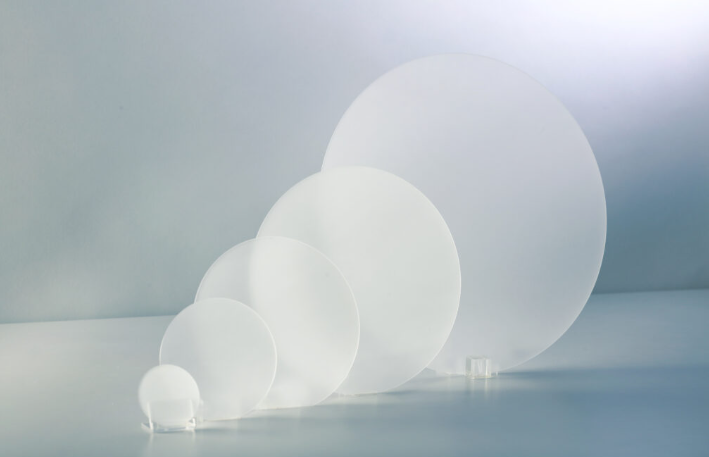
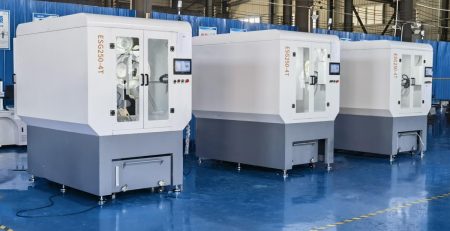
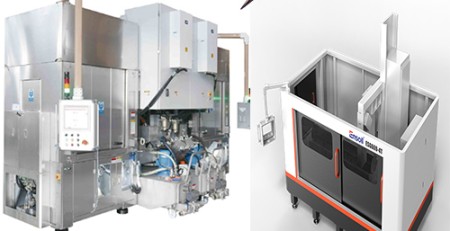
Les substrats de saphir sont des composants critiques dans la fabrication de LED, dispositifs optiques, et applications de semi-conducteurs. Toutefois, cutting sapphire—a material with a Mohs hardness of 9—poses significant challenges. Traditional methods like blade sawing or laser cutting often lead to cracks, high material loss, and uneven surfaces.
Points clés à retenir
Saphir (Mohs 9) is both extremely hard and brittle: blade sawing and laser cutting often cause cracks, uneven surfaces, and up to 30% perte de matériau.
A diamond wire loop can be as thin as 0.1 mm versus a 0.3 mm or wider blade kerf, so more wafers are recovered from every crystal ingot.
The low-force wire cut generates far less mechanical stress, preventing subsurface micro-cracks and leaving a smoother surface that needs less polishing.
Modern machines cut sapphire at 0.5-2 mm/min, and multi-wire systems can slice hundreds of wafers simultaneously.
Main beneficiaries: LED sapphire substrates, ultra-thin semiconductor wafers (down to about 100 micromètres), and optical windows and lenses.
Boucle de fil diamantécutting has emerged as the superior solution, offering higher precision, perte minimale de matière, and reduced subsurface damage. Dans cet article, we explore how this advanced technology improves efficiency in sapphire substrate production.
Challenges in Sapphire Substrate Cutting
Before discussing diamond wire loops, it’s essential to understand the difficulties in processing sapphire:
Extreme Hardness – Sapphire is one of the hardest materials, making mechanical cutting difficult.
Brittleness – Improper cutting can cause micro-cracks, reducing substrate quality.
High Precision Requirements – LED and semiconductor industries demand ultra-thin wafers (as low as 100µm) with near-perfect surfaces.
Material Waste – Conventional methods lose up to 30% of the material, increasing costs.
Traditional methods like ID saws (Scies de diamètre intérieur) and laser cutting struggle with these challenges, leading to higher rejection rates and production inefficiencies.
How Diamond Wire Loop Cutting Works
Diamond wire loop technology uses a thin, flexible wire embedded with diamond particles to slice through sapphire with minimal force. Here’s how it enhances efficiency:
1.Precision Cutting with Minimal Kerf Loss
– The wire diameter can be as thin as 0.1mm, significantly reducing material waste compared to blade saws (which have a kerf of 0.3mm or more).
– This allows more wafers per crystal ingot, lowering production costs.
2. Reduced Subsurface Damage
– Unlike abrasive saws, diamond wire cutting generates less mechanical stress, prévenant les micro-fissures.
– The result is a smoother surface finish, réduisant le besoin de polissage intensif.
3.Faster Cutting Speeds
– Avancé boucle de fil de diamantmachines can achieve cutting speeds of 0.5–2 mm/min, much faster than traditional methods.
– Multi-wire systems can cut hundreds of wafers simultaneously, boosting productivity.
4.Lower Operating Costs
– Diamond wire loops have a longer lifespan than abrasive blades, reducing replacement frequency.
– Less coolant is required compared to traditional sawing, lowering environmental and operational costs.
Applications in the LED and Semiconductor Industry
✅ LED Manufacturing – Producing high-quality sapphire substrates for brighter, more efficient LEDs.
✅ Semiconductor Wafers – Enabling ultra-thin wafers for advanced electronics.
✅ Optical Components – Cutting sapphire windows and lenses with superior surface integrity.
Conclusion
Diamond wire loop cutting has revolutionized sapphire substrate processing by improving precision, reducing waste, and increasing production efficiency. As demand for high-performance LEDs and semiconductors grows, this technology will remain a critical tool for manufacturers seeking cost-effective, high-quality solutions.
Interested in optimizing yourla découpe du saphir à grande vitesse? Contact us today to learn how diamond wire loops can enhance your production line!
Questions fréquemment posées
Why is sapphire so difficult to cut?
Sapphire rates 9 on the Mohs hardness scale and is highly brittle, so conventional blade or laser cutting easily produces micro-cracks and high rejection rates. The LED and semiconductor industries also demand ultra-thin wafers with near-perfect surfaces, which leaves almost no margin for error.
How does a diamond wire loop reduce sapphire material waste?
The wire can be as thin as 0.1 mm, compared with a blade kerf of 0.3 mm or more. Conventional methods lose up to 30% of the ingot, while the narrow wire kerf converts more of each crystal into usable wafers and lowers production cost.
Does diamond wire loop cutting damage the sapphire surface?
Non. Because the wire cuts with very low force, it generates less mechanical stress than abrasive saws, which prevents subsurface micro-cracks. The resulting surface is smoother and requires less polishing afterward.
Which industries use diamond-wire-cut sapphire substrates?
LED manufacturing uses them for brighter, more efficient chips; the semiconductor industry uses ultra-thin sapphire wafers for advanced electronics; and optics producers cut sapphire windows and lenses with superior surface integrity.
1) Une vitesse de ligne élevée et une capacité de production élevée soutiennent la réduction de l'investissement pour un GW unique
Selon la théorie de la fracture... Lire la suite
Outils Ensoll troisième génération Coupe-tiges en silicone Modifié et livré avec succès! La troisième génération de machines résout complètement le.... Lire la suite
Introduction
Dans la fabrication moderne, L’importance de la technologie d’usinage de précision devient de plus en plus importante, en particulier dans le domaine des matériaux magnétiques.. Lire la suite
Silicon carbide wafer application and future development trend
Key Takeaways
Silicon carbide is the main development direction of the power semiconductor industry.
SiC.... Lire la suite
Key Takeaways
A single-arm diamond wire saw carries one diamond wire on one arm: flexible for small batches and multi-specification work,... Lire la suite
Tendance de développement de l’industrie du creuset de quartz: Entraînement bidirectionnel semi-conducteur et photovoltaïque
1、 Overview of Quartz Crucible
Quartz crucible is a container made... Lire la suite
Advantages and Applications of Silicon Nitride Ceramic Materials
Boron nitride ceramic materials have good physical properties and chemical stability. Sa température élevée... Lire la suite
The boom ofsilicon wafersin the photovoltaic industry
Key Takeaways
Carbon-neutrality goals worldwide have made photovoltaics the fastest-growing source of... Lire la suite
Points clés à retenir
Les tailles de plaquettes de silicium photovoltaïques ont évolué à partir des formats de plaquettes de semi-conducteurs, avec le photovoltaïque ayant historiquement pris du retard sur les semi-conducteurs en matière de normes de dimensions.
Les dimensions du wafer restent... Lire la suite