Vantaggi del taglio con filo diamantato rispetto alla sospensione
La tecnologia di taglio Diamond-Wire-loop è una tecnologia di taglio avanzata per sostituire il tradizionale taglio di malta libera, che è ampiamente utilizzato nel campo del taglio di wafer di silicio nelle industrie fotovoltaiche e dei semiconduttori.
Ultima revisione: Settembre 2026

Il suo processo di sviluppo è il seguente:
Phase One: The Era of Free Abrasive Slurry Cutting Monopoly
Prior to the maturation of diamond wire technology, the cutting of solar cells and semiconductor silicon wafers predominantly relied on Free Abrasive Slurry Cutting (FASC). This method involved high-speed steel wires carrying a slurry—a mixture of abrasives like silicon carbide or zirconium corundum with polyethylene glycol—to slice silicon ingots through a “three-body abrasion” mechanism.
Tuttavia, this technique presented significant drawbacks:
- Low Efficiency and High Material Loss: The cutting speed was slow, and the resulting kerf was wide (typically exceeding 200 microns), leading to the waste of over 40% of the expensive silicon material during the process.
- Severe Pollution and High Costs: It generated large volumes of waste slurry that were difficult to handle, incurring high subsequent cleaning and disposal costs.
- Deep Surface Damage: The uncontrolled cutting process often caused deep damage layers on and beneath the wafer surface, adversely affecting further processing and the performance of the final solar cells.
Phase Two: Pioneering Application of Diamond Wire by Japanese Enterprises
Japanese companies, notably Asahi Diamond Industrial Co., Ltd. and Nakamura Choukou Co., Ltd., achieved a technological breakthrough. They employed an electroplating process to firmly “plant” micron-sized diamond particles onto high-strength steel wire substrates, creating a diamond wire with “fixed abrasives.”
The fundamental cutting mechanism shifted from “three-body abrasion” A “two-body abrasion”: the diamond particles, acting as fixed cutting edges, directly engaged with the material without rolling. This innovation increased cutting efficiency severalfold compared to the free abrasive method. In the early 2000s, this technology was primarily used for precision cutting of high-value, duro, and brittle materials like sapphire and optical glass. The wires were relatively thick and represented a specialized, high-end tool.
Phase Three: The Breakthrough of Thinner Wires and the Dawn of Photovoltaic Application
As the photovoltaic (PV) industry’s demand for cost reduction grew more urgent, the sector recognized that “wire diameter directly determines silicon material loss.” To achieve narrower kerfs and increase yield (more wafers per kilogram of silicon ingot), “thinner wire” development became the core focus of technological advancement.
Japanese companies continued to lead this progression, gradually reducing the diamond wire diameter from initial hundreds of microns to 17.5mm and even 14.5mm levels. Each reduction in diameter demanded more precise electroplating techniques and stronger wire substrates. This phase marked the expansion of diamond wire technology from niche applications like sapphire cutting into the realm of large-scale PV silicon wafer slicing, demonstrating immense potential for cost reduction.
Phase Four: The Rise of Chinese Enterprises and Global Industrial Adoption
Although the technology originated in Japan, the widespread global adoption and significant cost reduction of diamond wire cutting in the PV industry were primarily driven by Chinese enterprises. Companies such as Diamond Wire Technology Co., Ltd. and DaLee New Materials Co., Ltd. achieved key technological breakthroughs and scaled up production in the mid-to-late 2010s.
The contributions of Chinese manufacturers are mainly reflected in:
- Scale and Cost: Through massive capacity expansion and technological optimization, they brought down the high cost of diamond wire to a level widely acceptable for the PV industry.
- Technological Advancement: They persistently drove the “thinner wire” competition, pushing the mainstream diameter to 80μm, 60μm, and currently to the mass-produced 35μm level, drastically reducing silicon material costs.
- Process Integration: Through close collaboration with major Chinese wafer manufacturers (ad es., LONGi, TCL Zhonghuan), they jointly perfected the complete set of cutting processes, establishing it as the industry standard.
The market landscape was consequently transformed. Presso 2017, diamond wire cutting had completely replaced slurry cutting, becoming the mainstream process for crystalline silicon wafering, with a penetration rate exceeding 95%. Oggi, China holds the vast majority of the global diamond wire production capacity. Inoltre, it is propelling the application of this technology into broader semiconductor and precision machining fields, including silicon carbide, zaffiro, and magnetic materials.
I vantaggi di Anello di filo diamantato il taglio pricipalmente include——Velocità di taglio, Alta efficienza, high productivity.
Maggiore precisione e minore livello di danneggiamento, perdita di materiale e ustione durante il taglio di lamiere sottili, che favorisce il taglio di wafer di silicio più sottili o altre materie prime di alto valore.
Controllo di qualità, basso costo per pezzo.
L'uso di fluido di macinazione a base d'acqua favorisce il miglioramento dell'ambiente di lavoro e semplifica le procedure di post-lavorazione come la pulizia, che è semplice e rispettoso dell'ambiente.
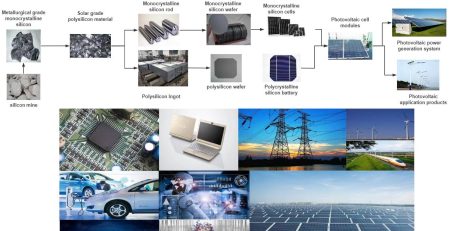
Pertanto, Il taglio ad anello diamantato è diventato il processo di taglio tradizionale per l'affettatura del silicio cristallino nell'industria fotovoltaica. Poiché 2015, Ensolltools Technology Co., Ltd. ha iniziato a coltivare profondamente il campo del taglio con sega a filo diamantato, La competitività dei prodotti continua a migliorare, e la quota di mercato aumenta di anno in anno.

In termini di anello di diamante, L'azienda continua a essere leader del settore nel settore delle ammende, ha sfondato le barriere tecniche dell'anello diamantato da 0,3 mm, e sviluppare attivamente le riserve e la produzione di prova di anelli diamantati di diametro più fine, Colla Attrezzatura per il taglio di anelli diamantati sviluppato da noi, Il diametro del filo più sottile aiuta a ridurre la perdita di taglio delle materie prime, materiali particolarmente rari e pregiati, migliorando al contempo la precisione e l'efficienza di taglio. Ridurre il consumo di energia di taglio.