다이아몬드 와이어 톱을 이용한 단결정 실리콘 웨이퍼 절단
단결정 실리콘은 현대 반도체 및 광전지 산업의 기초입니다.. 실리콘 잉곳을 기능성 웨이퍼로 변환하기 위해, 정밀 절단은 필수. 다양한 절단 기술 중, 다이아몬드 와이어 톱 cutting has become the industry standard due to its efficiency, 정밀, 재료 손실을 최소화하고.
이 종합 가이드에서, we will explore the monocrystalline silicon cutting process, 다이아몬드 와이어 톱 절단기에 초점 맞추기, 그들의 작동 원리, 장점, 및 산업 응용 분야.
- Silicon wafer cutting turns a monocrystalline ingot into wafers; the three metrics that matter are TTV, 표면 거칠기, and sub-surface damage.
- Fixed-diamond wire sawing has largely replaced slurry sawing: 더 좁은 절단선, cleaner process, more wafers per ingot.
- Wire diameter and tension stability drive both yield and how much downstream polishing is needed.
1. Understanding Monocrystalline Silicon
Before diving into the cutting process, let’s briefly discuss monocrystalline silicon and why it requires specialized cutting techniques.
1.1 What is Monocrystalline Silicon? (You can also click the link to learn more details via Wikipedia.)
 Monocrystalline silicon is a highly pure form of silicon with a single, continuous crystal lattice structure. It is produced using the Czochralski (CZ) method or the Float Zone (FZ) 메서드, resulting in cylindrical ingots.
1.2 Why Precision Cutting is Critical
– 반도체 산업: Silicon wafers must have ultra-smooth surfaces(nanometer-level roughness) for microchip fabrication.
-Photovoltaic Industry: Solar cells require thin, 균일한 웨이퍼들(typically 160-180µm) to maximize efficiency.
– 최소한의 절단 손실: Reducing material waste during cutting improves cost efficiency.
Traditional cutting methods like ID saws (inner diameter saws) and multi-wire slurry saws have been replaced by diamond wire saw cutting due to superior performance.
2. Diamond Wire Saw Cutting Technology
2.1 What is a 다이아몬드 와이어 톱 절단기?
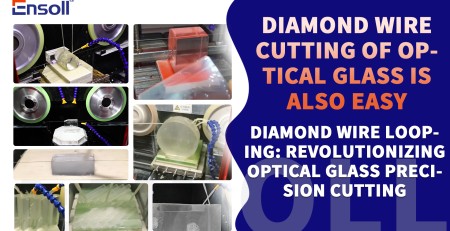
비디오 쇼케이스:
A 다이아몬드 와이어 톱 절단기 uses a high-tensile steel wire embedded with diamond abrasive particles to slice through hard materials like silicon. The wire moves at high speeds (10-15 mm / 분) while the workpiece is fed into it, enabling precision cutting with minimal kerf loss.
2.2Key Components of a Diamond Wire Saw Machine
- 다이아몬드 와이어: A steel wire coated with synthetic diamond grit(30-100 µm in size) using electroplating or resin bonding.
- Wire Guidance System: Ensures consistent tension (20-60 N) and alignment.
- 냉각수 시스템: Prevents overheating and removes silicon debris (typically using PEG-based or water-soluble coolants).
- Motion Control System: Controls wire speed, feed rate, and cutting angle.
2.3 다이아몬드 와이어 톱 절단 작동 방식
- Wire Movement: The diamond wire runs in a continuous loop, driven by motorized pulleys.
- 절단 메커니즘: The diamond abrasive particles grind through silicon via micro-cutting and brittle fracture.
- 냉각수 적용: A steady flow of coolant lubricates the cut, reduces thermal stress, and flushes away silicon slurry.
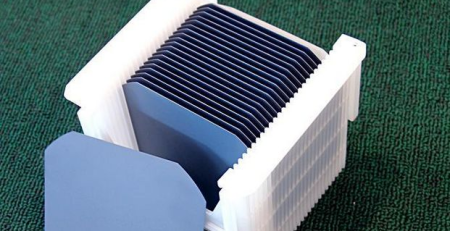
- Wafer Separation: The silicon ingot is sliced into wafers of precise thickness (예), 180µm for solar wafers).
Material Cutting Showcase:
3.Advantages of Diamond Wire Saw Cutting
Compared to older methods like multi-wire slurry saws (MWSS), diamond wire saw offers:
3.1 Higher Cutting Speed & 능률
– Cutting speeds up to 1.5x faster than slurry-based methods.
– Multi-wire configurations allow simultaneous cutting of hundreds of wafers.
3.2 Reduced Kerf Loss & 재료 낭비
– Kerf width as low as 120-150µm (대. 180-220µm in slurry saws).
– Higher yield per ingot, crucial for cost-sensitive solar manufacturing.
3.3 Improved Surface Quality
– Lower subsurface damage (SSD) due to controlled abrasive action.
– Reduced wire marks and waviness, minimizing post-cutting polishing.
3.4 Environmental & Cost Benefits
– No slurry disposal issues (unlike MWSS, which uses abrasive slurry).
– 더 긴 전선 수명 (up to 1,000 cuts per wire).
4. 과제 & Solutions in Diamond Wire Saw Cutting
Despite its advantages, 다이아몬드 와이어 톱 faces some challenges:

4.1 Wire Breakage & Wear
– Cause: Excessive tension, abrasive wear, or coolant failure.
– 해결책: Real-time tension monitoring**, optimized diamond grit size, and proper coolant filtration.
4.2 Surface Micro-Cracks
– Cause: Brittle fracture during cutting.
– 해결책: Controlled feed rate, post-cut etching, or annealing.
4.3 Wire Bow Effect
– Cause: Uneven wire tension leading to wavy cuts.
– 해결책: Advanced wire guidance systems with dynamic tension control.
5.Applications of Diamond Wire Saw Cutting
5.1 태양광 (태양광 발전) Industry
– Solar wafer production (Mono PERC, TOPCon, HJT cells).
– Thin-wafer cutting (below 150µm for next-gen high-efficiency cells).
5.2 반도체 산업
– Silicon wafer dicing for IC manufacturing.
– Advanced packaging** (예), wafer-level packaging).
5.3 Other Applications
– LED sapphire substrate cutting.
– Hard material machining (원문대로, 석영, 도예).
6.Future Trends in Silicon Wafer Cutting
- Thinner Wafers: Demand for sub-100µm wafers drives ultra-precision diamond wire saw advancements.
- AI & 자동화: Machine learning-based process optimization for higher yield.
- Hybrid Cutting Methods: Combining laser pre-scoring + diamond wire saw for ultra-thin wafers.
결론
Diamond wire saw cutting has revolutionized monocrystalline silicon wafer manufacturing, offering superior precision, 능률, and cost savings over traditional methods. As the semiconductor and solar industries push for thinner, larger wafers, 엔들리스
diamond wire saw technology will continue to evolve, enabling next-generation electronics and renewable energy solutions.
제조업체들에게, investing in advanced diamond wire saw machines is critical to staying competitive in the high-tech materials market.
By understanding the science and engineering behind diamond wire saw cutting, industry professionals can optimize their processes for higher efficiency and lower production costs.
자주 묻는 질문
How are silicon wafers cut from an ingot?
The ingot is mounted and sliced with a diamond-impregnated wire. Modern lines use fixed-diamond wire with water-based coolant instead of loose abrasive slurry.
What is TTV in wafer cutting?
Total thickness variation across a single wafer. It decides how much lapping and polishing is needed afterwards, so it drives both yield and cost.
Why did diamond wire replace slurry sawing?
Narrower kerf (more wafers per ingot), 재료 손실 감소, a cleaner water-based process, and more consistent surface quality.
What controls breakage when cutting thinner wafers?
Finer wire, tightly controlled tension, and a stable feed rate. Below standard thickness any tension fluctuation shows up directly as breakage.
엔솔 엔지니어링 팀이 검토한 기술 내용 — 다이아몬드 와이어 루프 제조업체 10+ 다년간의 생산 경험을 가진 회사.