Diamond Wire Saw: Precision Metal Cutting
In the world of precision cutting, diamond wire saw technology stands out as a revolutionary method that has transformed how industries approach material processing. A diamond wire saw is a cutting tool consisting of a continuous wire embedded with diamond beads along its length. These diamond particles act as cutting teeth, enabling the wire to slice through exceptionally tough materials with remarkable precision.
- A diamond wire saw cuts with a continuous wire embedded with diamond beads or coating, combining abrasion and precision for metal cutting.
- Wire types include fully-coated and segmented diamond wire loops, each suited to different materials and cut quality requirements.
- Diamond wire saw cutting offers narrow kerf, low cutting force and high precision on metals that are hard or difficult to machine.
- Proper selection of wire type, speed and feed is essential to balance cutting speed, surface quality and wire life in metal applications.
The manufacturing process involves selecting high-strength steel wire as the base material, which provides excellent flexibility and durability to withstand the cutting process. Diamond particles—either natural or synthetic—are then carefully and uniformly embedded into the steel wire through various methods such as electroplating, sintering, or brazing. The result is a flexible yet incredibly strong cutting tool that outperforms traditional cutting methods in numerous applications.
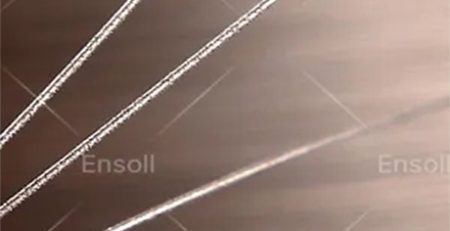
Diamond wire loops, also known as endless diamond wire saw, are a specific configuration where the diamond-embedded wire forms a continuous loop. This design enables one-way cutting at higher speeds compared to two-way cutting systems that use spool wires. Depending on the machine type, wire loops typically measure 1 to 9meters in length.

Types of Diamond Wire Loops
Diamond wire loops come in several configurations, each designed for specific applications:
Fully-Coated Diamond Wire Loops
These feature diamond beads that completely cover the entire circumference of the wire loop. This comprehensive coating ensures consistent cutting performance and extends the overall lifespan of the tool. The uniform distribution of diamond beads across the wire enables precise and efficient cutting through various materials.
Segmented Diamond Wire Loops
These designs feature diamond beads placed at regular intervals along the wire loop. This configuration allows for faster cutting speeds and efficient debris removal during the cutting process. The segmented arrangement ensures a smooth and continuous cutting operation, making it ideal for applications requiring both high cutting speed and precision.
How Diamond Wire Saw Cutting Works
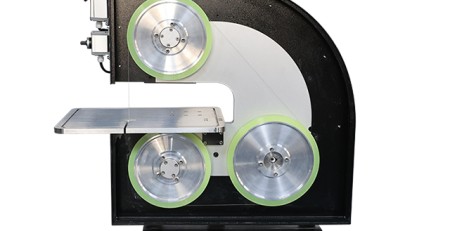
The cutting process of a diamond wire saw is both sophisticated and efficient. The diamond wire surrounds the material to be cut and is connected to numerous pulleys that allow the operator to cut to any depth or form into the structure. A motor or hydraulic motor drives the wire saw machine, creating tension and causing the wire to move at high speeds around the object being cut.
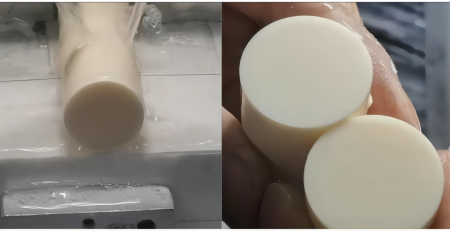
As the wire moves, the diamond beads grind against the material under pressure, gradually working through it. The continuous movement of the diamond wire loop, combined with the precision of the embedded diamond beads, results in a smooth and clean cut. During this process, powder forms and heat generates, necessitating water cooling to control temperature and prevent overheating.
Advantages of Diamond Wire Saw Cutting
Diamond wire saw technology offers numerous benefits over traditional cutting methods:
- Minimal Material Deformation: Diamond wire loops provide rigid cutting that minimizes material deformation. Their stiffness allows for precise and controlled cutting, resulting in smaller kerfs (the width of the cut) compared to conventional sawing.
- Reduced Material Waste: The smaller kerf size—ranging from 0.5mm to 0.25mm compared to 1mm or larger with traditional sawing—means less material waste and higher cutting precision. This makes diamond wire loop cutting both efficient and cost-effective.
- Versatile Cutting Capabilities: Diamond wire loop cutting enables full 360-degree cutting, offering greater flexibility in cutting operations. Unlike traditional sawing limited to unidirectional cuts, diamond wire loops excel at cutting complex shapes, curves, angles, and irregular forms.
- Extended Tool Life: Diamond wire loops have a significantly longer cutting life compared to conventional saw blades. The diamond beads embedded in the wire loop are extremely durable and wear-resistant, leading to cost savings and reduced downtime for replacements.
- Superior Surface Finish: The continuous motion of the diamond wire loop, combined with the precision of the embedded diamond beads, produces exceptionally smooth and clean cuts. This superior surface finish often eliminates the need for additional machining or finishing steps.
- Environmental Benefits: Diamond wire sawing generates less dust, noise, and vibration compared to other cutting technologies. This creates a safer, healthier work environment for operators and reduces impact on the surrounding environment.
Diamond Wire Saw Applications in Metal Cutting
While diamond wire saws were initially used for cutting stone in quarries, they have since become invaluable tools across various industries, particularly in metal cutting applications. The technology’s ability to cut through virtually any material faster and more effectively than traditional methods has made it indispensable in modern manufacturing and construction.
Industrial Metal Cutting
Diamond wire saws are particularly effective for cutting various metals and reinforced materials. Their ability to handle thick sections of heavily reinforced concrete with steel embeds makes them ideal for demolition and construction projects where conventional methods would struggle. The technology is also capable of cutting through steel and other hard metals with precision.
Selecting the right cable saw for metal comes down to three variables: section thickness, alloy hardness, and the surface finish you need.


 Complex and Delicate Applications
The flexibility of diamond wire loops makes them perfect for complex cutting applications in narrow areas. They can navigate tight spaces and create intricate shapes that would be impossible with rigid cutting tools. This capability is especially valuable in the aerospace and automotive industries where precision is paramount.
Nuclear and Specialized Industries
In nuclear facility areas where sharp and meticulous results are required, diamond wire sawing provides the necessary precision and control. The technology’s minimal vibration and reduced risk of causing structural microfractures make it particularly suitable for these sensitive environments.
Selecting the Right Diamond Wire Loop for Metal Cutting
Choosing the appropriate diamond wire loop is essential for achieving optimal results in metal cutting applications. Several factors must be considered:
Diameter Selection
For metal cutting, thinner diamond wire loops are generally preferred due to their lower cutting resistance and higher efficiency. The specific diameter choice depends on the particular metal you need to cut, with thinner diameters typically providing greater precision for harder metals.
Bead Density
Higher bead density—more beads per meter—increases contact between the cutting diamonds and the metal, resulting in faster cutting speeds and longer product life. Minimizing the distance between beads also produces a more even cut.
Material Considerations
Different metals require different approaches. The selection should be based on the specific metal’s hardness, density, brittleness, chemical stability, and other properties. Many manufacturers offer customized solutions tailored to these specific material characteristics.
The Future of Diamond Wire Saw Technology
Diamond wire loop technology continues to evolve, with ongoing innovations in diamond manufacturing, wire design, and cutting machine capabilities. This continuous improvement has positioned diamond wire loops as a growing trend in the cutting industry.
As companies across various sectors seek to maintain competitiveness and achieve better cutting outcomes, the adoption of diamond wire loop technology is expected to increase. Its superior cutting performance, versatility across materials including various metals, and reduced environmental impact make it an increasingly attractive option compared to traditional cutting methods
Conclusion
As technology continues to advance, we can expect further refinements in diamond wire saw capabilities, making them even more efficient and applicable to an expanding range of metal cutting scenarios. For any industry requiring precise, efficient, and environmentally conscious metal cutting solutions, diamond wire saw technology offers a compelling option worthy of serious consideration.
Frequently Asked Questions
What is a diamond wire saw used for in metal cutting?
A diamond wire saw uses a wire coated or beaded with industrial diamonds to grind through metal. It is used for precision slicing of hard metals, alloys and delicate components where conventional saws cause excessive burr, heat or deformation.
What is the difference between fully-coated and segmented diamond wire loops?
Fully-coated wire has a continuous diamond coating along its length, giving smooth finishes and long life on hard-brittle materials. Segmented wire carries spaced diamond beads, offering more aggressive cutting and better swarf clearance for certain metals and composites.
Is diamond wire saw cutting precise enough for metal parts?
Yes. Diamond wire saw cutting routinely achieves tight tolerances with narrow kerf and smooth surfaces, and its low cutting force prevents distortion of thin or delicate metal parts.
How do I choose a diamond wire for cutting metal?
Match wire diameter and diamond grit to the material hardness and required finish, then tune wire speed, feed rate and cooling through trial cuts. Harder metals generally need finer grit and slower feed to protect the wire.
Reviewed by the Ensoll engineering team.