Notícias da indústria

Industry news and market insights on diamond wire cutting, precision machining and advanced materials.
Optical Glass Cutting: Diamond Wire Saw vs Laser

Optical glass machining requires sub-micron precision to meet the demands of industries like aerospace, photonics, and consumer electronics. With endless diamond wire saws and laser cutting emerging as dominant technologies, manufacturers face a critical choice. This guide analyzes both methods across 7 key parameters to help you make data-driven decisions. Key Takeaways Diamond wire saw cutting removes material by diamond grit abrasion (fio 0.1-0.3 milímetro, 5-30 M) and holds +/-0.02-0.03 mm tolerance; laser cutting vaporizes material and typically holds +/-0.05 milímetro. Cut quality...
Equipamento para Corte de Materiais Magnéticos: Guia

Introdução ao Corte de Materiais Magnéticos: Materiais magnéticos como neodímio (NdFeB), samário cobalto (SmCo), ferrita, and alnico require specialized cutting equipment to maintain their structural integrity and magnetic properties during processing. Unlike conventional metals, these materials present unique challenges that demand precision cutting solutions. Key Takeaways Cutting magnetic materials demands equipment that handles four challenges at once: fragilidade, heat sensitivity, ±0.02 mm tolerances and minimal material waste. Compared with laser (heat-affected zone, <5 espessura em mm), jato de água (abrasive contamination, taper) and abrasive saws (1-2 mm kerf,...

Melhor Fabricante de Corte de Material Magnético

Principais Conclusões Os melhores fabricantes de corte de material magnético combinam a tecnologia de serra de fio de diamante, tight tolerances and zero thermal damage — the three things laser, waterjet and abrasive cutting cannot deliver together. Key quality markers to look for: ±0.02 mm tolerances, kerf width down to 0.2 milímetro, burr-free edges that skip post-processing, and no demagnetization risk. A capable manufacturer should handle all magnet families — NdFeB, ferrita, SmCo and AlNiCo — plus custom geometries for sensors, motors and medical devices, from prototype to mass...

Porque os Materiais Duros e Frágeis lascam durante a Corte

Introdução Materiais duros e quebradiços são essenciais em indústrias como a eletrônica, óptica, aeroespacial, e dispositivos médicos. Contudo, cutting them often results in chipping, rachaduras, and poor edge quality. This comprehensive guide explores what hard and brittle materials are, their key properties, advanced cutting techniques, and how to achieve clean, precise cuts - especially for complex shapes. If you're looking for expert insights on minimizing material damage, check out this Facebook discussion where professionals share their experiences: Agora, let's explore the details. <img class="aligncenter...

Corte de Carboneto de Tungsténio com Serra de Fio de Diamante

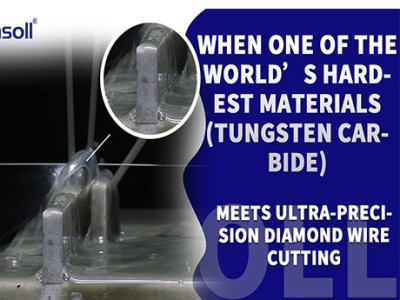
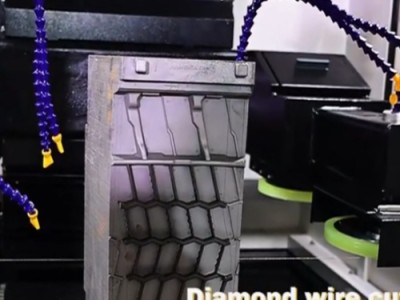
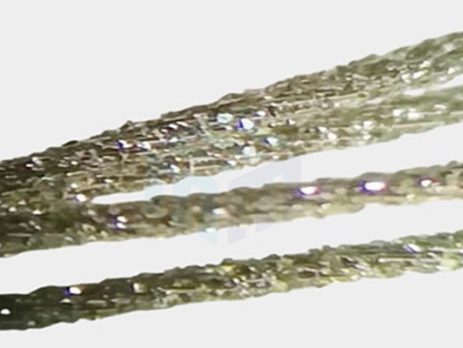
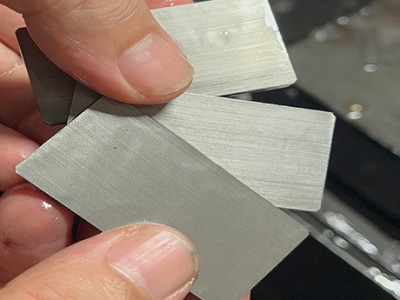
No mundo do corte de precisão, carboneto de tungstênio (BANHEIRO) stands as one of the most challenging materials to process due to its extreme hardness and wear resistance. Traditional cutting methods often struggle with efficiency, precisão, and tool wear. Contudo, diamond wire saw cutting machines have emerged as a game-changing solution, offering unmatched accuracy and cost-effectiveness in slicing tungsten carbide. This blog explores: ✔ Why tungsten carbide is difficult to cut ✔ How diamond wire saw technology overcomes these challenges ✔ Key advantages over...

Fio de Diamante para Corte de Pastilhas Semicondutoras

Principais Conclusões O corte de pastilhas semicondutoras é uma etapa crítica na fabricação de CI, onde a precisão e a integridade da superfície determinam o rendimento do dispositivo. A diamond cutting wire loop is a closed loop of diamond-coated wire that slices ingots with ultra-precise, minimal kerf loss. Its key advantages are lower thermal and mechanical stress than laser or blade cutting, which matters most as wafers get thinner. Semiconductor wafer slicing is a critical process in the manufacturing of integrated circuits (Ics) e outros dispositivos microeletrônicos. Precisão e eficiência são primordiais, as...

Corte de SiC/GaN: Como a Serra de Fio de Diamante Resolve Isso

Principais Conclusões SiC e GaN são semicondutores de terceira geração que estão a transformar a eletrónica de potência, 5G e VE — mas são extremamente difíceis de cortar. A sua dureza ultra-alta, fragilidade e sensibilidade ao stress térmico derrotam a maioria dos métodos de corte convencionais. A serra de fio de diamante resolve o corte de SiC/GaN com o abrasivo mais duro num processo frio, de baixa força, com sulco estreito. Introduction The rise of third-generation semiconductor materials (SiC e GaN) transformou a eletrônica de potência, 5G, e indústrias de veículos elétricos. Contudo, Sua extrema dureza e fragilidade tornam o corte de precisão um grande obstáculo de fabricação. This article explores the cutting challenges of SiC/GaN...

Corte de Precisão de Alumina com Fio de Diamante

Principais Conclusões A alumina é dura, resistente ao desgaste e quebradiça; chipping at the entry and exit of the cut is the main defect to control. Diamond wire cutting uses distributed grinding instead of concentrated shearing, which keeps edges intact. Verde (unsintered) bodies and fully sintered alumina need different wire grit and feed settings. Introdução Alumina (Al₂O₃), ou óxido de alumínio, é uma das cerâmicas avançadas mais utilizadas devido à sua dureza excepcional, estabilidade térmica, e propriedades de isolamento elétrico. Contudo, its extreme mechanical strength and brittleness make...