Corte de Contorno de Materiais Magnéticos com Serra de Fio Contínuo
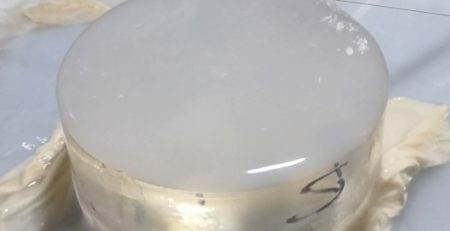
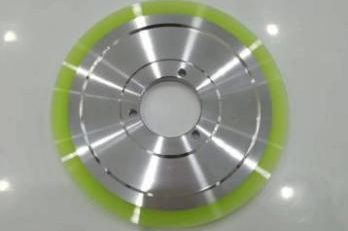
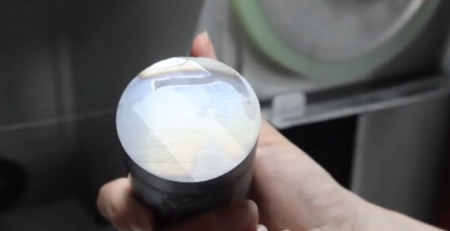
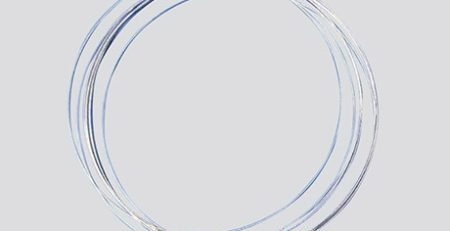
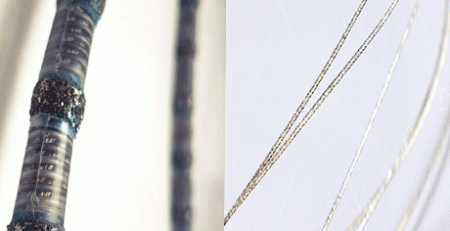
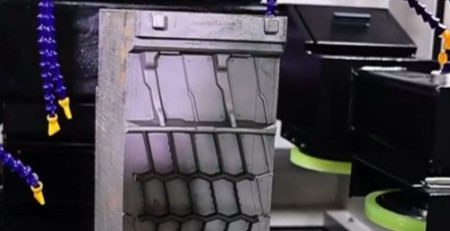
A Ensoll testou uma amostra de material magnético de um cliente europeu com uma serra de fio de diamante contínuo personalizada. O objetivo era cortar um contorno irregular mantendo o lascamento da aresta, rugosidade superficial, e desvios do contorno sob controlo. O processo utilizou uma serra de fio de diamante sem fim em conjunto com um anel de fio de diamante totalmente revestido.
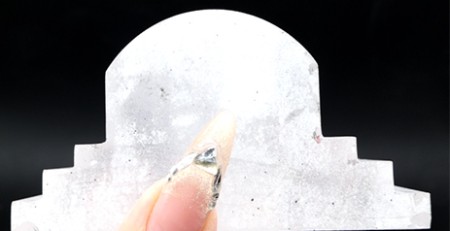
- Um processo de laço de fio de diamante cortou um contorno irregular em um 80 x 50 x 50 amostra de material magnético de mm, mantendo as variações da característica de fixação dentro de -0.110 / +0.073 milímetro.
- O equipamento correspondente era um 0.5 mm de laço de fio de diamante totalmente revestido em 29 M, 120 tensão N, fixação vertical e refrigeração com óleo de corte.
- A rugosidade da superfície manteve-se numa faixa estreita de Ra 0.53-0.58 micrómetro, com a região do arco apenas ligeiramente mais rugosa do que os segmentos planos.
- A lascagem máxima da borda foi apenas 2.8 micrómetros, fazendo do processo uma referência prática para cortes irregulares limpos antes do acabamento secundário.
O trabalho de contorno em blocos de terras raras segue os mesmos princípios que como cortar ímanes de neodímio, com velocidades de alimentação mais baixas em raios apertados.
Resultado do Teste de um Visto
- Material: material magnético fornecido por um cliente europeu
- Tamanho da peça: 80 x 50 x 50 milímetro
- Alvo de corte: usinagem de contornos irregulares
- Meio de refrigeração: óleo de corte
- Malha de arame: 0.5 laço totalmente revestido de mm, 2305 comprimento de mm
- Velocidade linear do fio: 29 M
- Tensão do fio: 120 N
- Tempo de curvatura do fio: 200 s
1. Amostra e Objetivo do Corte
O cliente precisava de um resultado de corte de forma irregular numa amostra de material magnético com consistência dimensional estável e baixo dano nas arestas. Materiais magnéticos pode ser frágil, localmente sensível à concentração de tensões, e propenso a lascamento relacionado com o contorno. Por essa razão, o teste enfatizou a estabilidade do processo em vez de uma alimentação agressiva.
A Ensoll utilizou um processo de fio diamantado contínuo porque oferece corte contínuo numa direção única, narrow kerf loss, e controlo de carga mais suave do que muitos métodos de corte convencionais. A configuração é bem adequada para amostras onde a precisão da geometria é mais importante do que o rendimento bruto.
2. Equipamento e Configuração do Processo
A plataforma da máquina era um sistema personalizado de corte vertical com fio diamantado contínuo. A amostra foi fixada verticalmente para ajudar a estabilizar a distribuição de força ao longo do percurso de corte, e óleo de corte foi aplicado para suportar o arrefecimento, lubrificação, e evacuação de cavacos.
| Parâmetro | Valor |
|---|---|
| Máquina | Serra de fio diamantado vertical infinita personalizada |
| Especificação do fio | 0.5 laço de fio totalmente revestido de mm, 2305 comprimento de mm |
| Velocidade do fio | 29 M |
| Tensão do fio | 120 N |
| Tempo de curvatura do fio | 200 s |
| Largura de corte | 50 milímetro |
| Arrefecimento e lubrificação | Óleo de corte |
A interface de corte foi monitorizada em tempo real para que o operador pudesse confirmar o estado do movimento e os valores dos parâmetros durante o corte.
3. Resultados de corte
O contorno foi verificado em várias posições de características. Para este teste, a largura do arco exterior, largura inferior, altura H1, e altura H2 foram registadas. Os dados mostraram que a amostra se manteve estável no geral, com a direção H2 a mostrar a maior variação e, portanto, a oportunidade mais clara para um ajuste adicional se for necessário uma tolerância de desenho mais rigorosa.
| Característica | TTV (milímetro) |
|---|---|
| Largura do arco exterior | 0.020 |
| Largura inferior | 0.010 |
| altura H1 | 0.010 |
| Altura H2 | 0.040 |
| Característica | Dimensão de projeto | Dimensão média medida | Desvio |
|---|---|---|---|
| Largura do arco exterior | 12.500 | 12.390 | -0.110 |
| Largura inferior | 7.500 | 7.403 | -0.097 |
| altura H1 | 12.500 | 12.393 | -0.107 |
| Altura H2 | 13.750 | 13.823 | +0.073 |
| Desvio máximo positivo | +0.073 | ||
| Desvio máximo negativo | -0.110 | ||
| Amplitude total de desvio | 0.183 | ||
As desvios das características medidos foram suficientemente pequenos para confirmar que o contorno foi formado de forma consistente. Ao mesmo tempo, as direções de desvio desiguais indicam-nos que este tipo de forma irregular deve ser ajustado por zona de característica em vez de por um parâmetro geral para todo o corte.
4. Resultados de Rugosidade da Superfície
A rugosidade da superfície foi medida em posições representativas ao longo da amostra. As regiões planas eram ligeiramente mais lisas do que a área de transição curva, o que é um padrão comum em cortes irregulares.
| Área de Medição | Ra-1 | Ra-2 | Ra-3 | Ra médio (micrómetros) |
|---|---|---|---|---|
| Região central | 0.52 | 0.54 | 0.53 | 0.53 |
| Região esquerda | 0.56 | 0.57 | 0.55 | 0.56 |
| Região direita | 0.55 | 0.58 | 0.56 | 0.56 |
| Região do arco | 0.57 | 0.59 | 0.58 | 0.58 |
Resultado: a amostra manteve-se numa faixa de rugosidade estreita nas áreas medidas. A zona do arco era ligeiramente mais rugosa do que os segmentos rectos, por isso deve ser monitorizada de perto se a próxima amostra precisar de um Ra mais baixo na secção curva.
5. Resultados de lascamento de arestas
Edge chipping was measured along the contour after cutting. The bevel edges showed the largest defects, while the arc region stayed more stable.
| Test Point | Posição 1 | Posição 2 | Posição 3 | Posição 4 | Max Chipping (micrómetros) |
|---|---|---|---|---|---|
| Top arc | 1.2 | 1.4 | 1.3 | 1.8 | 1.8 |
| Left bevel edge | 1.5 | 1.7 | 1.6 | 2.8 | 2.8 |
| Right bevel edge | 1.4 | 1.6 | 1.5 | 1.5 | 1.6 |
| Bottom region | 1.8 | 2.0 | 1.9 | 1.6 | 2.0 |
Resultado: the maximum chipping stayed low across the contour, and the largest defect was still only 2.8 micrómetros. That makes the process a practical reference for customers who need a clean irregular cut on magnetic materials before secondary finishing.
6. Conclusão de Engenharia
This sample test shows that an endless diamond wire process can cut an irregular magnetic-material contour with stable force distribution, baixa rugosidade, and limited edge damage. The result depended on a matching set of process choices: vertical cutting, óleo de corte, 120 tensão N, 29 velocidade do fio m/s, and careful path control.
If a future drawing requires tighter consistency, a altura H2 e a aresta chanfrada esquerda são os primeiros lugares que eu ajustaria. Para a amostra atual, no entanto, a qualidade geral do contorno é forte o suficiente para servir como referência prática do processo.
Leitura Relacionada
Veja também o nosso guia de corte de materiais magnéticos e a categoria de máquinas de serra de fio de diamante para mais contexto de aplicação.
Permissão para citação: Se achar este artigo útil, A Ensoll autoriza-o a citá-lo ou a referenciá-lo, desde que inclua um link para esta página como fonte original.
Perguntas Frequentes
Como cortar formas irregulares em materiais magnéticos frágeis?
Uma serra de laço de fio de diamante CNC guia um fino fio revestido de diamante ao longo do contorno programado. Como remove material por micro-moagem de baixa força em vez de cisalhar, evita lascamento das bordas e fissuras de tensão que lâminas rígidas causam em materiais magnéticos frágeis.
Que rugosidade de superfície o corte por fio de diamante em laço pode alcançar em materiais magnéticos?
Neste teste de amostra, a média Ra manteve-se entre 0.53 e 0.58 micrómetros em regiões planas e curvas — suficientemente lisos para que muitas peças necessitem de pouco ou nenhum acabamento secundário.
O que causa lascamento da aresta ao cortar ímanes, e como é controlado?
Lascamento resulta de esforço mecânico concentrado, especialmente quando uma aresta cortante sai da peça. é controlado reduzindo a força de corte, mantendo o fio afiado e frio com óleo de corte, e ajustando a taxa de avanço por zona de característica em vez de um parâmetro de manta.
quais os parâmetros que mais importam para a precisão do contorno?
Tensão do fio, a velocidade do fio e o controlo de avanço são os mais importantes. Este teste usou 120 tensão N e 29 velocidade do fio m/s; TTV medido por característica manteve-se entre 0.010 e 0.040 milímetro, com a altura H2 identificada como o primeiro local a ajustar para tolerâncias mais apertadas.
Conteúdo técnico revisto pela equipa de engenharia da Ensoll — um fabricante de laços de fio de diamante com 10+ anos de experiência em produção.