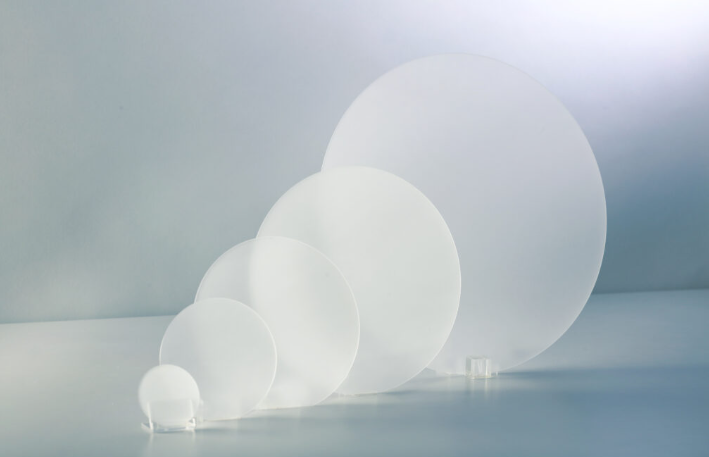
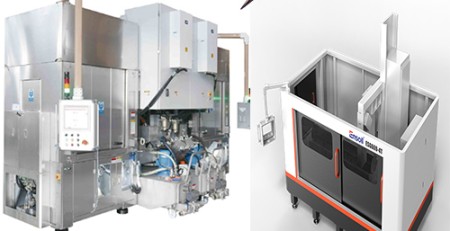
Os substratos de safira são componentes críticos na fabricação de LED, dispositivos ópticos, e aplicações em semicondutores. Contudo, cutting sapphire—a material with a Mohs hardness of 9—poses significant challenges. Traditional methods like blade sawing or laser cutting often lead to cracks, high material loss, and uneven surfaces.
Principais Conclusões
Safira (Mohs 9) is both extremely hard and brittle: blade sawing and laser cutting often cause cracks, superfícies irregulares, and up to 30% perda de material.
A diamond wire loop can be as thin as 0.1 mm versus a 0.3 mm or wider blade kerf, so more wafers are recovered from every crystal ingot.
The low-force wire cut generates far less mechanical stress, preventing subsurface micro-cracks and leaving a smoother surface that needs less polishing.
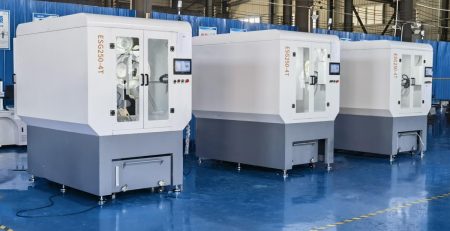
Modern machines cut sapphire at 0.5-2 mm/min, and multi-wire systems can slice hundreds of wafers simultaneously.
Main beneficiaries: LED sapphire substrates, ultra-thin semiconductor wafers (down to about 100 micrómetros), and optical windows and lenses.
Laço de fio diamantadocutting has emerged as the superior solution, offering higher precision, mínima perda de kerf, and reduced subsurface damage. Neste artigo, we explore how this advanced technology improves efficiency in sapphire substrate production.
Challenges in Sapphire Substrate Cutting
Before discussing diamond wire loops, it’s essential to understand the difficulties in processing sapphire:
Extreme Hardness – Sapphire is one of the hardest materials, making mechanical cutting difficult.
Brittleness – Improper cutting can cause micro-cracks, reducing substrate quality.
High Precision Requirements – LED and semiconductor industries demand ultra-thin wafers (as low as 100µm) with near-perfect surfaces.
Material Waste – Conventional methods lose up to 30% of the material, increasing costs.
Traditional methods like ID saws (inner diameter saws) and laser cutting struggle with these challenges, leading to higher rejection rates and production inefficiencies.
How Diamond Wire Loop Cutting Works
Diamond wire loop technology uses a thin, flexible wire embedded with diamond particles to slice through sapphire with minimal force. Here’s how it enhances efficiency:
1.Precision Cutting with Minimal Kerf Loss
– The wire diameter can be as thin as 0.1mm, significantly reducing material waste compared to blade saws (which have a kerf of 0.3mm or more).
– This allows more wafers per crystal ingot, reduzindo os custos de produção.
✅ LED Manufacturing – Producing high-quality sapphire substrates for brighter, more efficient LEDs.
✅ Semiconductor Wafers – Enabling ultra-thin wafers for advanced electronics.
✅ Optical Components – Cutting sapphire windows and lenses with superior surface integrity.
Conclusão
Diamond wire loop cutting has revolutionized sapphire substrate processing by improving precision, reducing waste, and increasing production efficiency. As demand for high-performance LEDs and semiconductors grows, this technology will remain a critical tool for manufacturers seeking cost-effective, high-quality solutions.
Interested in optimizing yoursapphire cutting processo? Contact us today to learn how diamond wire loops can enhance your production line!
Perguntas Frequentes
Why is sapphire so difficult to cut?
Sapphire rates 9 on the Mohs hardness scale and is highly brittle, so conventional blade or laser cutting easily produces micro-cracks and high rejection rates. The LED and semiconductor industries also demand ultra-thin wafers with near-perfect surfaces, which leaves almost no margin for error.
How does a diamond wire loop reduce sapphire material waste?
The wire can be as thin as 0.1 milímetro, compared with a blade kerf of 0.3 mm or more. Conventional methods lose up to 30% of the ingot, while the narrow wire kerf converts more of each crystal into usable wafers and lowers production cost.
Does diamond wire loop cutting damage the sapphire surface?
Não. Because the wire cuts with very low force, it generates less mechanical stress than abrasive saws, which prevents subsurface micro-cracks. The resulting surface is smoother and requires less polishing afterward.
Which industries use diamond-wire-cut sapphire substrates?
LED manufacturing uses them for brighter, more efficient chips; the semiconductor industry uses ultra-thin sapphire wafers for advanced electronics; and optics producers cut sapphire windows and lenses with superior surface integrity.
Aplicação de pastilhas de carbeto de silício e tendência de desenvolvimento futuro
Principais Conclusões
O carbeto de silício é a principal direção de desenvolvimento da indústria de semicondutores de potência.
SiC... leia mais
Ferramentas Ensoll terceira geração cortador de varas de silício modificado e entregue com sucesso! A máquina de terceira geração resolve completamente o.... leia mais
Principais Conclusões
Alumina (Al₂O₃) é dura, resistente ao desgaste e quebradiça; o defeito que importa é lascamento na entrada e na saída de... leia mais
Principais Conclusões
As cerâmicas de zircónia servem oito principais campos de aplicação, desde eletrónica 3C até metalurgia, graças à sua resistência, tenacidade, resistência ao desgaste.... leia mais
Key Takeaways
Advanced ceramics differ from traditional ceramics in raw materials and processes: são feitos a partir de pós de alta pureza, ultra-finos com... leia mais
O boom de wafer de silício na indústria fotovoltaica
Principais Conclusões
Os objetivos de neutralidade carbónica em todo o mundo fizeram da energia fotovoltaica a fonte de crescimento mais rápido de.... leia mais
2022 Visão Geral da Indústria de Pastilhas de Semicondutores
Principais Conclusões
As pastilhas de silício semicondutoras são o substrato de suporte para a fabricação de chips, e a indústria de pastilhas é... leia mais
Principais Conclusões
Uma serra de fio de diamante de braço único carrega um fio de diamante num braço: flexível para pequenas quantidades e trabalhos de múltiplas especificações,... leia mais