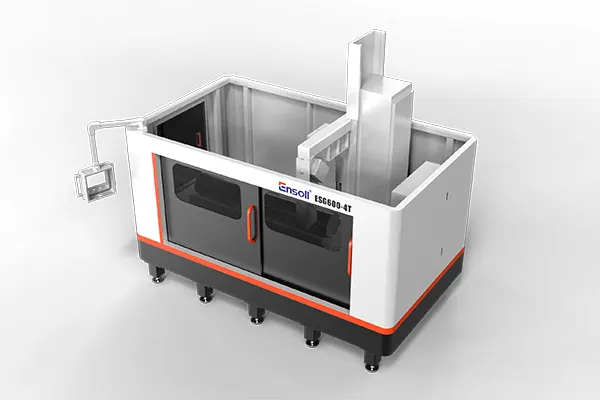
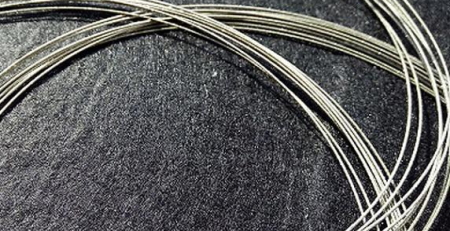
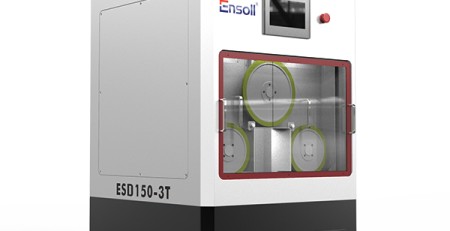
A single-arm diamond wire saw carries one diamond wire on one arm: flexível para pequenas quantidades e trabalhos de múltiplas especificações, simple to operate, and cheap to build and maintain.
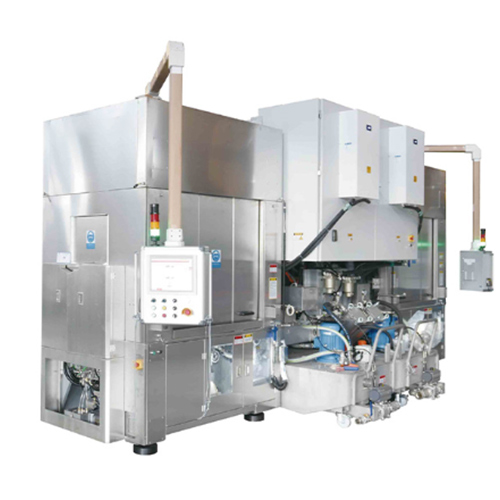
A multi-arm machine cuts multiple silicon rods simultaneously for high output, but its complex structure makes maintenance, debugging and downtime significantly worse.
Multi-arm machines struggle in automated production: synchronization across arms is hard, material handling integration is difficult, and adapting to new specifications is cumbersome.
For automated production lines, the single-arm design integrates seamlessly and offers the best balance of efficiency, flexibility and total cost of ownership.
Diamond wire saw cutting machinesare essential tools for processing hard and brittle materials like silicon rods and sapphire. Entre os vários tipos, As máquinas de corte de haste de silício de braço único e multibraço se destacam por suas diferenças estruturais e funcionais. Aqui está uma comparação detalhada e uma explicação de por que as máquinas de corte de fio diamantado de braço único são mais adequadas para produção automatizada.
1.Single-Arm Diamond Wire Saw Cutting Machine
Estrutura:
Apresenta um único braço equipado com um fio diamantado.
Vantagens:
Alta flexibilidade: Ideal para corte de pequenos lotes ou com várias especificações, allowing easy adjustments.
Simple Operation: The straightforward design makes maintenance and debugging easier.
Automation-Friendly:Its simple structure enables seamless integration into automated production lines.
Custo-Efetivo: Lower manufacturing and maintenance costs compared to multi-arm machines.
2.Multi-Arm Diamond Wire Saw Cutting Machine
Estrutura:
Consists of multiple arms, each equipped with an independent diamond wire.
Vantagens:
Alta Eficiência: Capable of cutting multiplesilicon rodssimultaneously, suitable for large-scale production.
High Output: Significantly boosts productivity, meeting high-demand scenarios.
Desvantagens:
Complex Structure: Difficult to maintain and debug, leading to higher downtime.
Poor Automation Compatibility**: Challenges in synchronization and integration with automated systems.
High Costs: Higher manufacturing and maintenance expenses compared to single-arm machines.
3. Why Multi-Arm Machines Are Less Suitable for Automated Production
While multi-arm diamond wire saw cutting machines excel in efficiency, they face several challenges in automated production environments:
1.Complex Synchronization: Coordinating multiple arms for precise and consistent cutting is difficult, leading to potential quality issues.
2.High Maintenance: The intricate design requires frequent maintenance, increasing operational costs and downtime.
3.Integration Challenges: Automated production lines demand seamless material handling, which is harder to achieve with multi-arm designs.
4.Limited Flexibility: Adapting to different product specifications is more cumbersome due to the complex structure.
5.Higher Costs: The overall cost of ownership is higher, making single-arm machines a more economical choice for automation.
Conclusão
Single-Arm Machines: Offer flexibility, simplicity, e eficiência de custos, making them ideal for automated production.
Multi-Arm Machines: While efficient for large-scale manual production, their complexity and high costs limit their suitability for automation.
For industries seeking a balance between efficiency, flexibility, and automation, the single-arm diamond wire saw cutting machine emerges as the superior choice. Its ability to integrate seamlessly into automated systems while maintaining high performance makes it a game-changer in modern manufacturing.
Perguntas Frequentes
What is the difference between single-arm and multi-arm diamond wire saw machines?
A single-arm machine has one arm equipped with one diamond wire, offering high flexibility, simple operation and low costs. A multi-arm machine has multiple arms each with an independent diamond wire, so it can cut several silicon rods simultaneously for high output, but its structure is far more complex.
Why are single-arm diamond wire saws better suited for automated production?
Their simple structure enables seamless integration into automated production lines. Multi-arm machines face complex synchronization across arms, challenging material-handling integration, frequent maintenance and limited flexibility when product specifications change – all of which fight against automation.
When does a multi-arm diamond wire saw make sense?
Multi-arm machines excel in large-scale manual production where cutting multiple rods simultaneously and maximizing output matters more than automation compatibility, flexibility or maintenance cost.
Are single-arm machines cheaper to run than multi-arm machines?
Sim. Single-arm machines have lower manufacturing and maintenance costs, and their simpler design means less downtime. Multi-arm machines carry higher overall cost of ownership due to their intricate structure, more frequent maintenance and integration difficulties.
Principais Conclusões
Os tamanhos das pastilhas de silício fotovoltaico evoluíram a partir dos formatos de pastilhas de semicondutores, com a PV historicamente a ficar atrás dos semicondutores em padrões de dimensão.
As dimensões dos wafers mantêm-se... leia mais
A tecnologia de corte Diamond-Wire-loop é uma tecnologia de corte avançada para substituir o tradicional corte livre de argamassa, que é amplamente utilizado em... leia mais
Principais Conclusões
Na preparação de pastilhas semicondutoras, lingotes de silício monocristalino são processados em pastilhas nuas com alta precisão de superfície para litografia.
O lingote.... leia mais
Processo tradicional de produção de células solares
Principais Conclusões
A produção tradicional de células solares começa com a fabrico de pastilhas de silício e prossegue através de texturização, difusão, etching,... leia mais
Introdução
Na fabricação moderna, A importância da tecnologia de usinagem de precisão está se tornando cada vez mais proeminente, especialmente no campo do material magnético... leia mais
Application of precision ceramics in semiconductor and new energy fields
Today's world has witnessed unprecedented changes and accelerated evolution. Um novo... leia mais
Tipos de Vidro Óptico
Principais Conclusões
O vidro óptico apresenta-se em seis tipos principais: vidro óptico incolor, vidro óptico anti-radiação, vidro resistente à radiação,... leia mais
Principais Conclusões
O quartzo de alta pureza é a matéria-prima para cadinhos de semicondutores, crescimento de lingotes PV e componentes ópticos.
A pureza define o limite de desempenho de.... leia mais
1º tri: Você é um fabricante ou empresa comercial?
Ensoll é uma empresa de alta tecnologia especializada na pesquisa e produção de Endless... leia mais