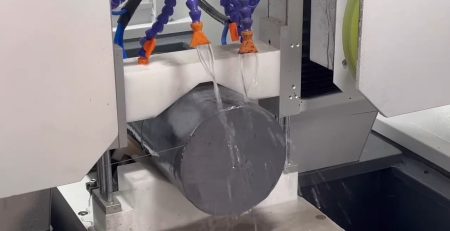
Metal Processing: Diamond Wire Cutting Solutions
In the ever-evolving landscape of advanced manufacturing, Diamond Wire Loop Cutting has established itself as a transformative technology for precision material processing. This innovative method utilizes a continuous loop of wire embedded with diamond particles to achieve cuts of exceptional accuracy and quality across a diverse range of challenging materials. The technology represents a significant advancement over traditional mechanical and thermal cutting processes, offering solutions to long-standing manufacturing challenges.
- Diamond wire loop cutting uses a continuous loop of diamond-coated wire running at high speed to grind through metals with very low cutting force.
- The technology excels at cutting hard, brittle or delicate metal components where conventional saws cause deformation, burrs or heat damage.
- Key advantages in metal processing: narrow kerf, minimal material waste, no heat-affected zone and excellent surface finish.
- Typical applications include automotive and aerospace components, precision profiles, and hard alloys that are expensive to machine conventionally.
The global adoption of diamond wire cutting continues to accelerate, driven by increasing demands from aerospace, semiconductor, medical device, and renewable energy sectors. As industries push toward more complex designs, tighter tolerances, and more efficient production methods, understanding this technology’s capabilities becomes increasingly essential for maintaining competitive advantage in today’s demanding market environment.
 What is Diamond Wire Loop Cutting?
Diamond wire loop cutting operates on a sophisticated yet elegantly simple principle: a continuous wire loop impregnated with synthetic diamond particles moves at controlled speeds while maintaining precise tension, gradually abrading material through mechanical action. The diamond particles, typically ranging from 20-100 micrometers in diameter, function as microscopic cutting teeth that progressively remove material through controlled abrasion.
The technology differs fundamentally from conventional cutting methods in several key aspects:
– Non-thermal processing: Unlike laser or plasma cutting, diamond wire operates without generating significant heat, eliminating thermal distortion and heat-affected zones
– Continuous cutting action: The uninterrupted loop movement provides consistent cutting performance without the periodic interruptions of reciprocating blade systems
– Minimal cutting force: The technology applies substantially lower mechanical force than traditional sawing methods, reducing workpiece stress and potential damage
– Versatile material compatibility: The system effectively processes materials ranging from ultra-hard ceramics to ductile metals and brittle semiconductors
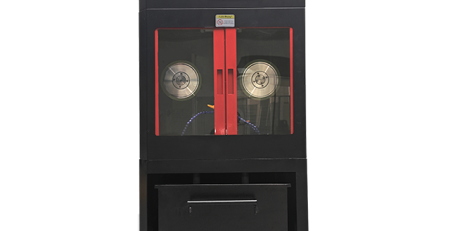
System Components and Configuration
– Diamond-impregnated wire: The core cutting element with precisely engineered diamond distribution and advanced bonding technology
– Precision guidance system: Sophisticated pulley and tensioning mechanisms maintaining exact wire alignment and optimal tension
– Advanced control systems: Computer Numerical Control (CNC) technology managing cutting parameters with exceptional accuracy
– Coolant delivery system: Integrated cooling mechanisms managing temperature and ensuring efficient debris removal
– Material handling system: Automated platforms for workpiece positioning and movement during cutting operations
Diamond Wire Cutting in Metal Processing Applications
The aerospace sector has embraced diamond wire cutting for processing advanced metallic materials that challenge conventional machining methods:
– Titanium alloy component fabrication: The technology excels at cutting titanium alloys used in aircraft structures and engine components, overcoming the material’s poor thermal conductivity and tendency to work-harden during conventional machining
– Nickel-based superalloy processing: Diamond wire cutting provides effective solutions for processing heat-resistant superalloys used in turbine blades and other high-temperature components
– Composite-metal hybrid structures: The technology enables precise processing of advanced composite materials bonded to metal substrates, maintaining integrity at material interfaces while achieving required dimensional tolerances
Automotive and Transportation Applications
– Electric vehicle component production: The technology processes specialized metals and conductive materials used in battery systems, power electronics, and motor components
– Lightweight material fabrication: Diamond wire cutting enables precise processing of aluminum alloys and advanced high-strength steels for vehicle lightweighting initiatives
– Sensor and electronic system manufacturing: The technology creates precise components for advanced driver assistance systems and vehicle electronics
Technical Advantages in Metal Processing
Diamond wire cutting produces exceptional surface finishes on metallic materials, typically achieving roughness values between 0.1-0.8 micrometers Ra depending on the specific metal and cutting parameters. This surface quality significantly reduces or eliminates the need for secondary finishing operations, streamlining manufacturing processes and reducing production costs. The mechanical cutting action preserves material microstructure and prevents the formation of heat-affected zones common with thermal cutting methods.
Minimal Kerf Loss and Material Conservation
The narrow cutting width of diamond wire systems, typically ranging from 120-200 micrometers, represents a substantial improvement over conventional metal cutting methods that may produce kerf losses of 500-2000 micrometers. This material conservation proves particularly valuable when processing expensive metals like titanium alloys, nickel-based superalloys, or precious metals, where reduced kerf width directly translates to significant cost savings and improved material utilization efficiency.
Reduced Thermal Impact and Distortion
Unlike thermal cutting methods such as laser or plasma cutting, diamond wire processing operates at near-ambient temperatures, eliminating thermal distortion and preserving the intrinsic material properties of processed metals. This characteristic proves crucial for maintaining dimensional stability in precision components and preventing microstructural alterations that could compromise mechanical performance in critical applications.
Enhanced Cutting Precision and Accuracy
Diamond wire cutting technology achieves exceptional dimensional accuracy, typically within ±5 micrometers for most metal processing applications. The technology’s flexibility enables complex contour cutting and intricate geometric patterns that challenge conventional machining approaches. This precision proves particularly valuable for applications requiring tight tolerances and complex geometries.
Operational Efficiency and Economic Benefits
Increased Processing Efficiency
Diamond wire cutting systems demonstrate significantly higher processing efficiency compared to conventional metal cutting methods:
Teams specifying a wire saw for metal should weigh cutting speed against kerf loss, because every millimetre of kerf is material you cannot sell.
– Reduced processing time: High cutting speeds combined with optimized cutting paths significantly decrease production cycles
– Minimal setup requirements: The technology requires less extensive fixturing and preparation than conventional machining methods
– Continuous operation capability: Systems can operate for extended periods with minimal operator intervention
– Reduced secondary processing: Superior surface quality often eliminates need for additional finishing operations
Economic Advantages and Cost Reduction
economic benefits for metal processing operations:
– Reduced material costs: Minimal kerf width maximizes usable material from expensive metal stock
– Lower tooling expenses: Extended wire life and reduced consumable requirements decrease operational costs
– Energy efficiency: Lower power consumption compared to conventional machining methods
– Labor optimization: Reduced manual intervention requirements through automation and simplified operation
Conclusion: The Future of Precision Metal Processing
For organizations processing advanced metals, precious materials, or high-value components, diamond wire cutting technology offers a compelling combination of precision, efficiency, and economic benefits that position it as the optimal choice for tomorrow’s manufacturing challenges. As the technology continues to evolve through ongoing research and development, its role in advancing manufacturing capabilities will undoubtedly expand, opening new possibilities for innovation across diverse industrial sectors.
Frequently Asked Questions
Can diamond wire cutting be used for metal processing?
Yes. Although best known for brittle materials, diamond wire loop cutting is increasingly used for metals – especially hard alloys, precision profiles and delicate parts where low cutting force and narrow kerf reduce waste and distortion.
What are the advantages of diamond wire cutting for metals?
Low cutting force prevents part deformation, the narrow kerf minimizes material loss, there is virtually no heat-affected zone, and the cut surface often needs little or no secondary finishing.
Which metals are suitable for diamond wire loop cutting?
Hard and specialty metals benefit most: tool steel, titanium alloys, tungsten, molybdenum, superalloys and metal-matrix composites. Soft, ductile metals like pure aluminum can smear and load the wire, so parameters must be tuned carefully.
How does diamond wire cutting compare to band saws for metal?
Band saws are faster for soft metals and thick sections, but they exert high cutting force, create burrs and a heat-affected zone. Diamond wire cutting is slower but far gentler and more precise, making it better for high-value, distortion-sensitive parts.
Reviewed by the Ensoll engineering team.