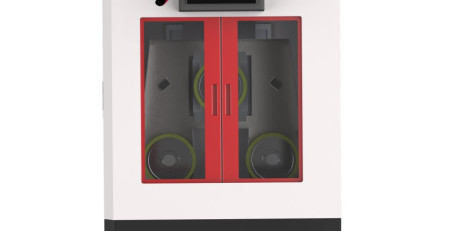
Graphite is soft but brittle and abrasive — it dulls blades fast and produces conductive dust, so the cutting method matters more than the machine.
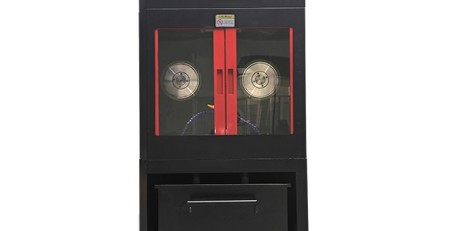
Diamond wire cutting applies low force with continuous water cooling, suppressing both dust and edge crumbling.
Contour and shaped work is where diamond wire clearly beats blades and routers.
Introduction:
Graphite, known for its unique properties, has become increasingly popular in various industries. However, achieving precise cuts on this material requires the right cutting methods and tools. In this guide, we will explore the characteristics of graphite, traditional cutting methods, innovative cutting techniques, products that can be cut using diamond wire saws, and how to contact us for further assistance.
Characteristics of Graphite:
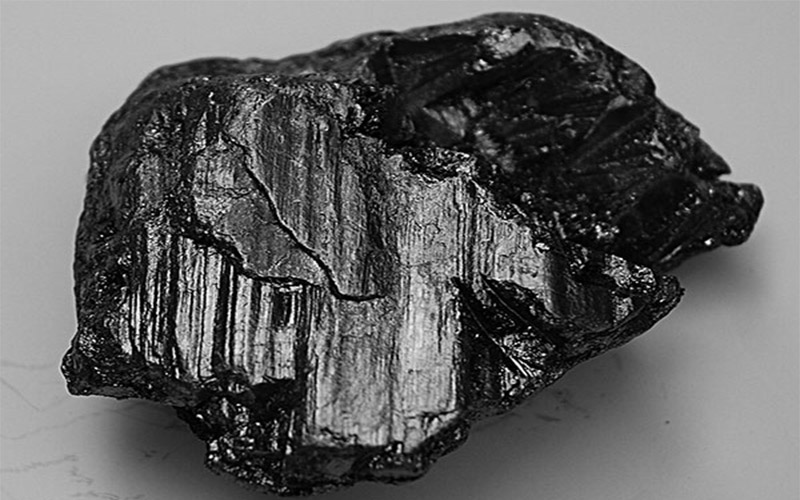
Graphite is a form of carbon that possesses excellent thermal conductivity, lubricity, and electrical conductivity. It is widely used in industries such as aerospace, automotive, electronics, and metallurgy due to its heat resistance, chemical stability, and low friction properties.
The features are as follows:
1. Hexagonal Layered Structure
At the atomic level, graphite consists of carbon atoms arranged in a hexagonal lattice, forming planar sheets known as graphene.
Bonding: Within each layer, carbon atoms are held together by strong covalent bonds.
Inter-layer Forces: Between these layers, only weak Van der Waals forces exist. This allows the layers to slide over one another with minimal friction, which is why graphite feels “greasy” and functions as an effective dry lubricant.
2. Exceptional Thermal Stability
Graphite is one of the most heat-resistant materials known. Unlike many substances that melt under intense heat, graphite undergoes sublimation (turning directly from a solid to a gas) at approximately 3,900 K (around 3,627°C) under standard pressure.
Strength at Temperature: Interestingly, the mechanical strength of graphite actually increases as it is heated from room temperature up to about 2,500°
Thermal Expansion: It has a low coefficient of thermal expansion, making it highly resistant to thermal shock—the cracking that usually occurs during rapid temperature changes.
3. High Electrical and Thermal Conductivity
While most non-metals are insulators, graphite is an anomaly.
Free Electrons: Because each carbon atom is bonded to only three others in its plane, one “extra” electron remains delocalized. these electrons are free to move throughout the layers, allowing graphite to conduct electricity efficiently.
Anisotropy: Its conductivity is anisotropic, meaning it is much higher parallel to the layers than it is perpendicular to them.
4. Chemical Inertness and Corrosion Resistance
Graphite is chemically stable and resistant to most acids, alkalis, and corrosive gases at moderate temperatures.
Oxidation:** It only begins to oxidize significantly in air at temperatures above 450°
Applications:** This makes it an ideal material for crucibles, chemical reaction vessels, and components in the semiconductor and metallurgical industries where harsh environments are common.
Traditional Graphite Cutting Methods:
1.Sawing:
Sawing is one of the commonly used methods for cutting graphite. It involves the use of a conventional saw blade or a diamond-coated saw blade. The blade is moved back and forth across the workpiece to cut through the graphite material. However, this method has some limitations. The saw blade tends to generate heat during the cutting process, which can cause the graphite to expand and result in rough edges. Additionally, the cutting speed may be slower, and the precision may be compromised.
2.Milling:
Milling is another traditional method used for shaping and cutting graphite. It involves the use of cutting tools, such as end mills or ball mills, to remove material from the workpiece. The cutting tool rotates while moving along multiple axes, allowing for precise shaping and cutting. However, milling graphite can be time-consuming and result in excessive material wastage. It also requires the use of coolant to dissipate heat generated during the cutting process.
3.Grinding:
Grinding is a method commonly used for finishing and refining the surface of graphite components. It involves the use of abrasive wheels or belts to remove small amounts of material and achieve the desired surface finish. Grinding can be performed manually or with the help of automated grinding machines. However, it is not typically used for primary cutting or shaping of graphite, as it is more suitable for precision surface finishing.
4.Wire EDM (Electrical Discharge Machining):
Wire EDM is a non-traditional cutting method that uses a thin, electrically charged wire to erode the graphite material. The wire is fed through the workpiece, and controlled electrical discharges occur between the wire and the graphite, resulting in material removal. Wire EDM offers high precision and can create complex shapes with tight tolerances. However, it may not be suita
New Cutting Techniques
In recent years, the use of diamond wire saws, also known as endless diamond wire saws, has gained significant attention as an innovative cutting technique for graphite. This method utilizes a continuous loop of diamond-coated wire to achieve precise and efficient cuts on graphite materials. Let’s delve deeper into the advantages and features of diamond wire saw cutting:
Diamond wire saw cutting minimizes material wastage compared to traditional cutting methods. The thin diamond-coated wire allows for narrow kerf widths, resulting in less material loss during the cutting process. This is particularly beneficial when working with expensive or limited graphite materials, as it helps optimize material usage and reduce costs.
2.Enhanced Cutting Speed:
Diamond wire saws offer faster cutting speeds compared to traditional cutting methods. The continuous movement of the wire and the sharp diamond particles coating its surface enable efficient cutting through graphite materials. This increased cutting speed translates to improved productivity and shorter project completion times.
3.Improved Surface Finish:
Diamond wire saw cutting provides a superior surface finish on graphite materials. The diamond particles on the wire’s surface create clean and precise cuts, minimizing the need for additional finishing processes. This is especially crucial when working with graphite components that require a high level of surface quality, such as those used in aerospace or electronics applications.
4.Versatility:
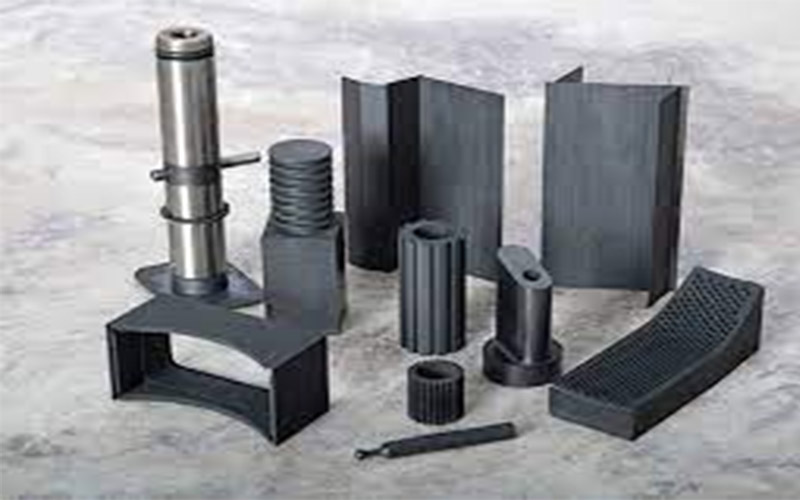
Diamond wire saws are versatile tools that can be used for a wide range of graphite cutting applications. Whether it’s cutting graphite blocks, sheets, electrodes, or molds, diamond wire saws can handle various shapes and thicknesses. This versatility makes them suitable for industries such as manufacturing, metallurgy, and research and development.
5.Precision and Accuracy:
Diamond wire saw cutting offers exceptional precision and accuracy, ensuring that the desired dimensions and tolerances are achieved. The continuous loop of the wire allows for smooth and controlled cutting, resulting in clean edges and minimal material deformation. This level of precision is essential for graphite components that require tight tolerances or intricate shapes.
Contact Us:
For further assistance or inquiries regarding graphite cutting solutions, please feel free to contact us. Our team of experts can provide tailored advice, recommend suitable diamond wire saws, and guide you through the entire cutting process to ensure optimal results.
Conclusion:
Achieving precise cuts on graphite requires the right cutting methods and tools. Traditional methods can be time-consuming and may result in rough edges. However, with innovative techniques like diamond wire saw cutting, you can achieve efficient, precise, and high-quality cuts on various graphite-based products. Contact us for a comprehensive range of graphite cutting solutions tailored to your specific needs.
Diamond wire cutting: low cutting force, continuous water cooling to contain dust, and none of the blade wear problems that graphite causes.
Why is graphite difficult to machine?
It is brittle and abrasive at the same time. Edges crumble under mechanical load, and the resulting dust is conductive — it contaminates spindles and electronics.
Does cutting graphite require coolant?
Yes. Water cooling or strong extraction is essential; conductive graphite dust damages equipment and is a health hazard.
Can graphite be cut into complex shapes?
Yes. CNC-controlled diamond wire loop machines cut contours and irregular profiles that blades and routers cannot produce cleanly.
Technical content reviewed by the Ensoll engineering team — a diamond wire loop manufacturer with 10+ years of production experience.
Key Takeaways
Semiconductor crystal cutting transforms raw ingots into wafers, and the slicing step sets both yield and downstream surface quality.
Diamond... read more
The settings for single-direction cutting and bi-directional cutting are specific cutting programs employed by single wire diamond wire saws... read more
Abstract: This reference sheet lists the process window validated in Ensoll's PMI
(polymethacrylimide) structural foam slicing test on an ESH600-4T horizontal
read more
Abstract: This report documents a precision straight-slicing trial on glass tube supplied by a
European customer. The workpiece was a tube... read more



 Sawing is one of the commonly used methods for cutting graphite. It involves the use of a conventional saw blade or a diamond-coated saw blade. The blade is moved back and forth across the workpiece to cut through the graphite material. However, this method has some limitations. The saw blade tends to generate heat during the cutting process, which can cause the graphite to expand and result in rough edges. Additionally, the cutting speed may be slower, and the precision may be compromised.
 Milling is another traditional method used for shaping and cutting graphite. It involves the use of cutting tools, such as end mills or ball mills, to remove material from the workpiece. The cutting tool rotates while moving along multiple axes, allowing for precise shaping and cutting. However, milling graphite can be time-consuming and result in excessive material wastage. It also requires the use of coolant to dissipate heat generated during the cutting process.
 Wire EDM is a non-traditional cutting method that uses a thin, electrically charged wire to erode the graphite material. The wire is fed through the workpiece, and controlled electrical discharges occur between the wire and the graphite, resulting in material removal. Wire EDM offers high precision and can create complex shapes with tight tolerances. However, it may not be suita