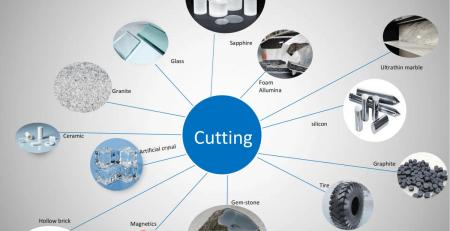
Cutting Ultra-Hard Materials with Diamond Wire Loop
Ultra-hard materials like Diamond, CVD Diamond (Chemical Vapor Deposition Diamond), and Cubic Boron Nitride (cBN) are revolutionizing industries ranging from aerospace to semiconductor manufacturing. However, their extreme hardness (Mohs 10 for diamond, ~9.5 for cBN) makes them incredibly difficult to machine using conventional methods.
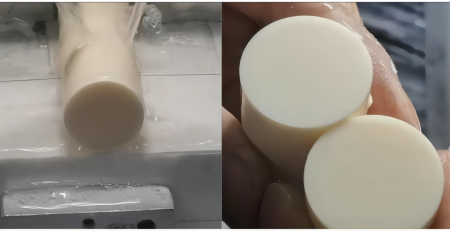
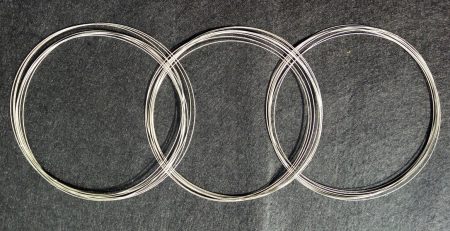
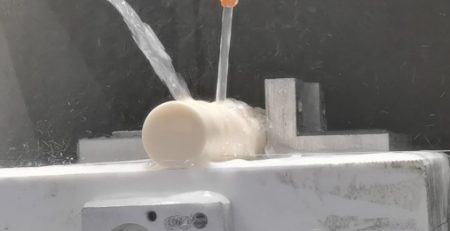
Diamond cutting wire loop technology has emerged as the most efficient solution for precision cutting of these materials. Unlike traditional saws, diamond wire loops provide minimal kerf loss, superior surface finish, and reduced thermal damage, making them ideal for processing ultra-hard coatings and bulk materials.
In this comprehensive guide, we will explore:
✔ Why diamond wire loops are ideal for cutting ultra-hard materials
✔ Key differences between natural diamond, CVD diamond, and cBN
✔ Best practices for optimizing cutting performance
✔ Industry applications and future trends
1. Why Diamond Wire Loop is the Best Cutting Tool for Ultra-Hard Materials
1.1 Unmatched Cutting Precision
– Diamond wire loops use micron-sized diamond abrasives embedded in a high-strength wire to slice through ultra-hard materials with sub-micron accuracy.
– Unlike blade saws, which cause chatter and micro-cracks, diamond wire cutting ensures smooth, defect-free edges.
1.2 Minimal Material Waste
– Traditional grinding wheels lose 30-50% of material due to wide kerfs.
– Diamond wire loops achieve kerf widths as narrow as 0.1mm, maximizing yield from expensive CVD diamond and cBN.
1.3 Reduced Thermal & Mechanical Stress
– Continuous wire motion prevents localized heat buildup, critical for CVD diamond coatings, which can delaminate under thermal stress.
– Low cutting force minimizes subsurface damage, preserving material integrity.
1.4 Cost Efficiency & Long Tool Life
– Diamond wire loops last 10x longer than conventional abrasive blades.
– Multi-wire systems enable batch processing, reducing production time.
2. Cutting Different Ultra-Hard Materials: Challenges & Solutions
2.1 Natural & CVD Diamond Cutting
Properties:
– Hardest known material (Mohs 10)
– CVD Diamond is synthetic but equally hard, used in coatings for cutting tools and optics.
Optimal Cutting Parameters:
✔ Wire diameter: 0.35mm
✔ Diamond grit size: 5–15µm (finer for polished edges)
✔ Cutting speed: 0.3–1.0 mm/min
✔ Coolant: Deionized water with anti-wear additives
Applications of Diamond Wire Loop Cutting in Ultra-Hard Materials
1.Cutting Tools (CVD Diamond-Coated Inserts)
The manufacturing of high-performance cutting tools relies heavily on CVD diamond coatings due to their exceptional hardness and wear resistance. Diamond wire loop technology enables:
✔ Precision shaping of tungsten carbide inserts before diamond coating
✔ Clean edge finishing on coated tools without delamination
✔ Cost-effective production of complex geometries for:
– PCB micro-drills
– Automotive machining tools
– Aerospace-grade cutting inserts
Case Study: A leading tool manufacturer reduced grinding time by 40% while improving edge quality by implementing diamond wire loop cutting for their CVD diamond-coated end mills.
2. Optical Windows (Laser-Resistant Components)
Advanced optical systems require flawless CVD diamond windows capable of withstanding high-power laser irradiation. Diamond wire cutting provides:
✔ Superior surface finish (Ra < 0.1μm) for minimal light scattering
✔ Stress-free edges critical for:
– CO₂ laser output couplers
– Synchrotron beamline components
– Military-grade IR windows
✔ Custom geometries including:
– Concave/convex surfaces
– Precision beveled edges
– Micro-structured optical elements
Industry Benchmark: The James Webb Space Telescope utilizes diamond-cut CVD diamond windows for its mid-infrared instruments, demonstrating the technology’s spaceflight readiness.
3. Semiconductor Heat Spreaders
As chip power densities increase, CVD diamond heat spreaders have become essential for thermal management in:
✔ High-power RF devices (5G base stations)
✔ LED and laser diode packaging
✔ Advanced computing (AI processors, HPC)
Emerging Application: Leading semiconductor companies now integrate diamond wire-cut CVD diamond heat spreaders in 3D-IC packaging to address thermal challenges in sub-3nm nodes.
3. Optimizing Diamond Wire Loop Performance
3.1 Key Process Parameters
| Factor | Optimal Setting |
| Wire Diameter | 0.35mm |
| Diamond Grit | 5–30µm (material-dependent) |
| Tension | 15–40N |
| Cutting Speed | 0.2–1.5 mm/min |
| Coolant Type | Water or oil-based |
3.2 Preventing Common Cutting Issues
– Wire Breakage → Check tension & alignment
– Edge Chipping → Reduce feed rate, use finer grit
– Poor Surface Finish → Optimize coolant flow
4. Industry Applications
✔ Tool Manufacturing (CVD diamond-coated cutters)
✔ Aerospace (cBN grinding of turbine blades)
✔ Semiconductors (Diamond heat sinks)
✔ Optics (Laser-grade diamond windows)
5. Future Trends in Ultra-Hard Material Cutting
– AI-driven adaptive cutting for real-time adjustments
– Hybrid laser-wire cutting for faster processing
– Eco-friendly diamond wire coatings
Conclusion
Diamond cutting wire loops provide the most efficient, precise, and cost-effective method for machining ultra-hard materials like CVD Diamond and cBN. By optimizing cutting parameters, manufacturers achieve higher yields, superior surface quality, and longer tool life.
Looking for the best diamond wire solution? Contact us for expert recommendations!