Schneiden von PMI-Schaum mit Diamantdrahtschlinge: 0.8 Präzisionsschnitt-Test im mm-Bereich
Abstrakt: Dieser Anwendungsbericht dokumentiert einen Präzisions-Test zum geraden Schneiden von PMI
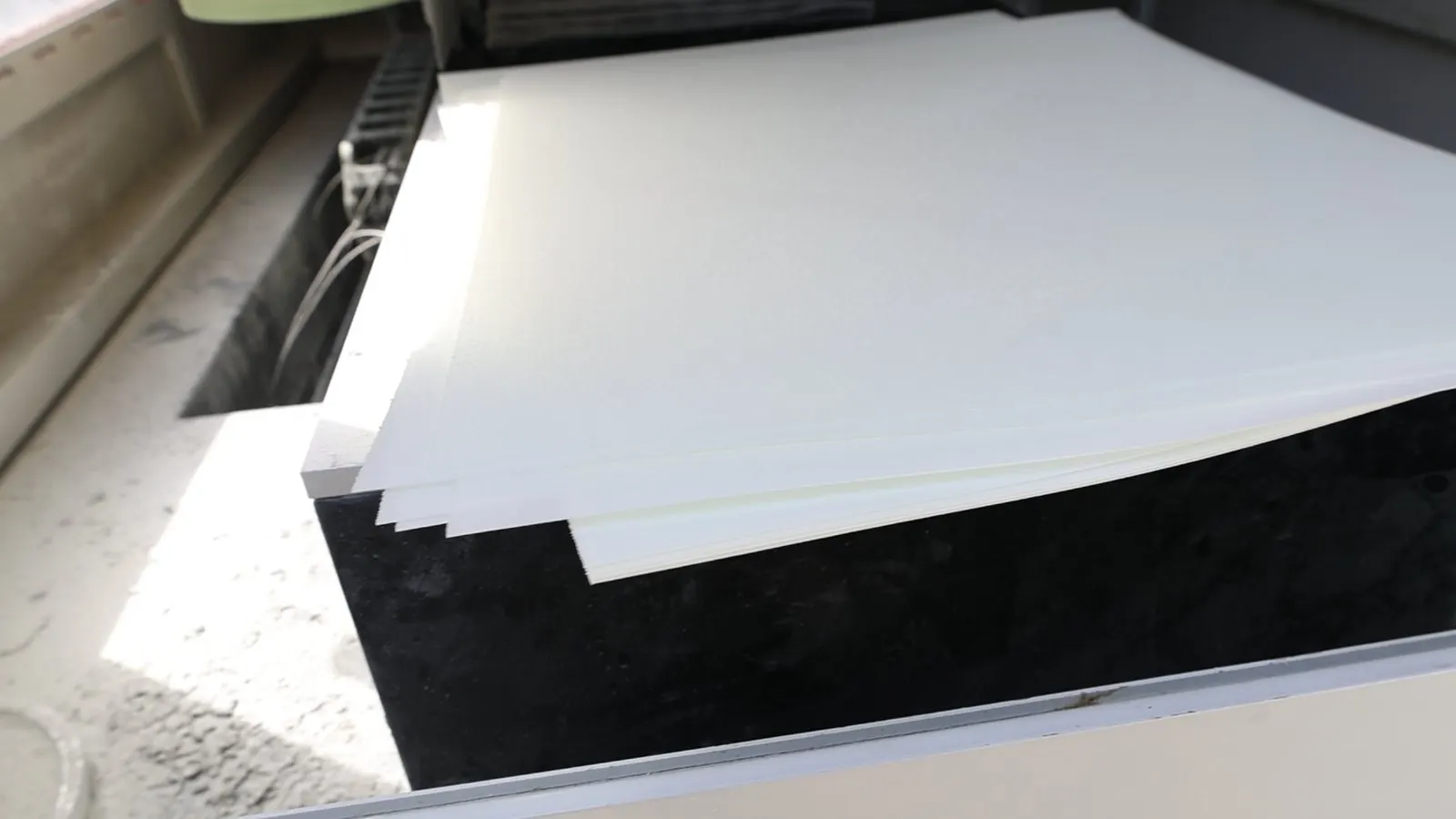
(Polymethacrylimid) Strukturschaum, geliefert von einem europäischen Kunden. Four slices measuring 400 mm x 400 mm x
0.8 mm were produced on an ESH600-4T horizontal Diamantdraht-Schlaufe cutting machine
using dry cutting and a fully coated diamond wire. Gemessene Ergebnisse: gesamte Dickenvariation (TTV)
0.013-0.050 Mm (Durchschnitt 0.036 Mm), Dickenabweichung +/-0.043 Mm, Oberflächenrauheit Ra 0.68-0.82 µm, and maximum
Faseabsplitterungen 5.5-7.1 µm. Matching machine structure, cutting method and process parameters to the cellular
structure of PMI foam kept material removal stable and held slice dimensional accuracy and cut-surface quality
within a workable range.
Wesentliche Erkenntnisse
- PMI foam is a low-density structural foam with a fine cellular structure; at excessive cutting load its
skeleton is compressed or torn rather than cleanly sheared. - Dry cutting was chosen to keep coolant out of the foam cells and to remove the cleaning and drying steps
that follow a wet cut. - Across four 0.8 mm Scheiben: TTV 0.013-0.050 Mm (mean 0.036 Mm), Dickenabweichung +/-0.043 Mm, Ra
0.68-0.82 µm, maximales Abplatzen 5.5-7.1 µm. - Samples ran slightly thin overall (bis auf -0.043 Mm), which points to a straightforward dimensional
Kompensation bei der nächsten Durchführung. - Maschine, Draht, Schneidverfahren und Parameter wurden als ein Set abgestimmt; kein einzelner Parameter beeinflusste das
Ergebnis.
Musterprüfung für europäischen Kunden I | Diamantdraht-Schneidprozess
Übersicht über den PMI-Schaum-Slicing-Test
Dieser Test wurde an von einem europäischen Kunden gelieferten PMI-Schaum durchgeführt (Kunde I), mit hoher Präzision
gerades Schneiden als Hauptanforderung. PMI (Polymethacrylimid) Schaum ist ein hochleistungsfähiger Struktur-Schaum
bekannt für geringe Dichte, eine gleichmäßige Zellstruktur, und gute spezifische Festigkeit und spezifische Steifigkeit. Sein
poröses Inneres führt zu einem Materialabtragungsverhalten, das sich deutlich von dem dichter Materialien unterscheidet: die Diamant-
Schleifkörner wirken kontinuierlich auf das Schaumskelett ein, und übermäßige Schnittlast oder schlecht abgestimmte Parameter
verursachen leicht lokale Kompression, Risse und eine ungleichmäßige Schnittfläche, all of which feed directly into slice thickness
and surface quality. This test therefore matched cutting method, Maschinenkonfiguration, wire and process
parameters to the structural characteristics of PMI foam and to the straight-slicing accuracy requirement, so
that material removal stayed stable while slice dimensions and cut-surface quality remained under control.
Because of the demands PMI foam places on cutting stability, dimensional accuracy and cross-section quality,
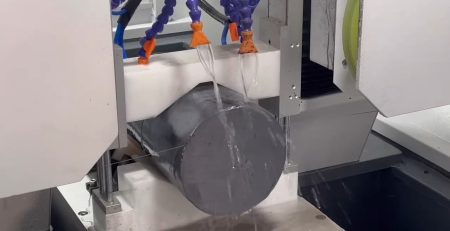
Ensoll applied a diamond wire solution tailored to foam machining. On the machine side, a dedicated horizontal
Diamantdrahtsäge-Maschine was used so that the wire runs stably along the horizontal
plane, providing a repeatable cutting path and stable feed for straight slicing. On the consumable side, ein
diamond wire suited to PMI foam keeps the abrasive grains acting on the material surface continuously and evenly,
which sustains stable removal. On the cutting-method side, dry cutting avoids coolant entering the foam cells and
lets chips escape promptly during the cut. On that basis, wire running speed and feed rate were adjusted against
the density, cellular structure and target slice thickness of the material, holding the cutting load in a
suitable band and reducing the local compression and tearing that excessive point loads cause in the foam
Struktur. Matching machine, Draht, cutting method and parameters as one set kept the slicing process stable and
brought slice thickness, dimensional accuracy and surface quality under control, establishing a process basis
for high-precision straight slicing of PMI foam.
1. Test Object: Basic Information
- Material: PMI-Schaum
- Härte: approximately MH 2
- Werkstückabmessungen: 400 mm x 400 mm x 50 Mm
- Cut dimensions: 400 mm x 400 mm x 0.8 Mm
2. Maschinen- und Drahtauswahl
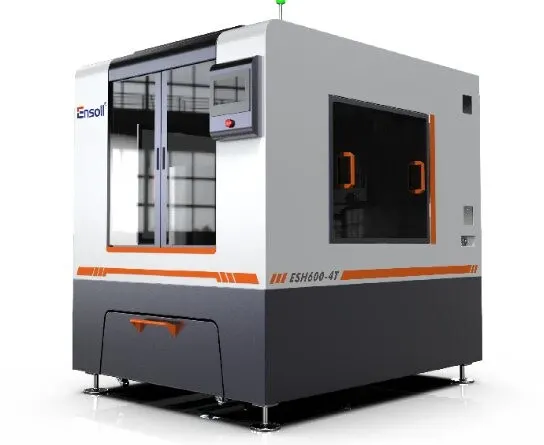
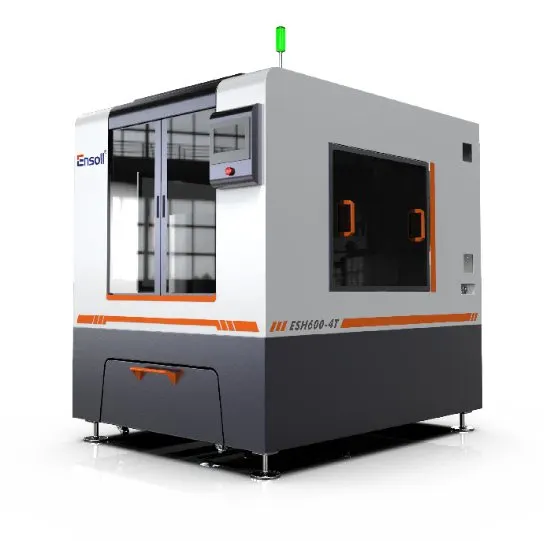
Machine type: ESH600-4T. Because PMI foam is lightweight, porous and easily deformed, und
because the requirement is high-precision straight slicing, Ensoll selected a horizontal diamond wire cutting
machine suited to PMI machining. This keeps the wire running stably and preserves cutting-path accuracy, reduziert
the effect of machine vibration and cutting-load fluctuation on machining quality, and limits the local
deformation, edge defects and thickness deviation that uneven loading would otherwise produce, thereby improving
both the dimensional accuracy and the cut-surface quality of PMI slices.
- Kühlmitteltyp: Trockenbearbeitung. Because PMI foam is porous, lightweight and prone to absorbing
liquids, dry cutting prevents coolant from entering the cells or remaining in the material and destabilising
slice dimensions. Es entfernt auch die Reinigungs- und Trocknungsschritte, die auf einen Nassschnitt folgen, was hilft, die
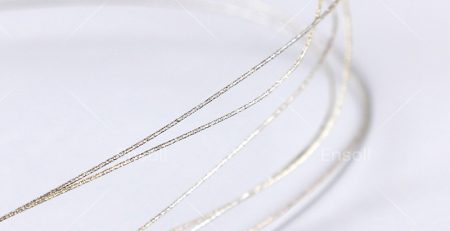
strukturelle Integrität und Maßgenauigkeit zu erhalten. - Drahttyp: vollständig beschichtet. Ein vollständig beschichtete Diamantdrahtschleife
erhöht die Kornbindungsstärke und Verteilungsstabilität, aufrechterhaltend eine stabile und kontinuierliche Schneidfähigkeit.
Es reduziert die Schnittschwankungen, die durch Drahtverschleiß und Kornausfall verursacht werden, begrenzte Risse und Kantendefekte, und
verbessert die Maßhaltigkeit und Oberflächenqualität von PMI-Scheiben.
3. Schneidmethode und Maschinenvorteile
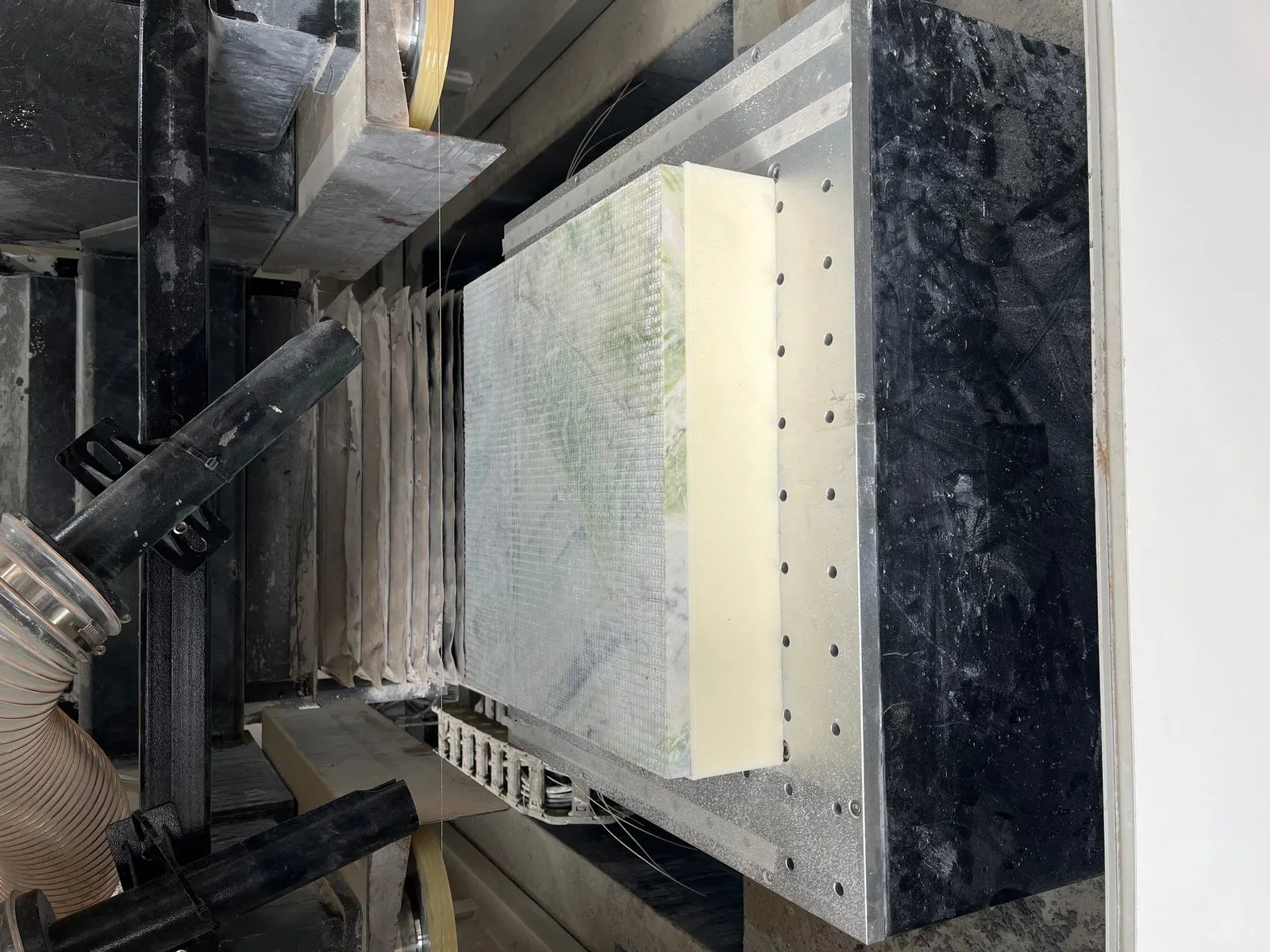
Horizontale Schneidmethode. Die Maschine verwendet eine horizontale Schneidstruktur mit einer
einseitig und schnell bewegenden Diamantdraht-Schlaufe als Schneidwerkzeug; das
Werkstück wird auf dem Arbeitstisch fixiert und durch präzises Vorschieben geschnitten. Dieses Layout ist kompakt mit einem klaren Bewegungsweg,
which helps keep the wire trajectory stable and reduces the influence of load fluctuation on slice thickness and
cut-surface quality. It also supports fixed, rotary and swing cutting modes, so the cutting mode can be matched
to material properties and machining requirements, widening the machine’s adaptability across materials and
process conditions.
Intelligent tension control system. Spring tensioning combined with force-sensor feedback
allows constant-tension or variable-tension operation according to the machining state. Holding wire tension
stable during the cut improves wire running stability and reduces trajectory fluctuation and the risk of wire
breakage; tension is automatically reduced in standby and during wire changes, which limits wire fatigue and
pulley wear.
Multi-stage automatic cutting. Schichtdicke, number of cuts, cutting speed and cutting
depth can be preset, and the machine then completes continuous cutting automatically to those parameters,
reducing manual interference in the process. For tasks requiring many slices in succession, this raises cutting
efficiency and batch-to-batch consistency.
Breakpoint resume. If the process is interrupted by a wire break, power loss or similar
fault, the system records the current cutting position and resumes from that point once operation is restored,
with no need to reset the workpiece origin. This reduces the machining error of repeated positioning, lowers
material loss and improves continuous-machining efficiency.
4. Parameter Settings and Cooling Method
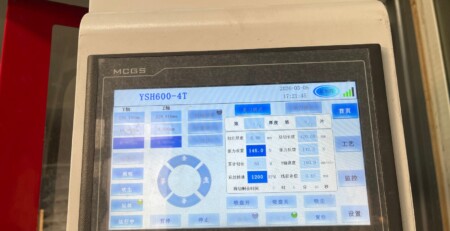
| Parameter | Wert |
|---|---|
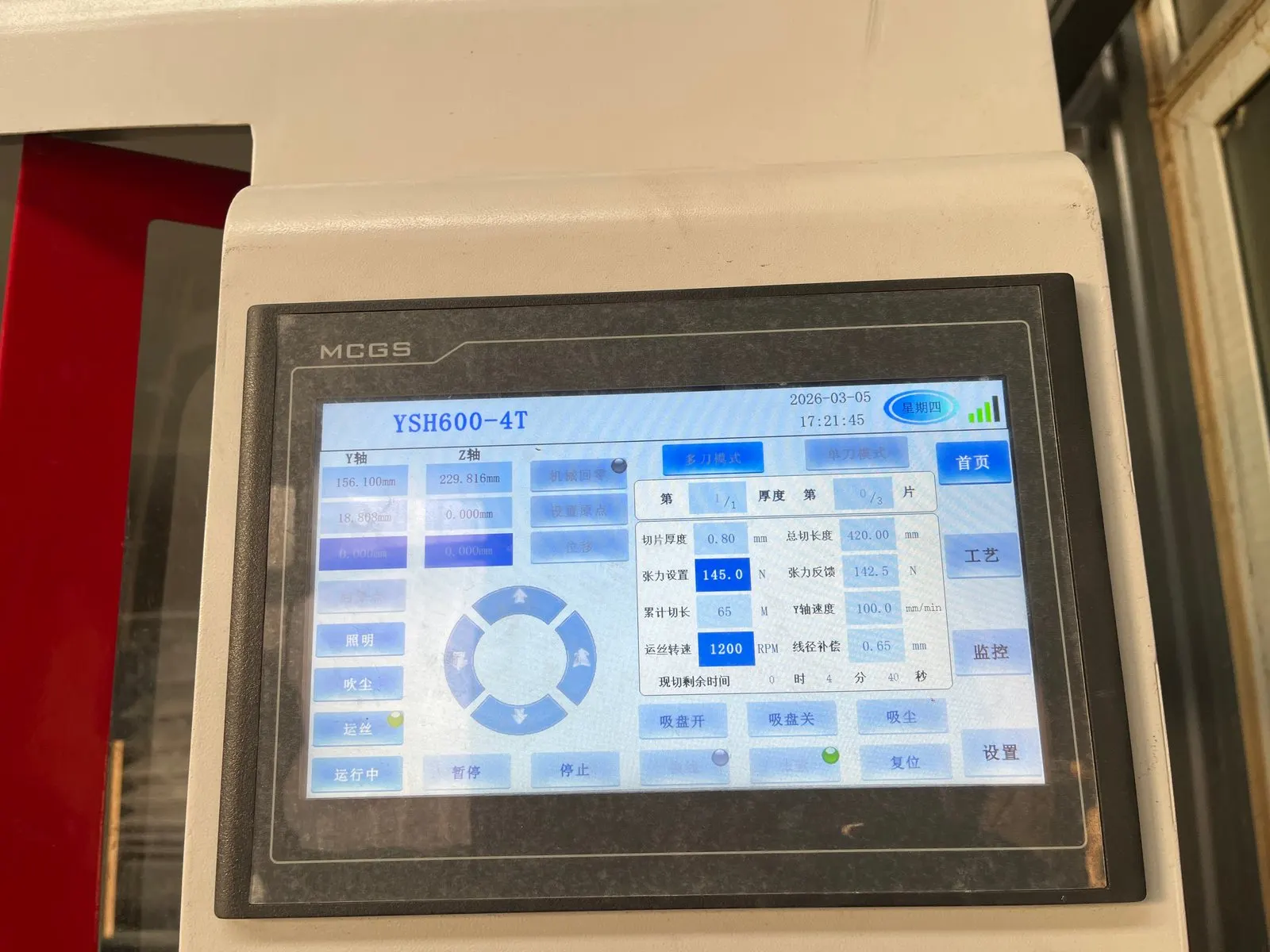
| Drahtdurchmesser (Mm) | 0.60 x 3460 |
| Drahtvorschubgeschwindigkeit (mm/min) | 100 |
| Schnittbreite (Mm) | 400 |
| Cutting wire tension (N) | 145 |
| Drahtgeschwindigkeit (M/s) | 25 |
| Wire-bow time (s) | 60 |
| Schneidlast (N·m) | 17 |
5. Schneidleistung und Ergebnisse
5.1 TTV-Testdaten (Mm)
TTV (Gesamt-Dickenvariation) wurde mithilfe eines Neun-Punkte-Rasters gemessen, dual-probe thickness method on a
vacuum-chuck stage, applied to PMI foam slices produced by diamond wire cutting. The cut sample dimensions were
400 mm x 400 mm x 0.8 Mm, with a nominal thickness of 0.8 Mm. Before measurement the instrument was thermally
stabilised and calibrated with a standard thickness block to reduce zero drift and systematic error. After
dust-free cleaning, each sample was centred on the vacuum chuck and held by negative pressure so that it stayed
in a stable measuring state, limiting the effect of position shift, local warping and deformation on the
thickness readings. The procedure follows the same nine-point method used in our
PEEK slicing test. Thickness data were then collected in sequence at the preset nine
grid positions, and the difference between the largest and smallest readings across all points was taken as the
TTV of that sample, which is used to evaluate the thickness uniformity and machining consistency of PMI foam
Scheiben.
| Probe | Neun-Punkte-Stärkemessungen (Mm) | Tmax | Tmin | TTV |
|---|---|---|---|---|
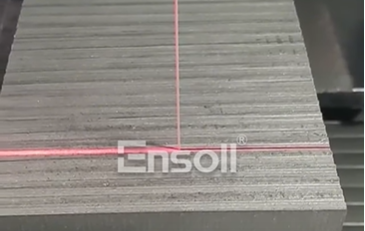
| S01 | 0.785, 0.790, 0.799 / 0.800, 0.802, 0.812 / 0.819, 0.832, 0.835 | 0.835 | 0.785 | 0.050 |
| S02 | 0.752, 0.754, 0.757 / 0.759, 0.762, 0.775 / 0.786, 0.787, 0.789 | 0.789 | 0.752 | 0.037 |
| S03 | 0.747, 0.748, 0.751 / 0.754, 0.756, 0.757 / 0.762, 0.784, 0.791 | 0.791 | 0.747 | 0.044 |
| S04 | 0.749, 0.751, 0.753 / 0.755, 0.759, 0.760 / 0.760, 0.761, 0.762 | 0.762 | 0.749 | 0.013 |
Bewertung: Four PMI foam slices were tested for thickness uniformity by the nine-point
Methode hergestellt. TTV-Werte reichten von 0.013 An 0.050 mm mit einem Durchschnitt von 0.036 Mm. Sample S04 showed the smallest
variation, bei 0.013 Mm. Insgesamt, the results indicate reasonable slice thickness consistency, although some
scatter remains between samples.
5.2 Dicken-Toleranz-Daten (Mm)
Thickness tolerance was measured by the same nine-point grid method, mit 0.800 mm as the nominal thickness of
the sample. The deviation between the measured thickness at each point and the nominal thickness was calculated,
und die maximale positive Abweichung, maximum negative deviation and thickness deviation range were collated to
evaluate the dimensional accuracy and overall machining consistency of the PMI foam slices.
| Probe | Durchschnittliche Dicke (Mm) | Dickenabweichung (Mm) |
|---|---|---|
| S01 | 0.808 | +0.008 |
| S02 | 0.769 | -0.031 |
| S03 | 0.761 | -0.039 |
| S04 | 0.757 | -0.043 |
| Maximale positive Abweichung | +0.008 | +0.008 |
| Maximale negative Abweichung | -0.043 | -0.043 |
| Dicken-Toleranz | +/-0.043 | +/-0.043 |
Bewertung: Mit 0.800 mm as the nominal thickness, the average thicknesses of the four PMI
foam slices were 0.808, 0.769, 0.761 und 0.757 Mm, corresponding to deviations of +0.008, -0.031, -0.039 und
-0.043 Mm. Die maximale positive Abweichung betrug +0.008 Mm, the maximum negative deviation -0.043 Mm, und die
overall thickness tolerance +/-0.043 Mm. The results show that sample thickness tends toward the negative side,
with the last three samples running somewhat thin; thickness control can be improved further through cutting
parameters and dimensional compensation.
5.3 Oberflächenrauheit Ra-Daten (µm)
Oberflächenrauheit (Ra) was measured to ISO 4287 using a stylus profiler. Drei repräsentative Positionen,
Mitte, mittig links und mittig rechts, were profiled on the cut face of each PMI foam slice, and Ra was calculated at
each position to evaluate surface quality and machining consistency after diamond wire cutting.
| Probe | Ra-1 | Ra-2 | Ra-3 | Durchschnittliches Ra |
|---|---|---|---|---|
| S01 | 0.82 | 0.79 | 0.85 | 0.82 |
| S02 | 0.76 | 0.72 | 0.78 | 0.75 |
| S03 | 0.80 | 0.75 | 0.82 | 0.79 |
| S04 | 0.68 | 0.65 | 0.71 | 0.68 |
Bewertung: Four PMI foam slices were tested for surface roughness by the three-point
Methode hergestellt. Average Ra ranged from 0.68 An 0.82 µm, with little variation between measuring positions, indicating a
broadly uniform cut surface and a stable wire running and material-removal process.
5.4 Edge Chipping Data (µm)
Chipping was measured by optical imaging on a toolmaker’s microscope to quantify edge defects on the PMI foam
Scheiben. Sample edges were cleaned before measurement, and the instrument magnification and measuring scale were
calibrated. Each edge region of the slice was then examined under the microscope, recognisable chips, notches
and local edge damage were located and measured, and the defect size at each measuring point was recorded. Das
largest defect on a single slice was taken as the primary evaluation index, giving a combined view of edge
integrity and machining quality after cutting PMI foam.
| Probe | Position 1 | Position 2 | Position 3 | Position 4 | Maximale Abplatzung |
|---|---|---|---|---|---|
| S01 | 5.2 | 6.4 | 5.8 | 7.1 | 7.1 |
| S02 | 4.6 | 5.7 | 5.1 | 6.3 | 6.3 |
| S03 | 5.0 | 6.1 | 5.5 | 6.8 | 6.8 |
| S04 | 3.8 | 4.7 | 4.3 | 5.5 | 5.5 |
Bewertung: Four PMI foam slices were inspected for edge defects by the four-point method.
Defect sizes were generally small, with maximum chipping between 5.5 und 7.1 um and little difference between
samples. The results indicate stable edge material removal during diamond wire cutting and good edge integrity on
the slices.
6. Schlussfolgerung
The high-precision slicing of PMI foam in this test produced good results, mainly because the dedicated
cutting machine, the dry cutting method and the process parameters were matched as one set. PMI foam is a
high-performance structural foam with low density, an internal cellular structure and good specific strength and
stiffness, and that cellular structure gives it a load behaviour different from dense materials during diamond
wire cutting. The diamond grains act continuously on the internal skeleton, and when the cutting load is too
high or the parameters are poorly matched, local compression, Rissen und eine ungleichmäßige Schnittfläche treten auf und wirken sich aus
Schnittdicke und Maßgenauigkeit. Ziel der strukturellen Eigenschaften von PMI-Schaum und dem Geraden
Schnittgenauigkeitsanforderung, Dieser Test optimiert daher die Maschinenauswahl, Schneidemethode und -prozess
Parameter auf gezielte Weise, Kontrolle der Maßgenauigkeit und Schnittflächenqualität bei gleichbleibender Schnitt
Prozess stabil.
Zuerst, Maschinenauswahl. Angesichts der Anforderungen an die Bewegungsstabilität durch PMI-Schaumstoff,
Schneidgenauigkeit und Maschinensteifigkeit, eine spezielle horizontale Diamantdrahtschleifenmaschine für Präzision
PMI-Bearbeitung wurde ausgewählt. Horizontales Schneiden hält den Draht stabil entlang der horizontalen Ebene, was
hilft, die Schneidbahn und die Zuführungsbewegung stabil zu halten und die Wirkung von Maschinenvibrationen zu verringern, Bewegung
error and wire running fluctuation on cut position and dimensional accuracy. Stable feed and motion control also
narrow the variation in cutting load, keeping the relative motion between wire and PMI foam consistent. Dies
reduces the compression and tearing that uneven local loading causes, improves slice dimensional consistency,
and provides a stable machine basis for high-precision PMI slicing.
Zweitens, cutting method. Given the cellular structure and properties of PMI foam, Trockenbearbeitung
wurde verwendet. Dry cutting introduces no liquid coolant, so liquid cannot enter the foam cells, and the cleaning and
drying steps that would otherwise affect the material state are avoided. Das
vollständig beschichtete Diamantdrahtschleife grinds the material directly and continuously, so
removal takes place under relatively stable cutting conditions. Controlling wire
running state and cutting load sensibly reduces the local squeezing and tearing the material experiences during
Schneiden, improving the uniformity of the cut cross-section and edge quality, and keeping the process
consistent.
Third, process parameters. Given the low density, cellular structure and removal behaviour of
PMI-Schaum, wire running speed and feed rate were matched accordingly. Parameters were set to keep the wire running
stably and material removal even, avoiding a feed rate so high that the cutting load rises and the foam skeleton
takes a large local force; wire running speed was controlled so that cutting stayed continuous and stable with
less load fluctuation. Targeted adjustment of the cutting parameters kept material removal comparatively smooth
und, while meeting machining efficiency, verbesserte Schnittdicke und dimensionale Konsistenz sowie die Qualität von
der Schnittfläche.
Zusammengenommen, die Ergebnisse für die Maßgenauigkeit der Schnitt, Dickenabweichung, Oberflächenrauheit (Ra) und
Schnittkantenqualität zeigen, dass, durch koordinierte Optimierung einer dedizierten horizontalen Schneidmaschine, trocken
Schneiden und geeignete Schnittparameter, Diamantdrahtschleifenschneiden die Anforderungen einer hochpräzisen Schleife erfüllt
Geradeschneidung für PMI-Schaum. Die bearbeiteten Proben wurden konsistent maßgenau durchgeführt, Schnitt
Dickenkonsistenz und Schnittflächenqualität, was darauf hindeutet, dass die passende Maschinenstruktur, cutting method
und Prozessparameter auf die Struktur und das Schneidverhalten von PMI-Schaum wirken sich effektiv auf die Materialabtragung aus
und Prozessstabilität, und liefert eine Prozessreferenz für hochpräzises gerades Schneiden von PMI-Schaum.
Verwandte Prozessdaten
Das validierte Parameterfenster hinter diesen Ergebnissen – Was jede Einstellung auf einem zellulären Schaum bewirkt und in welche Richtung es bewegt werden sollte, wenn ein Defekt auftritt – ist als eigenständige Referenz veröffentlicht: PMI-Schaum-Schneidparameter. Für einen Vergleich nebeneinander mit einem dichten Thermoplast, gemessen auf derselben Basis, sehen Sie PEEK vs. PMI-Schaum, und für die Messmethode der Dicke selbst, das Neun-Punkt-TTV-Anleitung.
Häufig gestellte Fragen
Kann Diamantdrahtschneiden PMI-Schaum auf eine Dicke von 0.8 mm schneiden?
Ja. In diesem Test, vier 400 mm x 400 mm PMI-Schaumscheiben wurden auf eine Sollstärke von 0.8 mm auf einem
ESH600-4T horizontal Diamantdrahtsäge-Maschine. Gemessene Gesamtdickenabweichung
(TTV) reichte von 0.013 An 0.050 mm mit einem Durchschnitt von 0.036 Mm, und die Gesamtdickentoleranz war
+/-0.043 Mm, was eine brauchbare Grundlage für präzise Schaumkomponenten ist.
Warum wurde das Trockenschneiden für PMI-Schaum statt Nassschnitt gewählt?
PMI-Schaum ist porös, leicht und neigt dazu, Flüssigkeiten aufzunehmen. Trockenschnitt verhindert, dass Kühlmittel eindringt
die Zellen oder das Verbleiben im Material und die Scheibenmaße destabilisieren, und es entfernt die Reinigungs- und
Trocknungsschritte, die auf einen Nassschnitt folgen. Das hilft, die Struktur des Schaums und die Maßgenauigkeit
der Scheiben.
Welche Oberflächenqualität kann beim Schneiden von PMI-Schaumstoff erwartet werden?
Die Oberflächenrauheit wurde nach ISO gemessen 4287 mit einem Nadel-Profiler an drei Positionen pro Scheibe. Durchschnittliches Ra
reichte von 0.68 An 0.82 ähm, mit geringen Variationen zwischen den Messpositionen, und das maximale Absplittern der Kanten
mit optischer Mikroskopie gemessen wurde 5.5 An 7.1 µm, deutet auf eine gleichmäßige Schnittfläche mit guter Kantenintegrität hin.
Warum wurden die PMI-Schaumscheiben etwas dünn?
Mit 0.800 mm as the nominal thickness, die vier Schnitte gemittelt wurden 0.808, 0.769, 0.761 und 0.757 Mm, sodass drei davon
sie wurden dünn 0.031 An 0.043 Mm. Dies ist ein systematischer Offset statt einer zufälligen Streuung, und es kann
direkt durch Schneidparameter und Maßkompensation beim nächsten Durchgang korrigiert werden.
welche anderen Materialien Ensoll mit Diamantdrahtschleifen getestet hat?
Ensoll hat vergleichbare Prozessdaten für andere Polymere und schwer zu bearbeitende Materialien veröffentlicht, einschließlich eines
PEEK-Präzisionsschneidetests und eines Leitfadens für die
materials suited to diamond wire loop cutting. allgemeinen Prozessfragen, sehen Sie
das Diamantdraht-Loop-Schneidtechnologie FAQ.
Technische Inhalte überprüft vom Ensoll-Engineering-Team – ein Hersteller von Diamantdrahtschleifen mit 10+ Jahre der Produktionserfahrung.