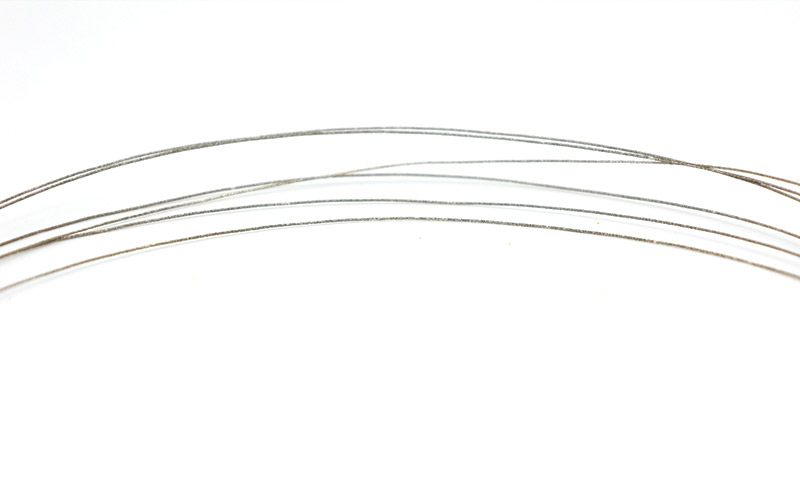
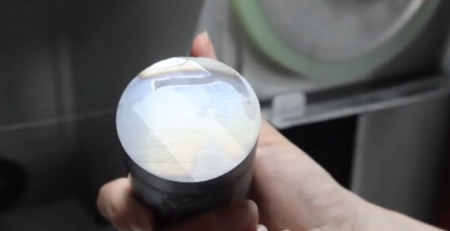
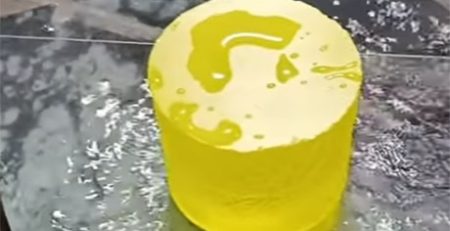
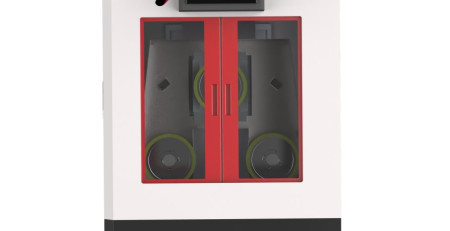
A diamond wire loop saw cuts with a continuous diamond-coated wire running over tensioned pulleys — the diamonds act as the abrasive, glatte,, clean cuts with minimal material loss.
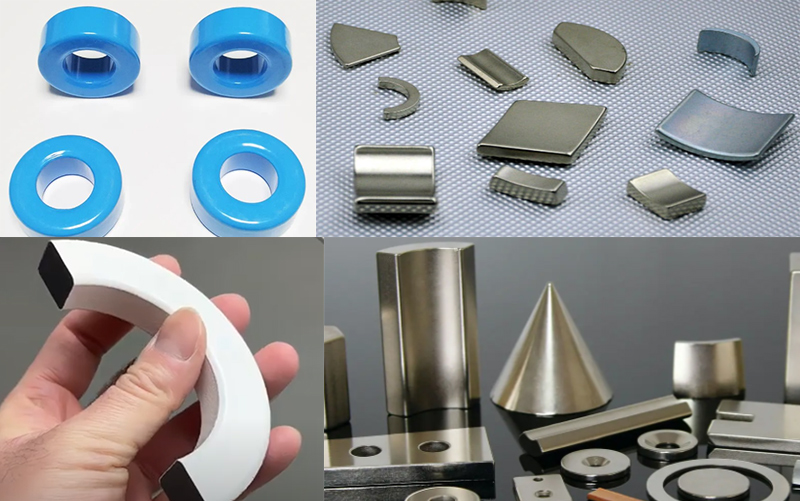
The process suits every magnet family: Ferrit, Neodym, SmCo, Alnico, flexible magnets and other rare-earth grades.
Its value for magnet fabrication rests on five pillars: precision shaping, efficient material utilization, design customization, batch-to-batch consistency and expanded manufacturing capability.
Because the wire removes material gradually instead of shearing it, even intricate contours and tight tolerances are achievable on the hardest permanent magnets.
Im Bereich des Präzisionsschneidens, the application of anendlose Diamantdrahtsägehas revolutionized the way magnets are shaped and tailored to fit diverse industrial needs. Das Verständnis der Prinzipien hinter dem Schneiden von endlosen Diamantdrahtsägen ist von größter Bedeutung, um ihre Bedeutung bei der Herstellung von Magneten zu verstehen.
Understanding the Principle of Endless Diamond Wire Saw Cutting
Endless diamond wire saw cutting, Wie der Name schon sagt, utilizes a continuous loop of diamond-coated wire to achieve precise and efficient cutting of various materials. This innovative cutting method is particularly effective when dealing with hard substances like ceramics, Glas, and even metals.
The process begins with the diamond-coated wire loop, which is threaded through a series of pulleys and tensioned to create a cutting path. The diamonds on the wire act as abrasive particles, gradually wearing down the material as the wire moves through it. This continuous cutting action results in smooth, clean cuts with minimal material loss.
in the hardness and durability of diamond as an abrasive material. Diamonds are one of the hardest substances known to man, making them ideal for cutting through tough materials with precision and efficiency. Zusätzlich, the continuous loop design of the wire ensures a consistent cutting action, allowing for the creation of intricate shapes and precise cuts.
Types of Magnets
Ferrit-Magnete: Also known as ceramic magnets, ferrite magnets are made from a mixture of iron oxide and barium or strontium carbonate. They are popular for their low cost, excellent corrosion resistance, and high coercivity, making them suitable for applications like refrigerator magnets, speakers, and small motors.
Neodym-Magnete: Neodymium magnets are the strongest type of permanent magnets commercially available. Composed of neodymium, Eisen, und Bor, these magnets exhibit exceptional magnetic properties and are used in applications requiring strong magnetic fields, such as in electric motors, Kopfhörern, and magnetic fasteners.
Samarium Cobalt Magnets: SmCo magnets are another type of rare-earth magnets known for their high magnetic strength and temperature stability. Comprised of samarium and cobalt, these magnets are used in industries where high operating temperatures and strong magnetic fields are required, such as aerospace and medical equipment.
Alnico-Magnete: Alnico magnets are composed of aluminum, Nickel, and cobalt, along with iron and other elements. They are characterized by their high magnetic flux density and excellent temperature stability. Alnico magnets find applications in sensors, guitar pickups, and specialized industrial equipment.
Flexible Magnets: Flexible magnets are made from a mixture of ferrite powder and rubber or plastic binders. These magnets are versatile and can be easily bent, twisted, and cut into various shapes. They are commonly used in advertising displays, Kühlschrankmagnete, and magnetic signage.
Rare-Earth Magnets: Rare-earth magnets include neodymium andSamarium-Kobalt Magnete, known for their exceptional magnetic properties. These magnets have high energy densities and are widely used in applications requiring strong and compact magnetic fields, such as in electric vehicles, windräder, und Medizinprodukte.
Importance of Endless Diamond Wire Saw Cutting for Magnets
Präzision und Genauigkeit: Endless diamond wire saw cutting offers unparalleled precision and accuracy in shaping magnets. The ability to create intricate shapes and precise cuts ensures that magnets meet exact specifications, leading to enhanced performance and efficiency in their intended applications.
Efficiency in Material Utilization: Endless diamond wire saw cutting minimizes material waste during the cutting process. By producing clean cuts with minimal kerf loss, this technique maximizes the utilization of raw materials, contributing to cost savings and sustainable manufacturing practices.
Customization and Versatility: The flexibility of endless diamond wire saw cutting allows for the customization of magnet shapes to meet specific requirements. Whether producing magnets for medical devices, Erneuerbare Energiesysteme, or industrial machinery, this cutting method enables manufacturers to tailor magnets to suit diverse applications effectively.
Consistent Quality: The uniform cutting action of endless diamond wire saws ensures consistent quality across magnet production batches. This reliability in cutting results in magnets with uniform magnetic properties and structural integrity, crucial for maintaining product performance and reliability.
Enhanced Manufacturing Capabilities: By incorporating endless diamond wire saw cutting into magnet production processes, manufacturers can enhance their manufacturing capabilities. This advanced cutting technique enables the creation of magnets with complex geometries and tight tolerances, expanding the possibilities for innovative magnet designs.
Industry Advancements: The integration of endless diamond wire saw cutting in magnet manufacturing contributes to advancements in various industries reliant on magnetic technologies. From renewable energy applications to medical diagnostics, the precision and efficiency of this cutting method drive progress and innovation in magnet-based technologies.
Schließlich, the importance of endless diamond wire saw cutting for magnets lies in its ability to deliver precise, effizienter, and customizable cutting solutions that enhance magnet quality, optimize material utilization, and drive technological advancements across industries dependent on magnetic components. By embracing this cutting-edge technique, manufacturers can elevate their magnet production processes and contribute to the evolution of magnetic applications in diverse sectors.
Häufig gestellte Fragen
How does a diamond wire loop saw cut magnets?
A continuous loop of diamond-coated wire is threaded over pulleys, tensioned and driven at speed. The diamond grains on the wire act as abrasive particles that gradually grind through the magnet, producing smooth cuts with very little kerf loss — even on the hardest rare-earth grades.
What types of magnets can a wire loop saw cut?
All major families: Ferrit (Keramik) Magnete, Neodym (NdFeB), Samarium-Kobalt (SmCo), Alnico, flexible rubber-bonded magnets and other rare-earth magnets. Only wire grit and cutting parameters change between materials.
Why is wire loop cutting better than blades for shaping magnets?
The thin wire removes material by gradual abrasion rather than shearing, so there is no edge fracture and kerf loss is minimal. It also follows programmed contours, enabling intricate shapes and tight tolerances that rigid blades cannot produce.
Does wire loop cutting keep magnet quality consistent across a batch?
Ja. The cutting action is uniform along the loop and CNC-controlled, so every part in a production batch gets the same dimensions and edge quality — which keeps magnetic properties and structural integrity consistent part to part.
In der anspruchsvollen Welt der fortschrittlichen Halbleiter, in der Leistung und Effizienz oberste Priorität haben, steht ein Material als entscheidender Enabler:... mehr lesen
Wichtige Erkenntnisse
Ziegel werden typischerweise bewertet 5-8 auf der Härteskala von Mohs, Daher müssen Schneid- und Schleifwerkzeuge härtere Schleifmittel haben und mehr.... mehr lesen
Wesentliche Erkenntnisse
Diamantdraht-Schleifen gleiten durch Glas mit einer diamantbeschichteten Schneidefläche, und ermöglichen es Handwerkern, Bierflaschen in komplizierte Designs zu schnitzen... mehr lesen
Wichtige Erkenntnisse
Eine diamantenbeschichtete Drahteinsäge ist ein dünner Draht, der mit Industrie-Diamantpartikeln beschichtet ist und durch harte Materialien schleift... mehr lesen
Einleitung: Revolutionizing Optical Crystal Processing
In the precision-driven world of optical manufacturing, beeinflusst die Qualität des Kristallschnitts direkt die Leistung... mehr lesen
Der globale Übergang zu sauberer Energie und fortschrittlichem Computing hat den Lieferketten der Photovoltaik beispiellosen Druck auferlegt... mehr lesen
Abstrakt: Dieser Anwendungsbericht dokumentiert einen hochpräzisen Gerade Schnitttest auf BG38-Glasblech, geliefert von einem europäischen Kunden. Das Werkstück wurde vermessen... mehr lesen
Wichtige Erkenntnisse
CNC-Fräsen kann weichere magnetische Materialien schneiden – kohlenstoffarme Elektrobleche, Nickellegierungen wie Permalloy und weiche Ferrite —... mehr lesen