Was ist Kristallquarz? Der vollständige Leitfaden
Wenn Sie das Wort hören “kristall,” was kommt Ihnen in den Sinn? Ein funkelnder Edelstein, der an einer Halskette hängt? Ein präziser Oszillator in einer Armbanduhr? Oder vielleicht eine mystische Kugel, die zur Heilung verwendet wird? All dies ist korrekt – denn alles verweist auf eine Substanz: Kristallquarz.
- Kristallquarz ist kristallines Siliziumdioxid (SiO2-KARTON) aufgebaut aus einem kontinuierlichen Gerüst von Si-O-Tetraedern; die reine farblose Form ist Bergkristall, unterschiedlich zu kryptokristallinen Varianten wie Achat und Jaspis.
- Spurenelemente und natürliche Bestrahlung erzeugen die gefärbten Varianten: Amethyst (Eisen), Citrin, Rosenquarz (Titan/Eisen/Mangan), Rauchquarz (bestrahltes Aluminium) und Milchquarz (Fluideinschlüsse).
- Quarz ist piezoelektrisch – ein Uhrenkristall schwingt genau bei 32,768 Hz — was sie für Oszillatoren unerlässlich macht, Filter, GPS, medizinischer Ultraschall und UV-Optik, weit über Schmuck hinaus.
- der Wert reicht von unter $1 pro Karat für gewöhnliche Bergkristalle bis $100+ pro Karat für hochwertigen rutilierten Quarz.
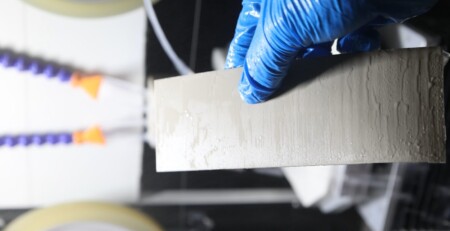
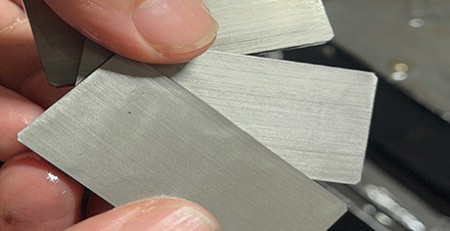
- Quarzschneiden (Mohs 7, spröd, anisotrop) begünstigt die Diamantdrahtschleife: ein 0.2-0.6 mm-Kerf, kein Absplittern oder Hitzeschäden, Ra 0.4-1.6 Mikrometer, bei typischen Zuführungen von 2-6 mm/min.
Kristallquarz ist das häufigste Mineral auf der Erdoberfläche, doch seine Kombination aus Schönheit, Haltbarkeit, und einzigartigen physikalischen Eigenschaften macht es alles andere als gewöhnlich. Von alten Zivilisationen, die glaubten, es sei dauerhaftes Eis, das von den Göttern eingefroren wurde, bis hin zu modernen Elektronikherstellern, die auf seine piezoelektrische Präzision setzen, Kristallquarz ist seit Tausenden von Jahren unschätzbar wertvoll geblieben.
In diesem Leitfaden, Wir werden alles erforschen, was Sie wissen müssen: was ist Kristallquarz, was ist Bergkristallquarz, die vielen Sorten von Quarz, wofür Kristallquarz verwendet wird, ob Quarzkristall ein Edelstein ist, wie viel ein Quarz wert ist, und schließlich—wie moderne Hersteller dieses harte Material schneiden Diamantdraht-Schlaufe Technologie.
Für die Industrieniveaus, die die Halbleiter- und PV-Produktion versorgen, sehen Sie hochreiner Quarz.
Was ist Kristallquarz? Eine wissenschaftliche Definition?
 Einfach gesagt, Kristallquarz ist eine kristalline Form von Siliziumdioxid (SiO₂) . Die Atome sind in einem kontinuierlichen Tetraeder-Rahmen angeordnet—jedes Siliziumatom ist mit vier Sauerstoffatomen verbunden. Diese sich wiederholende, geordnete Struktur ist das, was Quarz seine charakteristische hexagonale Prismengestalt mit spitzen pyramidenförmigen Abschlüssen verleiht.
Der Begriff “Kristallquarz” bezieht sich typischerweise auf makrokristallinen Quarz—was bedeutet, dass die einzelnen Kristalle groß genug sind, um sie mit bloßem Auge zu sehen. Das unterscheidet es von kryptokristallinen Varianten wie Achat oder Jaspis, bei denen die Kristallstruktur mikroskopisch ist.
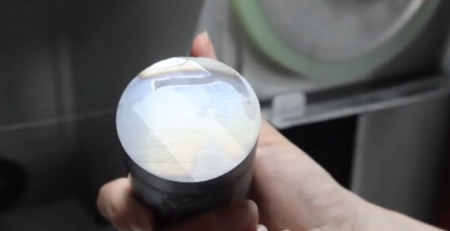
Reiner Kristallquarz ist vollständig farblos und transparent. Diese spezielle Variante hat einen besonderen Namen: Bergkristallquarz. Die alten Griechen nannten ihn krystallos, was “Eis,” bedeutet, weil sie glaubten, es sei Wasser, das so tief gefroren sei, dass es niemals auftauen könne.
Also, um die grundlegende Frage zu beantworten: was ist Bergkristallquarz? Es ist einfach die transparente, farblose Form von kristallinem Siliziumdioxid – der reinste Ausdruck von Quarz ohne jegliche Verunreinigungen oder Einschlüsse.
Die vielen Varianten von Quarz
Während Bergkristall die reinste Form ist, ist Quarz bei weitem kein einfarbiges Mineral. Spurenelemente und natürliche Bestrahlung erzeugen ein erstaunliches Spektrum an Varianten. Das Verständnis dieser hilft, spätere Fragen zu Wert und Edelsteinstatus zu beantworten.
 Rein, Farblose Varianten
– Bergkristall – Vollständig transparent und farblos. Die Basislinie, von der alle anderen Varianten abweichen.
Farbiger makrokristalliner Quarz
| Varietät | Farbe | Farbursache |
| Amethyst | Lila zu violett | Eisenverunreinigungen mit natürlicher Bestrahlung |
| Citrin | Gelb bis orange | Eisen (oder wärmebehandelter Amethyst) |
| Rosenquarz | Blassrosa | Spuren von Titan, Eisen, oder Mangan |
| Rauchquarz | Braun bis Schwarz | Natürliche Bestrahlung von Aluminiumverunreinigungen |
| Milchquarz | Weiß, Undurchsichtig | Mikroskopisch kleine Flüssigkeits- oder Gaseinschlüsse |
| Prasiolith | Grün | Wärmebehandelter Amethyst (selten in der Natur) |
Kryptokristalliner Quarz (Mikrokristallin)
– Chalcedon – Wachsartiger Glanz, Durchsichtig
– Achat – Bandes Calcedon
– Jaspis – Undurchsichtig, oft rot oder braun
– Onyx – Schwarz-weiß gebändertes Chalcedon
– Karneol – roter bis oranger Chalcedon
Spezielle Strukturvarianten
– Tigerauge – faseriger Quarz mit Chatoyance (der Katzenaugen-Effekt)
– Aventurin – Quarz mit eingeschlossener Glimmer- oder Hämatitbildung, erzeugt Funkeln
– Rutilquarz – Bergkristall mit nadelartigen Rutilkristallen
Jede Variante hat ihren eigenen Markt, Wert, und Anwendungen. Aber alle teilen die gleiche grundlegende SiO₂-Chemie und das hexagonale Kristallsystem.
Ist Quarzkristall ein Edelstein?
Das ist eine ausgezeichnete Frage, und die Antwort erfordert eine Unterscheidung zwischen technischer und kommerzieller Definition.
Technisch gesehen, ja. Ein Edelstein ist jedes Mineral oder organisches Material, das geschnitten, poliert, und zur Verzierung oder Dekoration verwendet wird. Quarzkristall erfüllt diese Definition vollständig. Tatsächlich, amethyst has been classified as a precious gemstone for centuries—it was once ranked alongside diamond, Rubin, Saphir, and emerald before large deposits were discovered in Brazil.
Commercially, it depends on the variety. The gemstone market divides quartz into three tiers:
- Precious (historically) – Amethyst and citrine were once considered precious. Heute, they are semi-precious due to abundant supply.
- Semi-precious – Most colored quartz varieties (Rosenquarz, Rauchquarz, Amethyst) fall here.
- Decorative – Milky quartz and rock crystal (unless exceptionally clear) are often used for carvings, spheres, and pyramids rather than faceted gemstones.
One key point: rock crystal quartz is absolutely a gemstone when it is transparent, inclusion-free, and polished. Aber, because it is common, its price is low compared to other gemstones—which leads directly to our next question.
Wie viel kostet 1 Quarz wert?
Das ist die Frage, die sich die meisten Menschen stellen, nachdem sie von Quarz erfahren haben. Die ehrliche Antwort: es variiert enorm, von weniger als $1 bis zu Tausenden von Dollar.
Hier ist eine realistische Übersicht für 1 Karatt (0.2 Gramm) oder 1 Kilogramm, abhängig davon, was “1 Quarz” bedeutet.
Preis nach Sorte (Pro Karat für facettierte Edelsteine)
| Varietät | Niedrige Qualität (USD/Karat) | Hohe Qualität (USD/Karat) |
| Bergkristall (klar) | 0.10–0,10–0,50 | 1–1–5 |
| Amethyst (lila) | 0.20–0,20–1 | 5–5–30 |
| Citrin (gelb) | 0.15–0,15–0,80 | 3–3–20 |
| Rosenquarz | 0.10–0,10–0,40 | 1–1–8 |
| Rauchquarz | 0.10–0,10–0,50 | 2–2–15 |
| Rutilquarz | 1–1–5 | 20–20–100+ |
| Prasiolith (grün) | 1–1–3 | 10–10–40 |
Wofür wird Kristallquarz verwendet?
Die Anwendungen von Kristallquarz erstrecken sich auf Wissenschaft, Industrie, Schmuck, und Spiritualität. Kein anderes Mineral hat eine so vielfältige Bandbreite an Anwendungen.
Elektronik und Zeitmessung (Die technologisch wichtigste Verwendung)
Quartz is piezoelectric—when mechanically compressed, it generates an electric voltage. Umgekehrt, applying an electric field causes it to vibrate at an extremely precise frequency. This property allows quartz crystals to act as oscillators and filters.
Every quartz watch uses a tiny tuning-fork-shaped crystal cut from synthetic quartz. When powered by the battery, it vibrates at exactly 32,768 times per second. The watch circuit counts these vibrations to keep time with an accuracy of ±15 seconds per month—far better than any mechanical movement.
Beyond watches, quartz oscillators are found in:
– Smartphones and computers (clock generators)
– Radio transmitters and receivers (frequency stabilization)
– GPS devices
– Medical ultrasound equipment
– Pressure sensors
Optical Components
Rein, synthetic quartz transmits ultraviolet light better than glass. Es wird verwendet für:
– UV-Spektroskopie-Küvetten
– Hochleistungslaserfenster
– Mikroskopobjektive (für UV-Bildgebung)
– Teleskop-Korrektorplatten
Schmuck und Dekoration
Wie oben festgestellt, ist Quarz ein legitimer Edelstein. Er wird geschnitten als:
– Facettierte Edelsteine für Ringe und Ohrringe
– Cabochons für Anhänger
– Perlen für Halsketten
– Geschnitzte Figuren, spheres, und Obelisken
Metaphysische und Heilpraktiken
Viele Menschen glauben, dass Quarzkristalle Energie verstärken, die Absicht fokussieren, oder Heilung fördern. Ob man nun an diese Überzeugungen glaubt oder nicht, ist der Markt für “Heilsteine” beträchtlich. Bergkristall wird typischerweise verwendet für “Reinigung” und “Aufladen” andere Steine, während Amethyst mit Ruhe, und Rosenquarz mit Liebe assoziiert wird.
Industrielle Schleifmittel und Glasherstellung
Zerstoßener Quarz wird verwendet als:
– Schleifmittel beim Sandstrahlen und Steinschneiden
– Flussmittel in der Metallurgie
– Der primäre Rohstoff für Glas- und Keramikglasuren
– Ein Füllstoff in Farben, Kunststoff, und Gummi
Wie man Kristallquarz schneidet: Die Diamant-Draht-Schleifen-Lösung
Nun kommen wir zu einer kritischen Fertigungsherausforderung. Ob für Elektronik, optische Komponenten, oder die Formgebung von Edelsteinen, muss Kristallquarz oft in präzise Formen geschnitten werden. Aber Quarz ist hart – 7 auf der Mohs-Skala, härter als Glas oder Stahl. Er ist auch spröde und neigt zum Absplittern, Risse bilden, oder Unterflächenschäden beim Schneiden verursachen.
Traditionelle Schneidmethoden haben jeweils ernsthafte Nachteile:
– Diamantschleifscheiben – Breite Schnittfuge (Materialverlust), erhebliche Vibration, Faseabsplitterungen, und Wärmeentwicklung.
– Wasserstrahlschneiden – Kann Kantenablösungen verursachen und erfordert hohen Druck, der dünne Abschnitte brechen kann.
– Laserschneiden – Erzeugt eine wärmebeeinflusste Zone (Wärmeeinflusszone) mit Mikrorissen und angeschmolzenen Oberflächen; ungeeignet für optische oder elektronische Anwendungen.
– EDM (Funkenerosion) – Funktioniert nur auf leitfähigen Materialien; Quarz ist ein elektrischer Isolator.
Die bewährte Lösung: Diamantdraht-Schlaufenschneiden
Ein Diamantdraht-Kreis ist ein kontinuierlicher, flexibler Stahldraht, mit industriellem Diamantkorn elektroplattiert. Der Kreis rotiert in einer einzigen Richtung mit hoher Geschwindigkeit (typischerweise 4–15 Meter pro Sekunde), und die Diamantpartikel schleifen durch Quarz wie eine Präzisionssäge – ohne die Einschränkungen traditioneller Methoden.
Warum Diamantdraht-Schlaufe ideal zum Schneiden von Kristallquarz:

| Merkmal | Vorteile für Quarz |
| Dünner Schnittspalt (0.2–0,6 mm) | Minimaler Materialverlust. Beim Schneiden eines $500 Quarzkristalls, erhöht jeder Millimeter eingespartes Material den Ertrag. |
| Keine Kantenausbrüche | Die kontinuierliche Schleifbewegung verteilt die Belastung gleichmäßig, und beseitigt das beim Sägen übliche Abplatzen an den Kanten. |
| Keine Hitzeschäden | Kühlmittel (Deionisiertes Wasser oder Öl) spült kontinuierlich die Schnittzone, Vermeidung von thermischen Mikrorissen oder piezoelektrischen Schäden. |
| Ausgezeichnetes Oberflächenfinish (Ra 0,4–1,6 µm) | Viele Quarzkomponenten benötigen kein Nachschleifen oder Polieren nach dem Schneiden – Zeit- und Kostenersparnis. |
| Fähigkeit, komplexe Formen zu schneiden | CNC-gesteuerte Drahtschlaufen können Kreise, Bögen, Schlitze, und kundenspezifische Konturen ohne Werkzeugwechsel schneiden. |
| Schneidet in jeder Orientierung | Quarz ist anisotrop (Eigenschaften variieren je nach Kristallrichtung). Diamantdraht schneidet gleichermaßen gut entlang oder quer zur optischen Achse. |
Praktische Anwendungen für geschnittenen Quarz
– Elektronik – Schneiden von synthetischen Quarzwafern in winzige Oszillatoren oder Filterrohlinge.
– Optik – Schneiden von UV-Quarz in rechteckige Fenster oder zylindrische Stäbe.
– Edelsteine – Formen von rohem Bergkristall oder Amethyst zu facettierten Vorformen vor dem Polieren.
– Metaphysische Produkte – Quarzschneiden Spitzen, spheres, und Stäbe aus größeren Rohkristallen.
Tips for Maximum Yield When Cutting Quartz
- Select the right wire diameter – 0.4 mm for general cutting; 0.2 mm for thin wafers or delicate crystals.
- Optimize feed rate – Typically 2–6 mm/min for quartz. Too fast causes chipping; zu langsam verschwendet Zeit, ohne die Qualität zu verbessern.
- Use clean coolant – Deionized water prevents contamination of optical or electronic surfaces.
- Inspect the wire regularly – Replace when cutting speed drops significantly or surface finish degrades.
- Secure the crystal firmly – Quartz is brittle; any vibration during cutting can cause fracture.
By adopting diamond wire loop cutting, manufacturers of quartz components—whether for Swiss watches, medical lasers, or gemstone jewelry—can dramatically reduce waste, Sekundärveredelung eliminieren, und komplexe Formen schleifen, die zuvor unmöglich oder zu teuer waren.
Schlussfolgerung
Kristallquarz ist weit mehr als ein hübscher Stein. Er ist ein wissenschaftliches Wunder (Piezoelektrizität), ein industrielles Arbeitspferd (Oszillatoren und Optik), ein legitimer Edelstein (Amethyst, Citrin, Bergkristall), und ein spirituelles Symbol. Sein Wert reicht von Cent pro Karat für gewöhnlichen Milchquarz bis zu Tausenden von Dollar für außergewöhnliche Meisterkristalle.
Häufig gestellte Fragen
Was ist Kristallquarz?
Kristallquarz ist die makrokristalline Form von Siliziumdioxid (SiO2-KARTON), wobei einzelne Kristalle groß genug sind, um mit bloßem Auge zu sehen. Seine Atome bilden ein kontinuierliches tetraedrisches Gestell, das die charakteristische sechseckige Prismaform erzeugt. Die reine, farblos, transparente Variante heißt Bergkristall.
Ist Quarzkristall ein Edelstein??
Technisch gesehen ja – er ist geschliffen, poliert und zur Verzierung verwendet, was die Definition eines Edelsteins ist. Kommerziell werden die meisten Sorten (Amethyst, Citrin, Rosenquarz, Rauchquarz) als Halbedelsteine eingestuft, weil das Angebot reichlich ist, während milchiger Quarz und gewöhnlicher Bergkristall hauptsächlich für Schnitzereien und dekorative Gegenstände verwendet werden.
Wofür wird Kristallquarz verwendet?
Seine wichtigste Verwendung ist in der Elektronik: piezoelektrische Quarzoszillatoren halten die Zeit in Uhren und stabilisieren Frequenzen in Telefonen, Computern, GPS- und Funkgeräten. Er dient auch für UV-Optiken, Schmuck und dekorative Schnitzereien, metaphysische Produkte, und — zerkleinert — als Schleifmittel und Rohstoff für die Glasherstellung.
Was ist die beste Methode, Kristallquarz zu schneiden?
Schneiden von Diamantdrahtschlaufen. Der dünne, diamantbeschichtete Draht ergibt einen 0.2-0.6 mm-Schnitt mit minimalem Materialverlust, keine Randabsplitterungen, keine Hitzeschäden dank kontinuierlicher Kühlung, und Oberflächenrauheiten von Ra 0.4-1.6 Mikrometer. Es schneidet auch komplexe Konturen und funktioniert gleichermaßen gut entlang oder quer zur optischen Achse des Kristalls.
Überprüft vom Ensoll-Ingenieurteam.