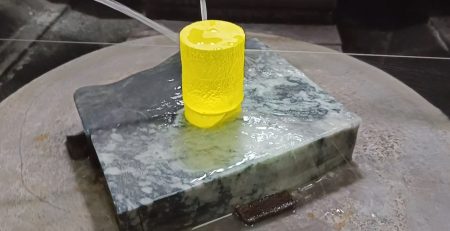
Warum harte und spröde Materialien beim Schneiden abplatzen
Einleitung
Harte und spröde Materialien sind in Branchen wie der Elektronik von entscheidender Bedeutung, Optik, Luft- und Raumfahrt, und Medizinprodukte. Aber, Beim Schneiden kommt es oft zu Abplatzungen, Risse, und schlechter Kantengüte. Dieser umfassende Leitfaden erläutert, was harte und spröde Materialien sind, ihre wichtigsten Eigenschaften, fortschrittliche Schneidtechniken, und wie man saubere Ergebnisse erzielt, präzise Schnitte erzeugt – besonders bei komplexen Formen.
Wenn Sie Experteneinsichten zur Minimierung von Materialschäden suchen, sehen Sie sich diese Facebook-Diskussion an, in der Fachleute ihre Erfahrungen teilen:
Nun, lassen Sie uns die Details erkunden.
<img class="aligncenter size-large wp-image-2309" src="https://www.ensolltools.com/wp-content/uploads/2025/05/1747123198357-1024×521.png" alt=""Diamantdraht-Schlaufe” width="”1024″ height="”521″ />1. Was sind harte und spröde Materialien? (Definition & Typen)
Harte und spröde Materialien haben hohe Härte, aber geringe Bruchzähigkeit, das bedeutet, dass sie Kratzer widerstehen, aber unter Belastung leicht brechen. Diese Materialien sind entscheidend für hochpräzise Anwendungen, die Haltbarkeit und Verschleißfestigkeit erfordern.
Gängige Typen harter und spröder Materialien:
– Keramik (Tonerde, Zirkonia, Siliciumnitrid) – Verwendet in medizinischen Implantaten und Schneidwerkzeugen
– Glas (Borosilikat, Quarz, Gorilla-Glas) – Unverzichtbar für Displays, Linsen, und Laborausrüstung
– Halbleitern (Siliziumwafer, Galliumarsenid) – Wichtig für Elektronik und Solarzellen
– Fortschrittliche Verbundwerkstoffe (Kohlenstofffaser, Keramische Verbundwerkstoffe) – Verwendet in Luft- und Raumfahrt sowie Verteidigung
– Ultra-harte Materialien (Diamant, Wolframkarbid) – Angewendet in industriellem Schneiden und Bohren
Jedes Material erfordert spezialisierte Schneidtechniken, um Defekte zu vermeiden.
2.Wichtige Eigenschaften harter und spröder Materialien
Das Verständnis dieser Eigenschaften hilft bei der Auswahl des richtigen Bearbeitungsansatzes:
– Hohe Härte – Verschleißfest, aber schwer mit herkömmlichen Werkzeugen zu schneiden
– Niedrige Bruchzähigkeit – Neigt unter mechanischer Belastung zum Reißen
– Thermische Empfindlichkeit – Plötzliche Temperaturänderungen können Mikro-Risse verursachen
– Anisotropes Verhalten – Festigkeit variiert je nach Schnittführung
Diese Eigenschaften machen traditionelle Bearbeitungsmethoden (zum Beispiel., Sägen, Bohren) ineffektiv, führt oft zu Randabplatzungen.
3. Schneidmethoden für harte und spröde Materialien
Um saubere Schnitte zu erzielen, verwenden Hersteller fortschrittliche Techniken:
3.1Laserschneiden
Vorteile: Hohe Präzision, minimaler mechanischer Stress
Nachteile: Wärmeeinflusszonen können in empfindlichen Materialien Mikrofrakturen verursachen
3.2Ultraschallbearbeitung (USM)
Verwendet Hochfrequenzvibrationen mit Schleifschlamm
Ideal für komplexe Formen in Glas und Keramik
Ein diamantbeschichteter Draht gewährleistet glatte, stressarme Schnitte
Reduziert Abplatzungen im Vergleich zu herkömmlichen Sägen
3.4Wasserstrahlschneiden
Hochdruckwasser gemischt mit Schleifmitteln schneidet ohne Hitze
Für dicke Materialien geeignet, kann aber eine raue Kante hinterlassen
3.5Präzisionsschleifen mit Diamantwerkzeugen
Diamantschleifmittel sorgen für eine überlegene Oberflächenqualität
Am besten für Endbearbeitungsprozesse
Die Wahl der richtigen Methode hängt vom Materialtyp ab, Dicke, und von der geforderten Präzision.
4. Wie man komplexe Schnitte in harten und spröden Materialien erzielt
Viele Branchen verlangen nach komplizierten Formen, wie Smartphone-Kameraausschnitten oder mikrofluidischen Kanälen in Lab-on-a-Chip-Geräten. So erreicht man sie ohne Absplittern:
4.1Optimierte Werkzeugwegstrategien
Langsam, kontrollierte Vorschubraten reduzieren plötzliche Belastungen
CAD/CAM-Software gewährleistet effiziente Schneidwege
4.2Laser-Vorabschwächung
Das Anlegen von Mikro-Rillen vor dem Schnitt minimiert die Rissausbreitung
4.3Fortschrittliche Kühlsysteme
Verhindert thermischen Schock und Werkzeugverschleiß
4.4Spezialisierte Schneidmaschinen
Für komplexe Formen, Ensolls fortschrittliche Schneidsysteme bieten außergewöhnliche Präzision. Ihre Maschinen verwenden Diamantwerkzeuge und Vibrationskontrolle, um Kantenschäden zu minimieren.
Fallstudie: Sehen Sie sich diese Demonstration des Schneidens komplexer Formen an, um zu sehen, wie Ensoll makellose Ergebnisse bei harten Materialien erzielt:
Schlussfolgerung
Das Schneiden harter und spröder Materialien ohne Absplittern erfordert ein tiefes Verständnis der Materialeigenschaften und fortschrittliche Bearbeitungstechniken. Egal, ob Sie mit Keramik, Glas, oder Halbleitern arbeiten, ist die Wahl der richtigen Methode entscheidend.
Für hochpräzise Schneidlösungen, entdecken Sie Ensolls Schneid-Diamantdraht-Sägenwerkzeuge:
Haben Sie Herausforderungen beim Schneiden harter Materialien erlebt? Teilen Sie Ihre Gedanken oder beteiligen Sie sich an der Diskussion über Auf Facebook.