Sierra de alambre de diamante anular para cortar cerámica
- Hard-and-brittle material cutting suffers from low efficiency, Bajo rendimiento de material, mala integridad superficial, alto costo de herramienta y contaminación; thick circular saw blades waste material in wide kerfs, and free-abrasive wire saws contaminate with diamond slurry.
- Wire saws are classified by abrasive type (free vs bonded) and motion (reciprocating vs unidirectional); reciprocating multi-wire free-abrasive saws still dominate semiconductors and optoelectronics.
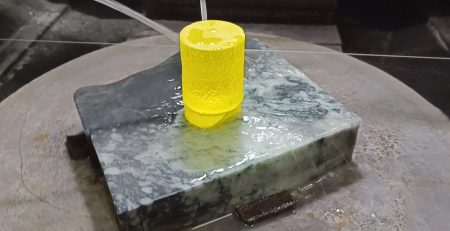
- The bonded-abrasive unidirectional annular (bucle) diamond wire saw fixes diamond grains on the wire, enabling simple machine structure, high-speed one-direction wire movement and shaped cutting.
- Four documented advantages: narrow kerf and high yield (0.175-0.180 mm wires from Sumitomo Electric and Lid, 0.19 mm actual kerf in sodium glass); faster cutting because fixed abrasive needs no slurry entry; smooth gentle cutting without reciprocating grooves; y mínima contaminación con refrigerante de agua o incluso corte en seco.
- Permanen vacíos de investigación en la fabricación de alambre, mecanismos de corte, modos de fallo del alambre, y control de postura y movimiento para cortes de conformado de precisión.
Actualmente, Los procesos de aserrado y corte de materiales duros y quebradizos están plagados de problemas como la baja eficiencia de procesamiento, Bajo rendimiento de material, Mala calidad e integridad de la superficie, Altos costos de herramientas, y la contaminación ambiental. Al usar sierras circulares para cortar materiales como piedra y cerámica, Las hojas de sierra deben poseer un cierto grosor para garantizar la rigidez. Esto da como resultado cortes amplios, Bajo rendimiento de material, y una contaminación significativa. Adicionalmente, Las sierras circulares no pueden realizar el mecanizado de superficies moldeadas, lo que conduce a una calidad superficial inferior al cortar materiales cerámicos. En la industria de semiconductores, el uso de métodos de corte con alambre abrasivo libre para procesar cristales de silicio resulta en una contaminación ambiental y superficial significativa por lechada de abrasivo de diamante, aumentando así los costos asociados con el procesamiento posterior y el tratamiento de residuos.
(1) Ranura estrecha, high material yield. By using high-strength steel wire as the base material, various wire saws with diameters below 1mm can be produced. Companies like Sumitomo Electric Industries and Lid in Japan have manufactured wire saws with average diameters ranging from 0.175 to 0.180mm using steel wires with diameters of 0.130 and 0.155mm as the base material, achieving an actual kerf loss of 0.19mm in sodium glass cutting experiments.
(2) Fast cutting speed, Alta eficiencia. The bonded abrasive annular diamond wire saw features unidirectional movement of the wire saw during the cutting process, with the abrasive grains fixed on the wire saw, eliminating the difficulty of abrasive entry into long and deep kerfs. Compared to reciprocating structures and wire saws using free abrasives, it is easier to achieve higher cutting speeds, resulting in high processing efficiency.
(3) Smooth cutting process, good slice surface quality. During the cutting process with a diamond wire saw, the cutting force is small and gentle, without the unique grooves generated on the workpiece surface due to reciprocating wire saw movement.
(4) Minimal environmental pollution. Bonded abrasive diamond wire saws typically use water as the standard coolant, and dry cutting methods can even be employed at lower wire speeds. This results in low or no need for wastewater treatment due to the use of bonded abrasives.
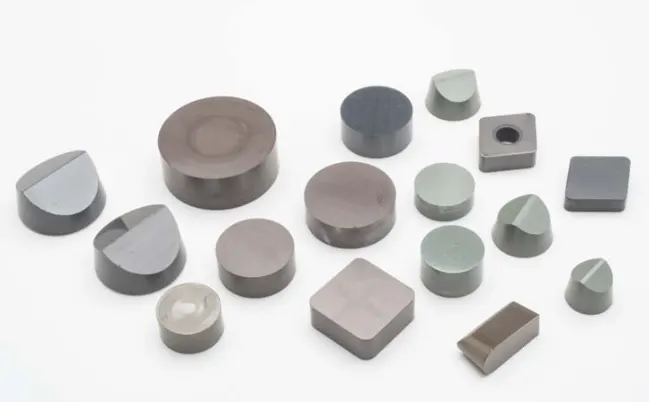
Las sierras anulares se adaptan a ciertas formas; para trabajos planos de precisión la referencia es corte de precisión de alúmina.
Preguntas Frecuentes
Qué es una sierra de alambre diamantado anular?
Es una sierra de alambre con abrasivo unido en la que los granos de diamante están fijados en un lazo de alambre que se mueve unidireccionalmente a alta velocidad. La estructura simple permite altas velocidades del alambre y corte conformado de materiales duros, brittle materials such as ceramics — an alternative to reciprocating free-abrasive wire saws.
What advantages does a bonded-abrasive wire saw have over free-abrasive sawing?
Because the diamond grains are fixed on the wire, there is no abrasive slurry that must enter long, deep kerfs, so higher cutting speeds are achievable. It also produces a narrow kerf with high material yield, a smooth cut surface without reciprocating grooves, and far less contamination.
¿Qué tan estrecho es el corte de una sierra de hilo de diamante??
Manufacturers such as Sumitomo Electric Industries and Lid in Japan have produced wire saws averaging 0.175-0.180 mm in diameter on steel cores of 0.130-0.155 milímetro, achieving an actual kerf loss of about 0.19 mm in sodium glass cutting experiments.
Is diamond wire sawing environmentally friendly?
Relatively yes. Bonded-abrasive diamond wire saws typically use plain water as coolant, and dry cutting is even possible at lower wire speeds. With no free-abrasive slurry, there is little or no wastewater treatment required — a major contrast with slurry-based silicon wafering.
Revisado por el equipo de ingeniería de Ensoll.