Noticias de la Industria

Industry news and market insights on diamond wire cutting, precision machining and advanced materials.
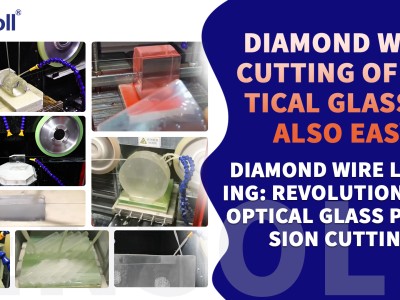
Corte de Vidrio de Precisión: Futuro de la Sierra de Alambre de Diamante

Introduction to Advanced Glass Cutting Solutions In today’s demanding optical manufacturing landscape, diamond wire saw cutting has emerged as the gold standard for processing brittle materials with unparalleled precision. Esta guía completa explora cómo los sistemas modernos de cortadores automáticos de bucle de alambre para materiales frágiles están transformando industrias, desde el corte de lentes AR/VR hasta la fabricación de óptica a nivel de oblea. Key Takeaways Modern precision diamond wire saws achieve +/-0.02 mm tolerance at 300 mm/s slicing speed, with near-zero kerf loss and guaranteed crack-free optical glass machining. Compared with blade cutting:...
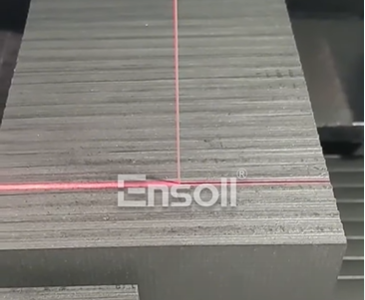
Contour Cutting Magnet Materials: Guía

Key Takeaways Craft cutters such as Silhouette machines only handle flexible rubber-bonded magnets up to about 1 mm thick; sintered NdFeB, SmCo and hard ferrite require industrial cutting equipment. Compared with laser (heat demagnetization risk), waterjet (rough edges) and CNC milling (lento), the diamond wire saw delivers the best combination: ±0.02 mm precision, mirror-finish edges and under 5% material waste. Diamond wire saw cutting is CNC-controlled and coolant-managed below 50 degC, achieving contour accuracy of ±0.02 mm and edge roughness under Ra 0.5...

Materiales Magnéticos: Propiedades & Guía de Aplicaciones

Puntos Clave Los materiales magnéticos se dividen en tres familias: imanes permanentes (NdFeB, SmCo, AlNiCo, ferrita), magnéticos blandos (acero al silicio, ferrita blanda, amorphous and nanocrystalline alloys, permalloy) and functional materials (magnetostrictive, recording media, spintronics). Each family fails differently under cutting: NdFeB microcracks and demagnetizes, ferrite crumbles at the edges, amorphous ribbons are extremely hard (hasta 900 HV) and thin, and nanocrystalline alloys degrade above 150 degC. End-use magnetic performance depends on edge quality (flux leakage), dimensional accuracy (air gaps) and freedom from heat- or...

Corte de precisión de imanes de ferrita: Guía

Key Takeaways Ferrite (cerámico) magnets are sintered iron oxide with strontium or barium carbonate: cheap, corrosion-resistant and stable up to 250 degC, but hard and brittle — so cutting method directly decides yield. Grinding leaves 50-100 micrometer micro-cracks and runs slowly; laser adds a heat-affected zone that alters magnetic properties; waterjet leaves Ra >3 micrometer edges needing polishing. Diamond wire saw cutting is the best fit: un 0.1-0.3 mm diamond-coated wire gives chip-free edges (Ra <0.5 micrómetros), no heat damage, ±0.02 mm tolerances...

Corte de precisión de materiales magnéticos

1.Qué son los materiales magnéticos? Magnetic materials are a fundamental class of substances defined by their ability to generate a magnetic field and to respond in a significant, measurable way to an applied magnetic field. This property originates from the quantum mechanical spin and orbital motions of electrons within the atoms, which create tiny magneticdipoles.The macroscopic magnetic behavior of a material is determined by how these microscopic magnetic moments are arranged and interact with one another. Key Takeaways Magnetic materials fall into...

¿Puede el fresado CNC cortar materiales magnéticos??

Key Takeaways CNC milling can cut softer magnetic materials — low-carbon electrical steels, nickel alloys like Permalloy and soft ferrites — but struggles with hard, brittle magnets. On NdFeB, hard ferrites and high-carbon steels, milling faces rapid tool wear, heat that can demagnetize the part, and brittle fracture at edges. Diamond wire loop cutting is the better route for hard magnetic materials: thin kerf saves expensive material, coolant prevents demagnetization, and tolerances reach ±0.05 mm crack-free. Rule of thumb: soft magnetic steels and nickel...

Crack-Free Glass Machining: Sierra de hilo de diamante

Key Takeaways Optical glass is brittle and sensitive to thermal shock; cracks usually start at the exit edge of the cut. Diamond wire machining keeps cutting force low and constant, producing crack-free edges. Coolant and feed control matter far more than cutting speed. Why Crack-Free Cutting Matters in Optical Glass Machining Optical glass, such as SCHOTT B270, N-BK7, and fused silica, is widely used in high-precision applications like camera lenses, laser optics, medical imaging, and aerospace components. Sin embargo, traditional cutting methods—such as diamond blade...

Sierra de diamante vs hoja: Prueba de superficie de vidrio óptico

Key Takeaways Controlled tests on 5 vidrio SCHOTT B270 de mm muestran que una sierra de hilo de diamante logra Ra 0.18-0.22 micrómetros frente a Ra 0.55-0.75 para una hoja de diamante — aproximadamente 60% menor rugosidad superficial sin pulido. El daño subsuperficial es la diferencia decisiva: la hoja genera 3-5 veces más microgrietas, y aún muestra grietas a 200 micrómetros de profundidad donde la sierra de hilo no muestra ninguna — más allá de la típica 100-150 profundidad de pulido de eliminación micrométrica. La pérdida de corte es 0.25 mm para el hilo frente a 0.42 mm for the...