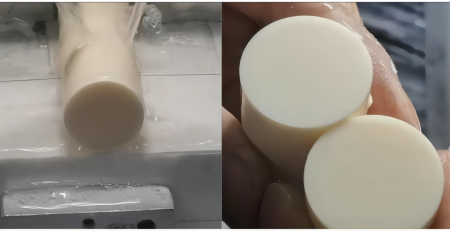
Corte de paneles solares de película delgada: El lazo de alambre de diamante sobresale
- Thin-film PV materials such as CdTe, CIGS y a-Si necesitan un corte de precisión que evite tanto el daño térmico como el mecánico.
- Diamond wire loop outperforms lasers and blades on brittle thin-film stacks: it is a cold, narrow-kerf process with clean edges.
- Diamond wire loop cutting is applied in CdTe modules, CIGS and amorphous silicon panels, and is positioned as the future of advanced PV cutting.
The solar energy industry continues to evolve with advanced thin-film photovoltaic (PV) technologies offering higher efficiency and lower production costs. Entre estos, Cadmium Telluride (CdTe), Copper Indium Gallium Selenide (CIGS), and Amorphous Silicon (a-Si) stand out as key materials for next-generation solar panels.
Sin embargo, manufacturing high-performance thin-film solar cells requires precision cutting to minimize material waste and maintain structural integrity. While various cutting methods exist, bucle de alambre de corte de diamante technology has emerged as the most efficient solution for thin-film semiconductors.
 Este blog explora:
✔ Why thin-film solar materials need precision cutting
✔ Comparison of cutting technologies
✔ Why diamond cutting wire loop is the best choice
✔ Industry applications and future trends
Thin-film stock fails for the same reason thin wafers do — see the yield notes under the wafer cutting process.
Why Thin-Film Solar Materials Require Precision Cutting
Thin-film solar cells are significantly thinner (1–4 µm) than traditional obleas de silicio, making them more challenging to cut without damage. Key challenges include:
- Minimal Kerf Loss Requirement
– Thin-film materials are expensive; waste reduction is critical for cost efficiency.
– Traditional saws create >200 µm kerf loss, while diamond wire loops achieve <100 µm.
- High-Quality Edge Finish Needed
– Rough edges reduce cell efficiency due to increased recombination losses.
– Laser cutting can cause heat damage, degrading performance.
- Scalability for Mass Production
– Thin-film solar manufacturing requires high-throughput cutting without sacrificing quality.
Cutting Technologies for Thin-Film Solar Materials
| Método | Ventajas | Contras | Mejor Para |
| Mechanical Scribing | Low cost | High breakage rate | Lab-scale R&D |
| Corte por láser | Alta precisión | Zona afectada por el calor (ZAT) | Small-scale production |
| Ultrasonic Cutting | Minimal stress | Slow processing speed | Flexible substrates |
| Bucle de alambre de corte de diamante | No HAZ, Alta velocidad, low kerf loss | Higher initial investment | Mass production |
Why Diamond Cutting Wire Loop Outperforms Other Methods
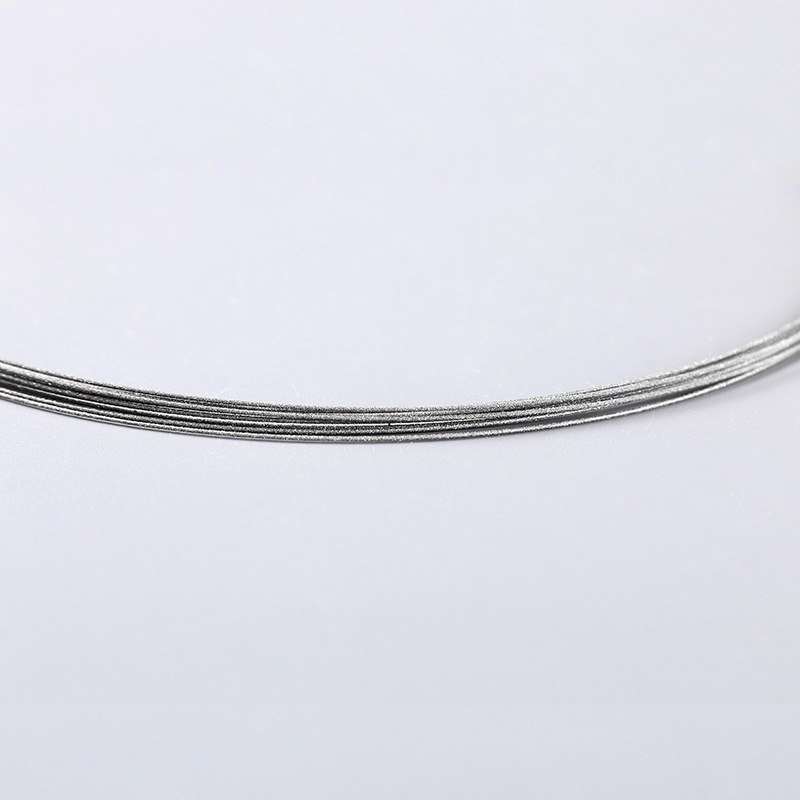

– Achieves 50–80 µm kerf width, preserving more active material.
– 30% higher material yield vs. laser/mechanical methods.
- Proceso de corte en frío (No Heat Damage)
– Unlike lasers, diamond wire loops do not generate heat, preventing:
– Thermal stress cracks in CdTe
– Layer delamination in CIGS & a-Si
3. Superior Edge Quality
– Rugosidad de la superficie <0.5 µm (vs. 2–5 µm with lasers).
– Smoother edges = higher cell efficiency (hasta 1.5% gain).
4. High-Speed Production
– Automated wire systems reduce downtime.
5. Lower Operational Costs
– No consumable slurry (unlike abrasive saws).
Applications in Thin-Film Solar Manufacturing
1. CdTe Solar Modules
– Challenge: CdTe is brittle and sensitive to thermal stress.
– Solution: Diamond wire loops provide clean, crack-free cuts for high-throughput CdTe panel production.
2.CIGS Flexible Solar Cells
– Challenge: Delamination risk during cutting.
– Solution: Low-tension diamond wire prevents layer separation.
3. a-Si Thin-Film Panels
– Challenge: Poor mechanical strength leads to edge defects.
– Solution: Polished diamond wires ensure smooth, defect-free edges.
Tendencias futuras: Diamond Wire Loops in Advanced PV
- Obleas más delgadas (0.5–1 µm) – Diamond wire tech is adapting for ultra-thin films.
- AI-Optimized Tension Control – Further reducing breakage rates.
Conclusión: Diamond Cutting Wire Loop is the Future
For thin-film solar materials (CdTe, CIGS, a-Si), diamond cutting wire loop technology delivers:
✅ Highest material yield (lowest kerf loss)
✅ No thermal damage (critical for thin films)
✅ Production-scale speeds
✅ Long-term cost savings
As the solar industry shifts toward higher-efficiency thin-film PV, manufacturers adopting diamond wire cutting will lead in quality, eficacia, and profitability.
Preguntas Frecuentes
Why do thin-film solar materials need special cutting methods?
Thin-film stacks are layered and brittle. Heat or excessive force causes delamination and cracking that directly reduce module efficiency.
Can diamond wire loop cut CdTe and CIGS materials?
Sí. Its cold micro-grinding action is well suited to brittle compound semiconductors and produces clean edges without a heat-affected zone.
Diamond wire loop versus laser for thin-film cutting?
Laser cutting risks delamination and heat damage in layered thin-film structures, while diamond wire loop gives damage-free edges at production quality.
Contenido técnico revisado por el equipo de ingeniería de Ensoll — un fabricante de bucles de hilo de diamante con 10+ años de experiencia en producción.