Taglio dell'agata con filo diamantato ad anello
Agata, con le sue affascinanti venature e i colori vivaci, è una gemma che ha catturato l'attenzione di artigiani e collezionisti per secoli. Tuttavia, unlocking its full beauty requires precise, clean cuts that traditional tools often struggle to achieve. This is where Diamond Wire Loop technology revolutionizes the process. This advanced cutting method provides the accuracy, smooth finish, and material efficiency essential for working with this delicate and valued stone. In questa guida completa, we’ll explore why diamond wire loops are the superior choice for agate and detail the step-by-step process for flawless results.
Agate and jade are cut on very similar settings — the jade-specific detail is in how to cut jade.
 Why Agate Demands Precision Cutting
Agate is a variety of chalcedony, a mineral within the quartz family. With a Mohs hardness rating of 6.5 A 7, it is a hard material. More critically, its value lies in its intricate internal banding, color patterns, and potential inclusions. A poor cutting technique can:
- Shatter or Chip the Stone: Causing irreversible damage to a unique specimen.
- Create Unsightly Kerf Marks: Leaving a rough, widened cut line that wastes material and requires extensive polishing.
- Generate Destructive Heat: Thermal stress from friction can cause internal fractures, known as “burning” the stone.
Traditional diamond blade saws, while effective for rough sizing, often produce significant vibration and a wider kerf, increasing the risk of damaging agate’s delicate structure. The diamond wire loop method elegantly solves these problems.
Diamond Wire Loop Technology: Come funziona
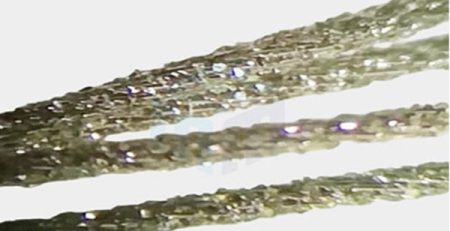
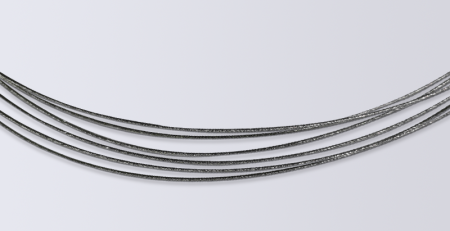
Un Anello di filo diamantato system is a continuous loop of high-tensile steel wire impregnated with synthetic diamond particles. This loop is threaded through a series of precision guide pulleys and driven by a motor. The key to its effectiveness lies in its minimal contact area and constant, linear cutting motion.
- The Cutting Action: Man mano che il filo si muove ad alta velocità, the microscopic diamond abrasives on its surface grind through the agate with a gentle, slicing action.
- Larghezza della scanalatura: The wire itself is incredibly thin, typically ranging from 0.2mm to 0.5mm in diameter. This results in an exceptionally narrow cut, sometimes as fine as 0.3mm, which translates to dramatically less material waste—a crucial factor for valuable agate slabs.
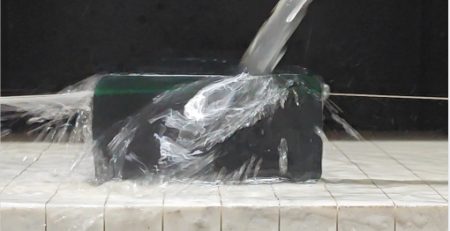
- Cooling and Lubrication: The process uses a constant flow of coolant (usually water or a specialized oil). This serves three vital purposes: it keeps the agate and wire cool, flushes away abrasive slurry, and reduces friction.
Step-by-Step: Cutting Agate with a Diamond Wire Loop
Achieving perfect agate slices requires careful preparation and execution. Follow this professional workflow:
1. Material Assessment & Planning
- Examine the Rough: Carefully study the raw agate nodule or slab. Use a strong light source to identify the direction of the banding, the most colorful areas, and any hidden flaws or cavities.
- Marking the Cut Line: Using a waterproof marker or scribe, draw your precise cut line on the stone’s surface. The goal is to slice perpendicular to the bands to showcase the full pattern on the face of the slab.
2. Machine Setup & Selezione del filo
- Wire Specification: For agate, a wire with fine to medium diamond grit (ad es., 80-220 rete) is ideal. It provides a good balance between cutting speed and achieving a smooth surface finish.
- Tensioning: Correct wire tension is critical. It must be tight enough to cut straight but not so tight it risks breaking. Refer to your machine’s manual for optimal settings.
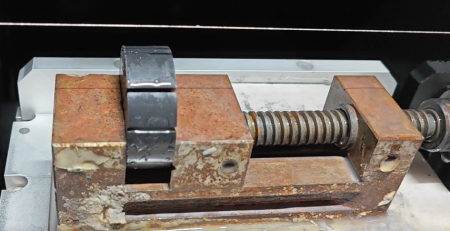
- Securing the Workpiece: Mount the agate securely in the vise or holding fixture. Ensure it is perfectly aligned so the cut will follow your marked line. Vibration is the enemy of a clean cut.
3. The Cutting Process
- Start the Coolant Flow: Begin the coolant pump before starting the wire to ensure immediate lubrication.
- Initiate the Cut: Start the machine at a low feed rate, allowing the wire to establish a clean entry groove.
- Monitor the Operation: Listen to the sound of the cut. A steady, smooth hum is ideal. Any chattering or change in pitch may indicate the wire is dulling, the tension is off, or the feed rate is too high. Patience is key; a slower, controlled feed will yield a superior finish.
The Unmatched Benefits for Agate
- Maximized Material Yield: The hair-thin kerf allows you to get more usable slabs from a single piece of rough agate.
- Superiore qualità della superficie: Cuts are straighter and smoother, significantly reducing the time and effort needed for subsequent lapping.
- Preservation of Integrity: The low-vibration, low-heat process minimizes the risk of creating hidden fractures, preserving the agate’s natural strength and clarity.
- Design Flexibility: The thin wire can be used for straight cuts or gentle curves, offering more creative freedom than rigid blades.
Conclusione
For the serious lapidary artist, geologist, or jeweler, investing in diamond wire loop technology is a game-changer for processing agate. It elevates the craft from risky guesswork to a precise, repeatable science. By minimizing waste, protecting the stone’s integrity, and delivering ready-to-polish surfaces, it allows you to consistently reveal the stunning hidden artistry within every piece of agate. As this technology becomes more accessible, it sets a new standard for quality and efficiency in pietra preziosa processing.