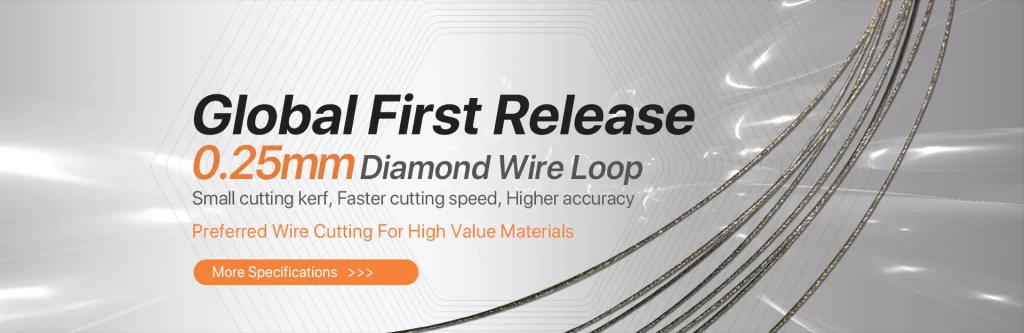
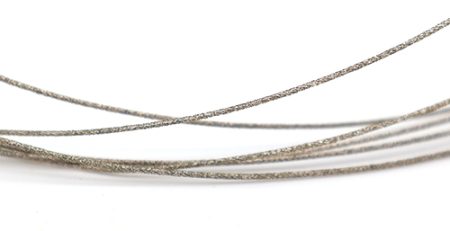
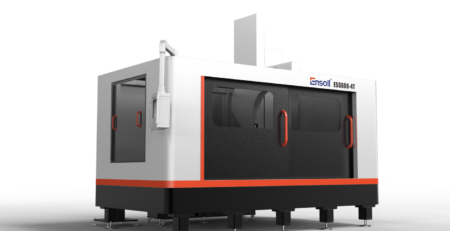
Anelli di filo diamantato rappresentare un vertice di precisione nel campo degli utensili da taglio, sfruttando la straordinaria durezza dei diamanti per tagliare i materiali con una precisione senza pari. Comprendere le sfumature tra gli anelli di filo diamantato oscillanti e non oscillanti fa luce sull'intricata meccanica di questi strumenti all'avanguardia.
Introduction to Diamond Wire Loops
Anelli di filo diamantato, al centro, sono costituiti da un filo sottile incorporato con cristalli di diamante, capable of cutting through a myriad of materials ranging from stone to metal with exceptional precision. Their applications span diverse industries, from construction and mining to semiconductor manufacturing, where intricate cuts are paramount.
Roles and Distinctions of Swinging and Non-Swinging Diamond Wire Loops
The fundamental disparity between swinging and non-swinging diamond wire loops lies in their cutting techniques. Non-swinging loops operate in a linear fashion, maintaining a fixed orientation during the cutting process. Al contrario, swinging loops introduce a dynamic oscillation, reducing the contact area between the wire and the workpiece, thereby enhancing cutting efficiency.
Swinging Diamond Wire Loops
Swinging diamond wire loops revolutionize the cutting process by incorporating oscillatory motion into the otherwise static operation. This oscillation can take two primary forms: swinging of the diamond wire itself or rotation of the workpiece. The former method involves the differential movement of the working wheels at the ends of the diamond wire, while the latter, known as point rotation cutting, entails rotating the workpiece on a turntable while the diamond wire remains stationary.
The advantage of swinging diamond wire loops becomes particularly evident when cutting materials of higher hardness. By minimizing the contact area between the diamond wire and the workpiece, swinging loops mitigate wear and tear on the wire, especially in scenarios where the material’s hardness poses a risk of frequent wire
In conclusione The swinging and non-swinging variants of diamond wire loops each have their unique strengths and applications. While swinging loops excel in enhancing cutting efficiency and reducing wear in high-hardness materials, non-swinging loops are better equipped for cutting various two-dimensional shapes.
Through a deeper understanding of swinging and non-swinging diamond wire loops, the cutting-edge capabilities of these tools can be harnessed effectively across a range of industries, ushering in a new era of precision cutting technology.
Anello di filo diamantato è emersa come la soluzione di taglio preferita per materiali duri, friabili come i nuclei di ferrite, magneti Alnico,... leggi di più
Punti Chiave
La produzione di semiconduttori inizia con la fabbricazione di wafer, dove l’affettatura con filo di diamante definisce sia il rendimento sia la qualità della superficie.
Rivestimento con fotoresist, litografia, incisione.... leggi di più
Astratto: Questo articolo presenta un test di affettamento di precisione sul PEEK (polieter etere chetone) utilizzando una anello di filo diamantato. Le... leggi di più
Punti chiave
Materiali fotovoltaici a film sottile come CdTe, CIGS e a-Si richiedono un taglio di precisione che eviti sia danni termici sia meccanici.
Diamante... leggi di più
Nel mondo del taglio di precisione, la tecnologia della sega a filo diamantato si distingue come metodo rivoluzionario che ha trasformato il modo in cui... leggi di più
Con il rapido sviluppo dell'energia pulita, Anche l'obiettivo della grid parity per la produzione di energia fotovoltaica è imminente. Mentre... leggi di più
Punti chiave
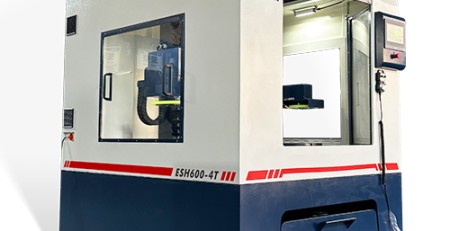
La Ensoll ESH600 è una macchina da taglio a filo diamantato progettata per tagli piani di grandi materiali duri e fragili come... leggi di più
Rapporto di test originale Ensoll: un 415 pezzo in quarzo da mm tagliato a velocità stabile 80 alimentazione mm/min, con TTV documentato, superficie... leggi di più