Diamond Wire Loop Cutting Technology: FAQ
ダイヤモンドワイヤーループ has emerged as the preferred cutting solution for hard, brittle materials such as ferrite cores, Alnico magnets, and crystal quartz. Yet many manufacturers still have questions about how it works, where it excels, and how to implement it effectively. This FAQ answers the most common technical and practical questions based on real-world cutting experience.
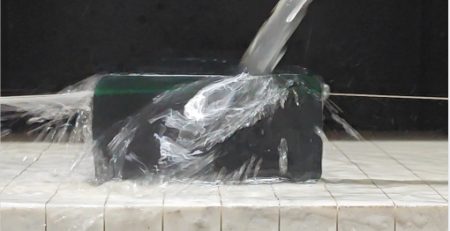
- A diamond wire loop is a closed loop of diamond-coated wire that precision-cuts hard, brittle materials such as ferrite cores, Alnico magnets and crystal quartz.
- It cuts without demagnetizing magnets or cracking crystals — the main reasons blades and slurry saws fail on these materials.
- 線径 (typically 0.35–0.65 mm) is chosen by material hardness and acceptable kerf loss.
- Feed rate and coolant are the two main levers for avoiding edge chipping.
- For small-batch, high-precision work, operating cost is lower than laser or slurry-based methods.
1. What is a diamond wire loop?
ある ダイヤモンドワイヤーループ is a continuous, endless steel wire that has been electroplated with industrial diamond grit. Unlike traditional reciprocating wire saws (which move back and forth), a diamond wire loop rotates continuously in a single direction at high speed The diamond particles act as microscopic cutting teeth, grinding through hard materials with precision and minimal waste.
The “loop” design means there is no free end; the wire forms a closed ring that runs over drive pulleys. This eliminates the need for wire spooling and reversing, enabling faster, smoother cuts.
2. What materials can be cut with a diamond wire loop?
Diamond wire loop is specifically designed for hard, brittle, and abrasive materials that are difficult to cut with conventional saws or lasers. Based on our previous discussions, the most common applications include:
– フェライトコア (MnZn, NiZn, and hard ferrite) – used in transformers, inductors, and EMI filters.
– Alnico magnets (cast and sintered) – high-temperature permanent magnets for sensors and guitar pickups.
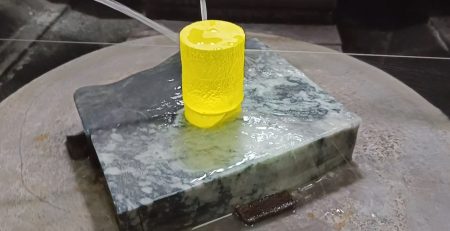
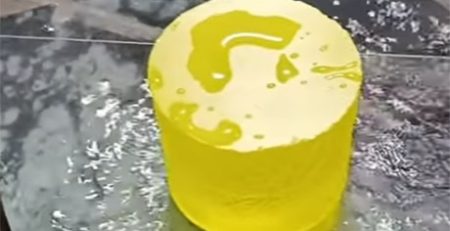
– Crystal quartz (rock crystal, amethyst, citrine, and synthetic quartz) – for electronics oscillators, 光学, and gemstones.
– その他の材料: 陶芸, 炭化ケイ素, サファイア, グラス, 石墨, and rare-earth magnets (NdFeB).
The common challenge across all these materials is the same: they chip, crack, or generate heat damage under traditional cutting methods. Diamond wire loop solves these problems.
3. How does diamond wire loop compare to traditional cutting methods?
This is one of the most frequently asked questions. Here is a direct comparison:
| Method | Kerf Width | エッジチッピング | Heat Damage | Surface Finish (Ra) | Complexity of Shape |
| ダイヤモンドワイヤーループ | 0.2–0.6 mm | なし | なし | 0.4–1.6 µm | 高い (CNC) |
| 研磨ホイール | 1–2 mm | 中程度から重度 | はい (局所加熱) | 3–10 µm | 限定的 |
| ウォータージェット | 0.8–1.5 mm | 中程度 (剥離) | いいえ | 3–8 µm | 中程度 |
| レーザー | 0.1–0.5 mm | 微細ひび | 重度 (ハズ) | 5–20 µm | 高い |
| 放電加工 | 0.2–0.5 mm | 再結晶層 | はい (熱の) | 2–6 µm | 中程度 (導電性のみ) |
ダイヤモンドワイヤーループの主な利点:
– 端面の欠けゼロ – 研削作用が応力を均等に分散.
– 狭い切り幅 – 材料損失が少なく、同じブロックからより多くの部品を作成.
– 熱損傷なし – 連続クーラントでワークを冷却.
– 優れた表面仕上げ – 二次研削を省略できることが多い.
– 絶縁体を切断可能 – EDMとは異なる, フェライトと石英に対応.
- ダイヤモンドワイヤーループがフェライトコアの切断に最適な理由?
フェライトは非常に硬い (モース硬度 5–7) そして脆い. Traditional abrasive wheels cause edge spalling and microcracks, especially on thin-walled E-cores or toroids. Diamond wire loop provides:
– Stress-free cutting – the flexible wire conforms to the cut path without imposing bending forces.
– Narrow kerf (0.4 mm typical) – critical when cutting expensive MnZn or NiZn ferrite.
– No heat-induced property change – ferrite magnetic properties degrade if overheated. Diamond wire loop with coolant eliminates this risk.
For manufacturers slicing ferrite transformer cores or EMI suppressors, switching from a dicing saw to a diamond wire loop can increase yield by 15–30%.
5. Can diamond wire loop cut Alnico magnets without demagnetization?
はい. Alnico magnets are hard (45–50 HRC) そして脆い, but their magnetic properties are sensitive to heat and mechanical shock. Diamond wire loop cutting offers two critical benefits:
– No thermal demagnetization – Because the cut is cool (coolant continuously removes heat), the magnetic flux remains unchanged.
– No microcracking – Alnico’s coercivity is low; microcracks can act as demagnetizing zones. The smooth grinding action of diamond wire prevents crack formation.
In practice, manufacturers cut Alnico 5 and Alnico 8 sensor components and guitar pickup magnets with diamond wire loops to achieve tight tolerances (±0.05 mm) without post-cut annealing or remagnetization.
6. How does diamond wire loop cut crystal quartz?
Quartz is Mohs 7, harder than most steels. It is also piezoelectric, meaning mechanical stress generates electrical charge – and traditional cutting methods can induce unwanted voltages or micro-fractures. Diamond wire loop cuts quartz by abrasive grinding, not impact or thermal vaporization.
– For electronic-grade synthetic quartz (oscillator blanks), diamond wire loop produces wafer-thin slices with no subsurface damage, preserving the crystal’s piezoelectric precision.
– For optical quartz (UV windows), the smooth surface finish (Ra < 0.8 µm) requires minimal polishing.
– For gemstone quartz (amethyst, citrine), the narrow kerf maximizes yield from expensive rough crystals.
7. What wire diameter should I choose?
Selection depends on your material and part geometry:
| 線径 | 最適用途 | Typical Kerf | Minimum Feature Size |
| 0.2 ミリメートル | Thin wafers, delicate cores, small quartz points | 0.22–0.25 mm | 1 ミリメートル |
| 0.4 ミリメートル | General-purpose ferrite, Alnico, 石英 | 0.42–0.45 mm | 3 ミリメートル |
| 0.6 ミリメートル | Large blocks, thick ferrite cores (>20 ミリメートル) | 0.63–0.67 mm | 5 ミリメートル |
Rule of thumb: Use the smallest diameter that provides sufficient strength for your cut length. Thinner wires reduce material loss but break more easily on long cuts or hard materials.
8. How do I optimize feed rate to avoid chipping?
Feed rate is the most critical parameter. Too fast causes chipping and wire breakage; too slow wastes time without improving quality.
Recommended starting feed rates (for 0.4 mm wire):
– MnZn ferrite: 4–6 mm/min
– NiZn ferrite: 3-5 mm/分
– Alnico 5: 3–4 mm/min
– Alnico 8: 2–3 mm/分
– Crystal quartz (rock crystal): 4–7 mm/min
– Synthetic quartz (electronic grade): 2–4 mm/min (to avoid subsurface damage)
Always start at the lower end and increase gradually while inspecting cut edge quality. A well-tuned ダイヤモンドワイヤーループソー should produce a smooth, matte surface without visible edge chipping under 10x magnification.
9. What coolant should I use?
Clean coolant is essential for three reasons: it removes swarf (cut particles), prevents heat buildup, and lubricates the wire.
– Deionized water – Best for ferrite, 石英, and Alnico. Prevents contamination of electronic or optical surfaces. Add a rust inhibitor if cutting ferrous materials.
– Light oil – Occasionally used for very brittle materials (例えば。, some ceramics). Oil provides better lubrication but requires post-cut cleaning.
Do not use: Tap water (mineral deposits), distilled water without monitoring (bacteria growth), or no coolant at all (rapid wire wear and heat damage).
10. Can diamond wire loop cut complex shapes?
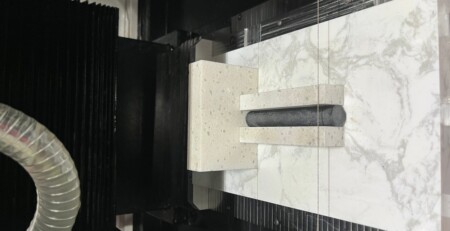
はい. When integrated with a CNC (computer numerical control) system, a diamond wire loop saw can cut:
– Straight lines
– Circles and arcs
– Slots and keyways
– Custom contours (例えば。, curved ferrite cores, shaped Alnico magnets, quartz watch blanks)
The wire can be steered in X, Y, and sometimes Z axes. しかし, the wire itself remains straight between guides – complex shapes are achieved by moving the workpiece relative to the wire. True 3D contour cutting requires specialized wire EDM, which is not suitable for insulators like ferrite or quartz.
11. Is diamond wire loop expensive to operate?
Compared to abrasive wheels or dicing saws, the operating cost per part is often lower, despite the higher initial investment in the saw.
Cost breakdown:
– Consumables – Diamond wire loop (replaced every 30–100 m of cut). Cost per loop ranges from $15 宛先 $60 depending on diameter and length.
– Coolant – Negligible (deionized water).
– Yield improvement – The biggest saving. Less material lost to kerf and fewer rejected parts due to chipping can reduce total cost by 20–40%.
For high-value materials like Alnico (cobalt content up to 40%) or large quartz crystals, the waste reduction alone often pays for the wire loop system within months.
12. What industries benefit most from diamond wire loop cutting?
Based on our previous discussions, the key industries include:
– Power electronics – Cutting ferrite cores for transformers and inductors.
– Automotive and aerospace – Slicing Alnico sensors and magnetic components.
– Watchmaking and telecommunications – Dicing synthetic quartz oscillators.
– Jewelry and gemstone processing – Shaping amethyst, citrine, and rock crystal.
– Optics – Cutting UV-grade quartz windows and prisms.
– Renewable energy – Machining magnetic materials for generators.
13. Where can I learn more or purchase a diamond wire loop saw?
For reliable, high-performance diamond wire loop cutting solutions, エンソール (鄭州エンソールツール .) is the industry leader you can trust.
Since 2015, エンソール has specialized in endless diamond wire loop technology, holding nearly 100 patents and offering fully integrated systems—from electroplated diamond wire loops to precision CNC cutting machines. Whether you are cutting ferrite cores, Alnico magnets, crystal quartz, 陶芸, or sapphire, Ensollが提供する
Ensoll also provides free test cutting on your material, expert technical support, and customized machine configurations to fit your exact needs.
Contact Ensoll today: Visit https://www.ensolltools.com/ or email [email protected] to request a quote or schedule a test cut.
Final Summary
Diamond wire loop technology has revolutionized the way manufacturers cut hard, brittle materials like ferrite, Alnico, and crystal quartz. Its advantages – zero chipping, narrow kerf, no heat damage, and smooth finish – directly translate to higher yields, lower waste, and better profitability. By understanding the right wire diameter, 送り速度, and coolant practices, you can integrate this technology into your production line with confidence.
Have a question not covered here? Contact our technical team with your material type, part geometry, and desired tolerances for a customized recommendation.