Contour Cutting Graphite: Diamond Wire Excels
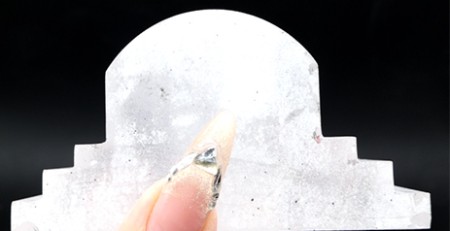
- Graphite is brittle, produces fine conductive dust, and thin walls under 0.5 mm break easily under conventional tools – three problems that define graphite contour cutting.
- A diamond wire saw uses a continuous loop of high-tensile steel wire (typically 0.2-0.5 mm) electroplated with diamond particles, cutting with minimal lateral force.
- Kerf can go below 0.3 mm, maximizing yield from expensive graphite and making ultra-thin slices and delicate thin-walled structures reliable to produce.
- The wire shears through the graphite grain rather than prying it apart, delivering chip- and burr-free edges that eliminate costly hand finishing.
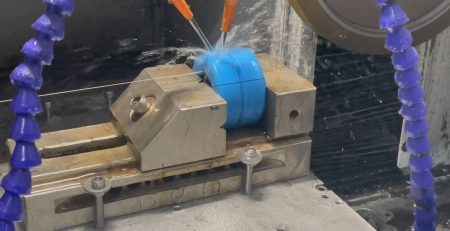
- Wet cutting captures all dust at the source and prevents thermal stress, while a multi-axis CNC table lets the wire trace any programmed 2D or 3D contour.
In advanced manufacturing, machining materials into precise, complex shapes is a defining challenge. Graphite, a cornerstone material in aerospace, semiconductors, and energy, is no exception. Known for its exceptional thermal stability, conductivity, and lubricity, graphite is also notoriously brittle and dusty. Traditional cutting methods often fall short, causing edge chipping, generating hazardous dust, and struggling with intricate geometries. This is where contour cutting with a Diamond Wire Saw For a full walkthrough of parameters, tooling and finish quality, see our guide on how to cut graphite. emerges as a transformative solution, enabling the production of complex, ultra-thin graphite components with unmatched precision and cleanliness.

The Graphite Contour Cutting Challenge
Creating intricate shapes from graphite blocks—be it for EDM electrodes, furnace fixtures, or bipolar plates in fuel cells—presents unique hurdles:
- Brittleness and Edge Integrity: Its layered structure makes graphite prone to chipping and flaking at the edges, especially during sharp internal cornering or detailed profiling.
- Dust Generation: Machining graphite produces fine, conductive dust that infiltrates machinery, poses health risks, and compromises workshop cleanliness and electrical safety.
- Thin-Wall and Ultra-Thin Section Machining: Demanding applications increasingly require thin walls or ultra-thin slices (<0.5mm). Conventional tools induce vibration and stress, leading to high breakage rates and low yields.
- Geometric Complexity: Producing fine details, tight radii, and true 3D contours with consistent accuracy is difficult for many tools.
Why Diamond Wire Saw is the Superior Choice for Graphite Contouring
The diamond wire saw, with its unique working principle, addresses each of these challenges head-on, offering a paradigm shift in graphite contour machining.
1. The “Thread” of Precision: How It Works
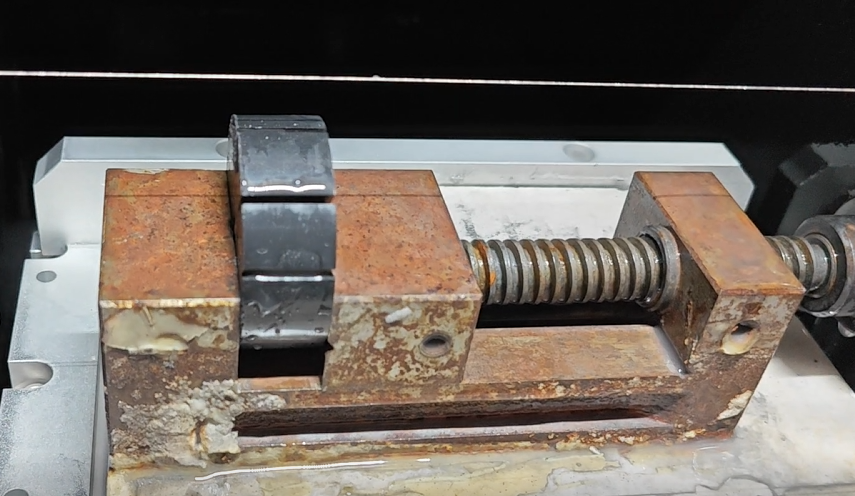
Imagine using a single, continuous loop of high-tensile steel wire electroplated with diamond particles as a versatile, programmable cutting tool. This thin wire (typically 0.2mm to 0.5mm in diameter) moves at high speed, acting like an infinitely long, ultra-hard “thread.” The workpiece is mounted on a multi-axis CNC table, which moves it precisely against the vertical wire. This allows the wire to trace any programmed 2D or 3D contour with extreme fidelity, cutting through the graphite with minimal lateral force.
2. Unmatched Advantages for Graphite Contouring
- Ultra-Thin Kerf and High Material Yield: The fine wire diameter results in an extremely narrow cut path (“kerf”), sometimes below 0.3mm. This minimizes material waste—a critical factor for high-grade, expensive graphite—and makes cutting ultra-thin slices and creating delicate, thin-walled structures not just possible, but reliable.
- Flawless Edge Quality: Precision Without Burrs or Chipping: The diamond wire’s continuous, controlled cutting action applies negligible lateral force. It shears through the graphite grain rather than prying it apart. The result is a smooth, pristine cut edge, completely free of the micro-chipping, fraying, or burrs typical of milling or grinding. This eliminates or drastically reduces costly and time-consuming hand-finishing operations.
- Clean, Contained, and Cool Cutting: When configured for wet cutting with a suitable coolant, the process is virtually dust-free. The fluid captures all particles at the source, protecting equipment, ensuring operator safety, and maintaining a clean shop floor. The coolant also effectively manages heat, preventing any thermal stress or alteration to the graphite’s microstructure.
- Unparalleled Geometric Freedom: The wire is a flexible, one-dimensional tool. Combined with multi-axis workpiece movement, it can produce intricate internal and external profiles, sharp corners, and complex contours that are impossible or prohibitively expensive to achieve with rigid end mills, especially in fragile, thin sections.
Beyond the Cut: The Impact on Final Components
The benefits of diamond wire contouring translate directly into superior end-use performance of graphite parts:
- EDM Electrodes: A flawless, chip-free surface on a complex electrode translates directly to a mirror-finish on the machined mold or part, reducing EDM time and secondary polishing.
- Fuel Cell Bipolar Plates: For ultra-thin plates with complex flow channels, the method ensures precise channel geometry and leak-free, strong ribs between channels, directly impacting fuel cell efficiency and durability.
- Semiconductor & PV Furnace Fixtures: The ability to create precise, thin-sectioned carriers and susceptors with high dimensional stability ensures uniform thermal processing and maximizes wafer yield.
Conclusion: Redefining the Boundaries of Graphite Machining
Contour cutting graphite with a diamond wire saw is more than an alternative process; it is a strategic enabler for next-generation component design. By solving the core problems of chipping, dust, and geometric limitation, it allows engineers to design with confidence, pushing the boundaries of what is possible with graphite. It transforms this challenging material from something that must be carefully worked around into a medium for high-precision, complex innovation. For manufacturers aiming to lead in sectors defined by precision and advanced materials, mastering diamond wire contouring is not just an option—it is the clear path forward.
Frequently Asked Questions
Why is graphite difficult to cut with conventional tools?
Graphite’s layered structure makes it prone to chipping and flaking at edges, especially on sharp internal corners. Machining also produces fine conductive dust that infiltrates machinery and poses health risks, and conventional tools induce vibration and stress that cause high breakage rates on thin walls or ultra-thin sections below 0.5 mm.
What is contour cutting with a diamond wire saw?
The workpiece is mounted on a multi-axis CNC table that moves it precisely against a vertical, high-speed diamond wire loop. Because the wire is a flexible one-dimensional tool, it can trace any programmed 2D or 3D contour with extreme fidelity, including internal profiles and sharp corners that rigid end mills cannot reach.
How thin can a diamond wire saw cut graphite?
The fine wire diameter produces a kerf sometimes below 0.3 mm, and the low cutting force makes it reliable to cut ultra-thin slices under 0.5 mm and delicate thin-walled structures that would break under milling or grinding.
Does diamond wire cutting produce graphite dust?
When configured for wet cutting with a suitable coolant, the process is virtually dust-free. The fluid captures all particles at the source, protecting equipment, operators and electrical systems, while also managing heat so the graphite microstructure is never thermally stressed.
Which graphite components benefit most from diamond wire contour cutting?
Three stand out: EDM electrodes, where a chip-free electrode surface produces a mirror finish on the machined mold; fuel cell bipolar plates, where precise flow-channel geometry and strong ribs directly affect efficiency; and semiconductor and PV furnace fixtures, where thin-sectioned carriers need high dimensional stability.
Reviewed by the Ensoll engineering team.