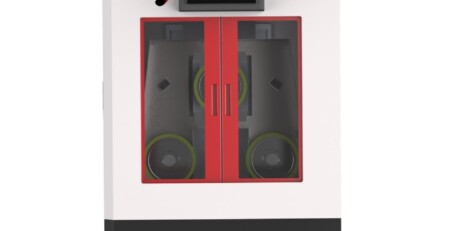
In competitive golf, equipment precision directly impacts performance. While golfers focus on swing technique and club selection, a manufacturing breakthrough is transforming how premium graphite shafts are produced. Diamond wire loop cutting technology represents the latest advancement in golf equipment manufacturing, delivering unprecedented accuracy for players seeking every possible advantage. Graphite shafts behave like other brittle composites, so the principles in our guide on how to cut graphite — low cutting force, fine grit, and a controlled feed rate — apply directly here.
Understanding Graphite Shaft Engineering
Modern graphite shafts utilize advanced composite materials that offer superior customization compared to traditional steel shafts. Through strategic layering of carbon fibers and epoxy resins, manufacturers can precisely engineer three crucial performance characteristics:
Flex Profile: Controls bending behavior throughout the shaft
Torque Rating: Manages rotational resistance during swings
Kick Point: Determines the optimal bending location
These engineering achievements, however, create significant manufacturing challenges during the cutting and finishing processes.
Why Traditional Cutting Methods Fall Short
Conventional cutting techniques using abrasive wheels or saws present serious limitations for high-performance graphite shafts:
Structural Damage: Traditional blades cause fiber tearing and layer separation, compromising shaft integrity
Heat-Related Issues: Friction generates excessive heat that damages epoxy resins and alters performance characteristics
Inconsistent Results: Mechanical blades struggle to maintain perfect perpendicular cuts, affecting club alignment and performance
These limitations become critical when manufacturing premium shafts where consistency and precision are non-negotiable.
Diamond Wire Loop Technology: A Manufacturing Breakthrough
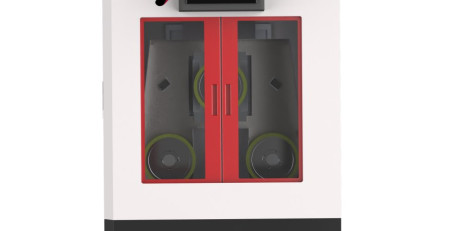
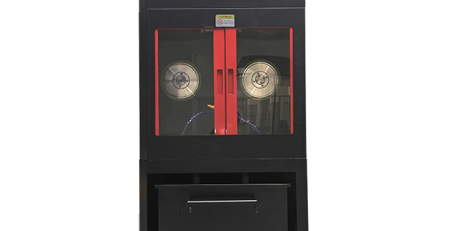
Diamond wire loop cutting utilizes a continuous diamond-coated wire moving at high velocity, creating an exceptionally precise cutting system that eliminates traditional manufacturing drawbacks.
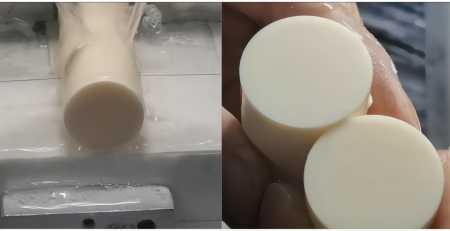
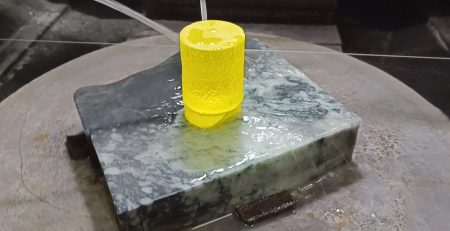
Optimal Graphite Shaft Cutting with Diamond Wire Technology
The diamond wire cutting process ensures perfect shaft preparation through these key stages:
Secure Positioning: Specialized fixtures hold shafts securely without compromising structural integrity
Digital Precision: CNC programming guarantees exact cutting specifications and angles
– Advanced Customization: Enables precise modifications for custom fitting
Technology Comparison: Traditional vs. Diamond Wire Cutting
The performance difference is immediately apparent:
– Traditional Methods: Visible fiber damage, heat discoloration, and inconsistent edges
– Diamond Wire Technology: Clean cuts, perfect edges, and preserved material integrity
Industry Adoption and Future Applications
While currently serving the premium shaft market, diamond wire cutting technology is rapidly becoming the standard for high-performance golf equipment manufacturing. The technology demonstrates how manufacturing innovations can directly enhance product performance and reliability.
Conclusion
Diamond wire loop cutting technology represents the new benchmark for graphite shaft manufacturing. By eliminating the compromises of traditional cutting methods, this advanced process ensures that the sophisticated engineering in modern golf shafts translates directly to improved on-course performance. For golfers who understand that equipment quality matters as much as technique, this manufacturing innovation delivers the precision and consistency demanded by today’s most discerning players.
Abstract: This application report documents a high-precision straight-slicing test on BG38
glass sheet supplied by a European customer. The workpiece measured... read more
Wire loop cutting as a new cutting technology using diamond coated wire loop cutting processing:
Advantages of diamond wire loop cutting:
High... read more
Abstract:
This study investigates the impact of different resin binders on the cutting performance of diamond wire loops. Resin-cured hardness samples... read more
Key Takeaways
Magnetic materials fall into three families: permanent magnets (NdFeB, SmCo, AlNiCo, ferrite), soft magnetics (silicon steel, soft ferrite, amorphous... read more
The rapid evolution of 5G telecommunications, electric vehicle (EV) charging infrastructure, and high-frequency power supplies has placed a massive spotlight... read more

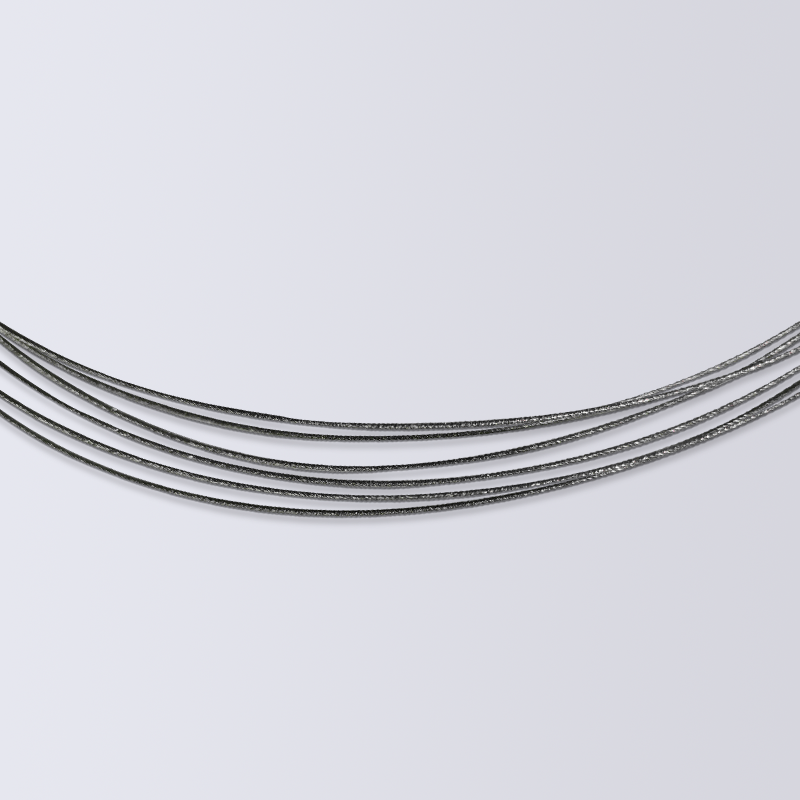
 Diamond Wire Loop Technology: A Manufacturing Breakthrough