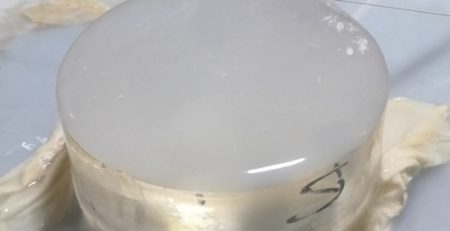
铁氧体 (陶瓷) 磁铁是用锶或钡碳酸盐烧结的氧化铁: 便宜, 耐腐蚀并可稳定使用至 250 degC, but hard and brittle — so cutting method directly decides yield.
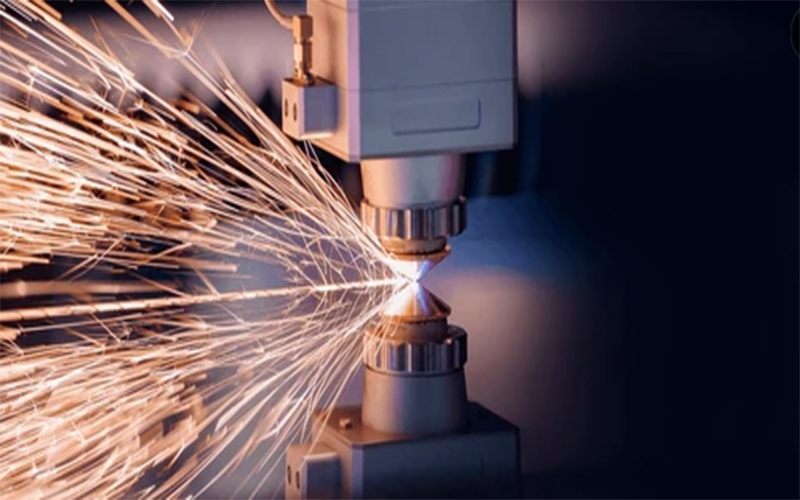
Grinding leaves 50-100 micrometer micro-cracks and runs slowly; laser adds a heat-affected zone that alters magnetic properties; waterjet leaves Ra >3 需要抛光的微米级边缘.
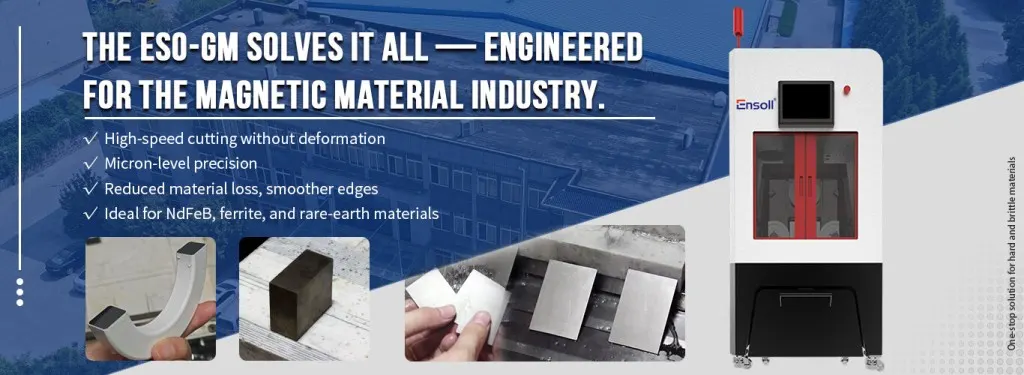
金刚线切割是最佳选择: 一个 0.1-0.3 毫米级镀金刚石线可获得无毛刺边缘 (Ra <0.5 微米级), 无热损伤, ±0.02 mm tolerances and kerf under 0.2 毫米.
About 80% of Japanese ferrite manufacturers already use diamond wire saws, cutting production cost by roughly 30% versus grinding in high-volume runs.
1. What Are Ferrite Magnets?
Ferrite magnets, 也称陶瓷磁体, are a type of permanent magnet composed primarily of iron oxide (Fe₂O₃) combined with strontium or barium carbonate. They are sintered under high temperatures to form a hard, brittle ceramic material with moderate magnetic strength (0.2–0.4 Tesla).
Key Properties
– Cost-Effective: Cheaper than rare-earth magnets (NdFeB/SmCo)
– High Resistivity: Low electrical conductivity reduces eddy current losses
– Sensor Components: Precision slots for Hall-effect devices
– Custom Shapes: Trapezoidal/arc cuts for motors
结论
Ferrite magnets demand precision cutting to maintain performance. While grinding and laser methods have limitations, diamond wire saw cutting machines deliver the best balance of accuracy, 表面质量, and cost efficiency.
For manufacturers seeking zero-defect ferrite components, upgrading to diamond wire technology reduces waste by 20% and boosts productivity by 3×.
Need a cutting solution? [联系我们] for a free sample test with your ferrite material! Compared withhow to cut neodymium magnets, ferrite allows a higher feed rate, 但是出口边缘的崩边仍然是需要注意的缺陷.
只能切割薄片 (厚度在……以下 3 毫米) 并且只能进行直线切割. The laser’s heat-affected zone alters the magnetic properties near the cut, so for production parts a cold process like diamond wire saw cutting is preferred.
Does cutting affect ferrite’s magnetic performance?
Yes if the process adds heat or stress. Laser and hot grinding can alter properties near the cut; diamond wire saw cutting is a cold, coolant-controlled process, so the ferrite keeps its rated performance with no heat-affected zone.