精密玻璃加工: 从原型到量产
光学行业要求极高精度, 无论是晶圆级光学生产, 显微镜载玻片制备, or custom 光学玻璃切割 服务业. Manufacturers must balance speed, 准确性, and cost-effectiveness while meeting strict standards like ISO 10110 compliant cutting.
- Wafer-level optics production fabricates many components on a single glass wafer before singulation — the cost-effective route for smartphone cameras, AR/VR lenses and medical imaging, where diamond wire saws deliver chip-free separation.
- Microscope slides and custom optical glass cutting depend on low-stress machining: uniform thickness, scratch-free edges and fast turnaround without stress fractures.
- For prototype glass machining, diamond wire wins over laser and waterjet because it leaves no heat-affected zone and its parameters adjust to fused silica, borosilicate and other glass types.
- High-volume optics production uses automated diamond wire saw machines to minimize kerf loss, keep batch consistency (critical for automotive LiDAR) and run 24/7 with lower labor cost.
- Glass wafer singulation with diamond wire achieves cuts as narrow as 50 micrometers with minimal chipping, and ISO 10110 compliant cutting keeps optical clarity and dimensional accuracy.
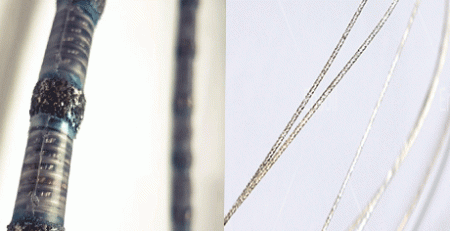
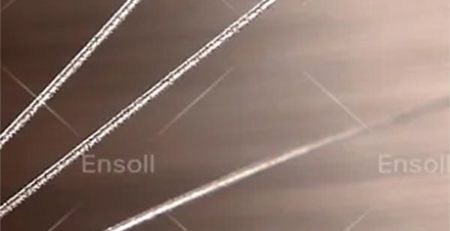
Advanced techniques such as 金刚石绳锯切割 have revolutionized glass processing, enabling prototype glass machining and high-volume optics production with minimal waste. 在这篇博客中, we’ll explore key applications, including glass wafer singulation and optical component subcontracting, while highlighting the role of diamond cutting wire loops and diamond wire saw cutting machines in achieving superior results.
Scaling from prototype to volume usually exposes the same defects, which is why the process notes on 光学玻璃切割 focus on repeatability.
Wafer-Level Optics Production: Precision at Scale
Wafer-level optics (WLO) manufacturing involves producing multiple optical components on a single glass wafer before separating them. This method is cost-effective for high-volume optics production, especially in smartphone cameras, AR/VR lenses, and medical imaging devices.
Key Challenges & Solutions:
– Glass wafer singulation must be ultra-precise to avoid micro-cracks.
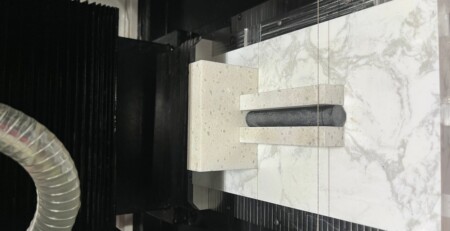
– Diamond wire saw cutting machines provide clean, burr-free edges.
– ISO 10110 compliant cutting ensures optical clarity and dimensional accuracy.
By using diamond cutting wire loops, manufacturers achieve smooth, chip-free separation, reducing post-processing needs.
Microscope Slide Preparation: Consistency Matters
Microscope slides require flawless surfaces for accurate biological and material analysis. Traditional cutting methods can introduce stress fractures, but low-stress glass machining with diamond wire saws ensures:
✔ Uniform thickness – Critical for imaging precision.
✔ Scratch-free edges – Prevents sample contamination.
✔ Fast processing – Ideal for laboratories and industrial suppliers.
This approach is also used in custom 光学玻璃 cutting services, where specific dimensions and edge quality are crucial.
Custom 光学玻璃切割 服务: Tailored Solutions
Not all optical applications use standard glass sizes. Prototype glass machining and small-batch production require flexibility, which is where custom optical glass cutting services excel.
Industries That Benefit:
– 航空航天 (laser windows, sensor covers)
– Medical devices (endoscope lenses, lab equipment)
– Consumer electronics (camera lenses, display panels)
一个 金刚石绳锯切割机 enables rapid prototyping with high repeatability, ensuring quick turnaround times for specialized orders.
Prototype Glass Machining: Speed Without Sacrificing Quality
Before mass production, optical components often undergo prototype glass machining to test designs. Traditional methods like laser cutting or water jets can cause thermal stress or rough edges.
Why Diamond Wire Saws Are Ideal for Prototyping:
– No heat-affected zones – Maintains material integrity.
– Adjustable cutting parameters – Supports various glass types (熔融石英, borosilicate).
– High precision – Reduces the need for multiple iterations.
This makes them perfect for R&D teams developing next-gen optics.
High-Volume Optics Production: 效率 & 精度
Mass-producing optical components requires both speed and accuracy. High-volume optics production leverages automated diamond wire saw cutting machines to:
✔ Minimize kerf loss – Maximizes material usage.
✔ Ensure batch consistency – Critical for industries like automotive LiDAR.
✔ Reduce labor costs – Automation allows 24/7 operation.
Companies specializing in optical component subcontracting rely on this technology to meet large-scale orders efficiently.
Optical Component Subcontracting: Outsourcing Precision
Many OEMs outsource their glass machining needs to specialized suppliers. Optical component subcontracting offers:
– Access to advanced diamond wire cutting technology without heavy capital investment.
– Expertise in ISO 10110 compliant cutting for regulated industries.
– Scalability – From prototypes to millions of units.
This model is particularly useful for startups and tech firms needing high-quality optics without in-house capabilities.
Glass Wafer Singulation: Clean Separation for Optics & 半导体
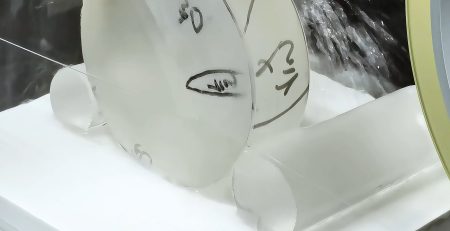
In both optics and semiconductor industries, glass wafer singulation is a critical step. The process involves cutting individual dies from a larger wafer without damaging them.
Why Diamond Wire Saws Dominate This Process:
– Thin, precise cuts – As narrow as 50µm.
-Minimal chipping – Essential for sensitive optical layers.
– High throughput – Cuts multiple wafers in a single run.
This method is widely used in wafer-level optics production and microelectronics
ISO 10110 Compliant Cutting: Meeting Industry Standards
Manufacturers using diamond wire saw cutting machines consistently meet these requirements, making them preferred partners for high-end optical applications.
Diamond Cutting Wire Loop vs. 传统方法
Compared to blades or lasers, diamond cutting wire loops offer:
✅ Thinner kerf – Less material waste.
✅ 更长的使用寿命 – 降低工具更换成本.
✅ 卓越的刀刃质量 – 无需抛光.
这使它们在现代玻璃晶圆切割和大规模光学产品生产中不可或缺.
金刚石绳锯切割机: 精密玻璃加工的未来
最新的金刚石线锯切割机特点包括:
– 自动上下料 – 实现连续生产.
– 基于人工智能的过程控制 – 优化速度和精度.
– 多轴切割 – 支持复杂几何形状.
这些进步使其成为原型玻璃加工的理想选择, 定制光学玻璃切割服务, 及大规模制造.
结论
从晶圆级光学生产到显微镜载玻片制备, 精密玻璃加工已经发生了巨大变化. 金刚石线锯切割机等技术及 ISO 10110 compliant cutting ensure high-quality results in both prototype glass machining and high-volume optics production.
For companies seeking efficiency, outsourcing to optical component subcontracting specialists with advanced diamond wire cutting capabilities is a smart strategy. Whether you need glass wafer singulation or a custom optical glass cutting service, investing in the right technology ensures superior performance and cost savings.
常见问题
What is wafer-level optics production?
It is a manufacturing method where multiple optical components are produced on a single glass wafer and then separated. This is cost-effective for high-volume products such as smartphone cameras, AR/VR lenses and medical imaging devices, provided the singulation step is ultra-precise to avoid micro-cracks.
Why are diamond wire saws preferred for glass wafer singulation?
They cut as narrow as 50 micrometers with minimal chipping, which is essential for sensitive optical layers, and they can process multiple wafers in a single run for high throughput. The result is clean, burr-free edges that reduce post-processing.
What does ISO 10110 compliant cutting mean?
ISO 10110 is the international standard for optical component specifications. Cutting that complies with it guarantees the optical clarity and dimensional accuracy required by regulated industries such as aerospace, medical devices and defense optics.
When should a company outsource optical glass cutting?
Outsourcing to an optical component subcontracting specialist makes sense when you need prototypes or small batches quickly, want ISO 10110 level quality without heavy capital investment, or need to scale from single prototypes to millions of units.
由Ensoll工程团队审查.