光学玻璃: Manufacturing, 成本 & 切削

金刚石环线切割玻璃

光学玻璃: Manufacturing, 成本 & 切削

When you look through a camera lens, a microscope, a pair of binoculars, or even the viewfinder of a sniper rifle, you are looking through optical glass. But not all clear glass is optical glass.


The glass in your window is cheap. The glass in a telescope lens can cost more than a used car.


So, what makes optical glass so special? Why is it so expensive? And how do manufacturers cut this precious material without wasting half of it?


This guide answers all of those questions—and introduces the cutting technology that saves optical glass from the scrap bin.

关键要点

  • Optical glass is expensive mainly because of process yield, not raw material: platinum crucibles, slow melting and annealing, and small batch sizes all push cost up before a single cut is made.
  • Glass is brittle and sensitive to thermal shock, so cracks almost always start at the exit edge of the cut rather than in the middle of the material.
  • Diamond wire machining keeps cutting force low and constant, which produces crack-free edges and kerf loss as low as 0.15 mm — material that would otherwise be ground away.
  • Coolant delivery and feed control decide the result; cutting speed is a secondary variable.

光学玻璃Chapter 1: What Is Optical Glass?

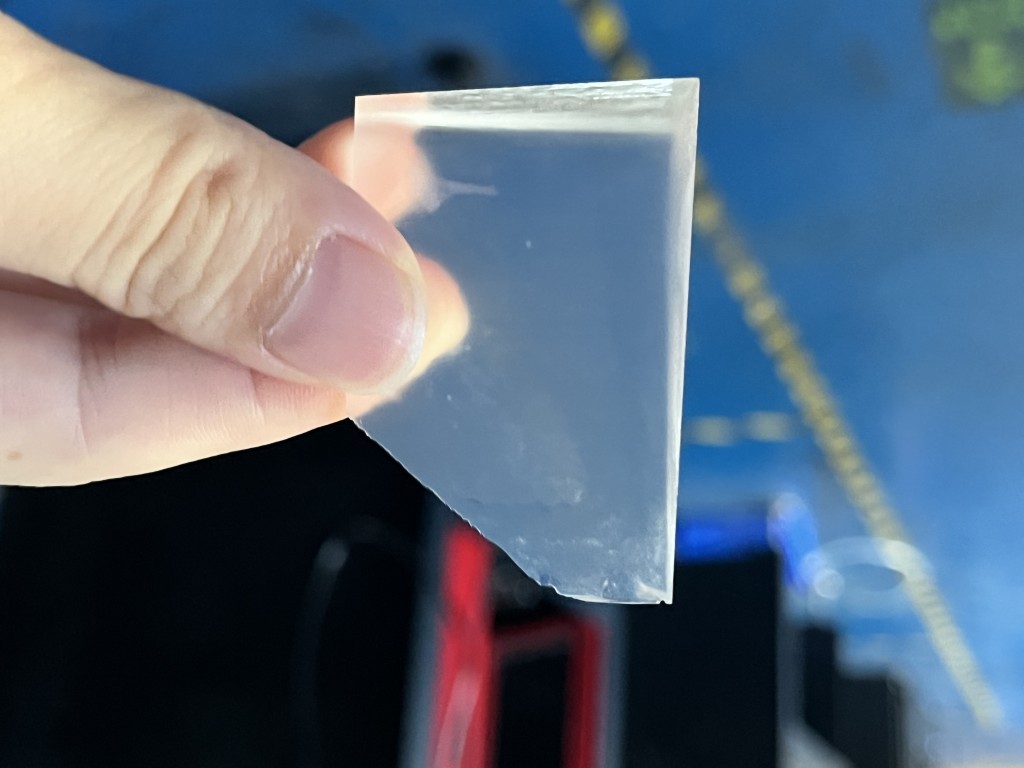
Optical glass is a specially formulated type of glass designed to transmit light with minimal absorption, scattering, or distortion. Unlike ordinary soda-lime glass (window glass), optical glass has precisely controlled refractive index, dispersion, and transmittance properties.

Getting a blank out of that glass without losing half of it is a machine question, covered in our 金刚石绳锯切割机 overview.


简单来说: ordinary glass lets light through, but it bends, blurs, and reflects some of it. Optical glass bends light exactly where it needs to go, with almost no loss.

Key Characteristics of Optical Glass:

PropertyWhat It Means
High homogeneityNo internal bubbles, striae, or inclusions
Precise refractive indexLight bends consistently and predictably
Low dispersionMinimal color separation (less rainbow effect)
High transmittanceLets 95%+ of light pass through
Thermal stabilityResists cracking from temperature changes

Chapter 2: Which Glasses Are Called Optical Glass?

光学玻璃

Not every transparent material qualifies as optical glass. The term specifically refers to glasses used in optical elements such as lenses, 棱镜, beam splitters, filters, and windows for scientific instruments.

Infrared crystals belong to the same family of problemssee the chipping data in our note on precision ZnSe cutting.


Here are the main categories:


1. Crown Glass (Low Dispersion)

Crown glass has a low refractive index (around 1.52) and low dispersion. It is commonly used for simple lenses and microscope slides. BK7 is the most famous crown glass.

Crown Glass

2. Flint Glass (High Dispersion)

Flint glass contains lead oxide or other additives, giving it a high refractive index (1.57–1.75) and high dispersion. It is used in combination with crown glass to correct chromatic aberration in camera lenses.

Flint Glass3. Lanthanum Glass (High Refractive Index, Low Dispersion)

Lanthanum oxide replaces some of the silica, creating glass with high refraction but low dispersion. This is the secret behind modern high-performance camera lenses.

Lanthanum Glass

4. Phosphate Glass

Used for high-power laser applications. It has excellent thermal stability but is softer and more difficult to manufacture.

Phosphate Glass

5. Fused Silica (Pure SiO2)

Technically not a “玻璃” in the traditional sense (it has no additives), fused silica has extremely low thermal expansion and high UV transmittance. It is used in space telescopes and semiconductor lithography.

Silicon itself is sliced to comparable tolerances, and the parameters are documented under silicon wafer cutting.

Fused Silica6. Colored Optical Glass

Used for filters and signal lenses. The color comes from precise additions of metal oxides like cobalt (blue), 钕 (purple-pink), or didymium (orange-absorbing).

综上所述: If a glass is formulated, melted, annealed, and polished specifically to control how it interacts with light, it is called optical glass. If it comes from a window factory, it is not.

Colored Optical Glass

Chapter 3: How Is Optical Glass Made?

Manufacturing optical glass is a slow, 精确, and expensive process. Here is the step-by-step journey from raw powder to lens blank.


六种基本微动开关 市场上有很多种开关 1: Raw Material Selection

Pure silica sand (二氧化硅) is the base. But pure sand alone does not make optical glass. Manufacturers add precise amounts of:

Boron oxide (for low dispersion)

Lead oxide (for high refractive index)

Lanthanum oxide (for high performance)

Arsenic or antimony (to eliminate bubbles)


Impurities are measured in parts per million. A single grain of the wrong mineral can ruin an entire melt.

六种基本微动开关 市场上有很多种开关 2: Melting (The Difficult Part)

The raw batch is heated to 1300°C–1600°C in platinum or ceramic crucibles. Platinum is often used because it does not contaminate the glass.


The melt must be stirred continuously—sometimes for days—to eliminate striae (threads of different compositions). Any variation in chemistry creates visible distortions in the final lens.


六种基本微动开关 市场上有很多种开关 3: Refining (Removing Bubbles)

The molten glass is held at high temperature for hours to allow bubbles to rise to the surface. For bubble-free optical glass, this step can take 24 hours or more.


六种基本微动开关 市场上有很多种开关 4: Homogenization

Special stirring mechanisms mix the glass to ensure every cubic millimeter has exactly the same refractive index. A difference of 0.0001 in refractive index is enough to reject an entire batch.

六种基本微动开关 市场上有很多种开关 5: Annealing (The Long Wait)

The glass is cooled extremely slowly—sometimes over weeks—in a controlled annealing lehr. This removes internal stresses. If cooled too quickly, the glass will shatter when cut or ground.


Large telescope mirror blanks can take months to anneal. The famous 200-inch Hale Telescope mirror at Palomar Observatory took nearly one year to cool.


六种基本微动开关 市场上有很多种开关 6: Shaping and Cutting

Once annealed, the glass is cut into blocks, strips, or near-net shapes. This is where waste reduction becomes critical—which we will cover in Chapter 5.

The waste arithmetic at this step is the same one that governs cutting alumina ceramics.


六种基本微动开关 市场上有很多种开关 7: Grinding and Polishing

The cut glass is ground to rough shape, then fine-ground, then polished to a surface accuracy measured in wavelengths of light (nanometers). A typical lens surface is polished to within 20 nanometers of perfection.

Chapter 4: Why Is Optical Glass So Expensive?

If you have ever priced a replacement lens for a camera or microscope, you know optical glass costs a fortune. Here is why.


Reason 1: Raw Material Purity

Ordinary glass uses cheap sand. Optical glass uses ultra-pure silica and rare additives like lanthanum, niobium, or tantalum. Some raw materials cost hundreds of dollars per kilogram.


Reason 2: Platinum Crucibles

Many optical glasses are melted in platinum crucibles to avoid contamination. Platinum costs roughly $30 per gram—30 times the price of silver.


Reason 3: Slow Production

A float glass factory produces tons of window glass per hour. An optical glass melting furnace might produce a few hundred kilograms per week. The annealing process alone can take weeks or months.


Reason 4: Low Yields

Even with perfect processes, a percentage of every melt is rejected due to bubbles, striae, or refractive index variations. For high-end glasses, the rejection rate can exceed 50%.


Reason 5: Precision Cutting and Finishing

Shaping a lens blank requires diamond tools, skilled labor, and hours of polishing time. A single camera lens element might require eight hours of polishing.

Much of that polishing time is really damage removal, which a dedicated 光学玻璃切割机 reduces at the cutting step.


Reason 6: Small Batch Sizes

Window glass is made in factories that run 24/7/365. Optical glass is often made in batches of a few hundred kilograms—or even a few kilograms for specialty glasses. Small batches mean high per-unit costs.


Putting It in Perspective:

Glass TypeCost per Kilogram (Approx.)
Window glass0.50–0.50–1
Soda-lime glass (tableware)2–2–5
Container glass (bottles)0.30–0.30–0.80
光学玻璃 (crown)50–50–200
光学玻璃 (flint)100–100–500
Lanthanum optical glass500–500–2,000
Fused silica (semiconductor grade)1,000–1,000–5,000+

Chapter 5: Processing Optical Glass – How to Minimize Waste

Now we arrive at the most practical question: How do you cut and shape optical glass without wasting half of it?


Optical glass is expensive—often $100–$2,000 per kilogram. Every millimeter of waste is money thrown away. Traditional cutting methods like diamond blades, abrasive wheels, or even laser cutting introduce problems:

We ran that comparison on a brittle semiconductor in our analysis of laser cutting vs diamond wire saw.


Diamond blades create a wide kerf (thick cut), wasting material

Abrasive saws generate heat, causing micro-cracks and internal stress

Laser cutting creates a heat-affected zone that ruins optical properties

Waterjet cutting embeds abrasive particles into the glass surface

The Solution: 金刚石线环 切削

Enter 金刚石线环 technology—the most efficient, low-waste method for cutting optical glass, 晶体, and other brittle optical materials.

What Is a Diamond Wire Loop?

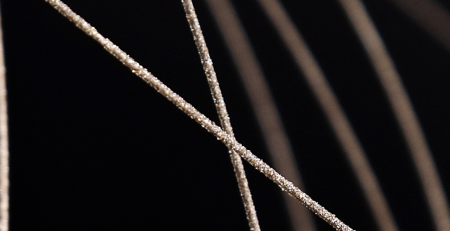
一个 金刚石线环 is an endless steel wire electroplated with industrial diamond grit. Unlike traditional wire saws that spool thousands of meters of wire back and forth, a diamond wire loop is a continuous loop—typically 2–10 meters in circumference—that moves in a single high-speed direction (40–80 m/s).

Machines are built around either one loop or many parallel strands; the trade-offs are set out in our comparison of single-wire and multi-wire diamond wire cutting.


As the loop spins, the diamond grit grinds through the glass with minimal force, minimal heat, and an extremely narrow kerf.

Why Diamond Wire Loop Cutting Minimizes Waste

FactorDiamond Blade / Saw金刚石线环
Kerf width (cut thickness)1–2 mm0.3–0.6 mm
Material loss per cut70–80% less than blades
Heat generation高 (cracks glass)Minimal (cool cutting)
Surface finishRequires post-polishingSmooth, often ready for inspection
Internal damageMicro-cracks commonNo subsurface damage


Additional Benefits for Optical Glass Cutting

  1. No Subsurface Damage

Diamond blades create a fractured layer beneath the cut surface. This damage must be ground away, adding time and material loss. Diamond wire loop cutting produces virtually no subsurface damage, saving hours of post-processing.

The same subsurface-damage argument decides the method for silicon carbide cutting.


  1. Cuts Curves and Complex Shapes

Unlike a straight diamond blade, the flexible diamond wire loop can cut curves, radii, 和不规则形状. This is essential for prototyping and specialty optics.


  1. Dry or Wet Operation

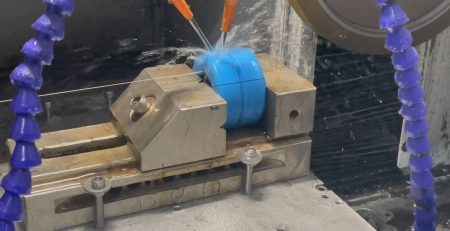
For optical glass, a small amount of coolant or water drip keeps the cut clean and dust-free. The ESO-GM supports both dry and wet cutting.

Both wet and dry modes are built into the ESO-GM diamond wire loop saw.


  1. Low Maintenance

The ESO-GM has no complex spooling mechanisms, no wire guides to replace, and no tension rollers to adjust. It is reliable, simple, and built for daily use.

Chapter 6: Comparing Cutting Methods for Optical Glass

方法Kerf WidthHeat Damage?Surface QualityWaste Level适用范围
Diamond blade saw1.5–2.5mm是的 (裂缝)RoughRough cutting of cheap glass
Abrasive wire (reciprocating)0.8–1.2mm一般Large blocks (slow)
Laser cutting0.1–0.5mm是的 (HAZ 系列)差 (melted edges)Thin glass only
水刀0.8–1.5mmNo差 (embedment)Thick glass (contaminated)
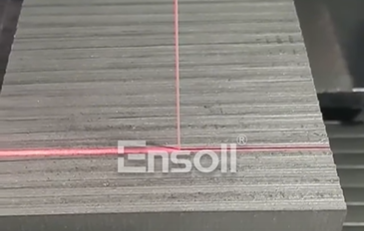
金刚石线环0.3–0.6mmNo优秀Very LowPremium optical glass

For expensive optical glass, diamond wire loop is the clear winner.

How Diamond Wire Saw Cutting Machines Ensure Crack-Free Results

Unlike conventional methods, diamond wire saw cutting machines use a thin, diamond-coated wire (typically 0.1–0.3mm in diameter) running at high speed under controlled tension. This unique cutting mechanism provides several key advantages for optical glass:

1. Ultra-Low Subsurface Damage

Traditional diamond blades create micro-fractures due to high-impact cutting.

Laser cutting generates heat-affected zones (HAZ 系列), leading to stress-induced cracks.

Diamond wire saws use a gentle abrasive action, producing near-zero subsurface cracks—critical for high-performance optics.

2. Superior Surface Finish (Ra < 0.2微米)

The fine-grit diamond wire ensures a mirror-like edge, reducing the need for extensive polishing.

Ideal for lenses, 棱镜, and precision optics where surface roughness must be minimized.

3. No Thermal Distortion (Cold Cutting Process)

Laser and waterjet cutting generate heat, risking stress birefringence and material warping.

Diamond wire saws operate at room temperature, preserving the glass’s structural integrity.

4. 最小的割缝损失 (As Low as 0.15mm)

Saves expensive optical glass material, improving yield and reducing costs.

Perfect for wafer-level optics and micro-optics arrays where material conservation is crucial.

结论: Cut Smart, Save Money

什么是光学玻璃? It is precision-engineered glass designed to control light with extreme accuracy. Which glasses are called optical glass? Crown, flint, lanthanum, phosphate, fused silica, and specialty filter glasses. How is it made? Through slow, careful melting, refining, and annealing—often taking weeks or months. Why is it so expensive? Raw material purity, platinum crucibles, slow production, low yields, and precise finishing all drive up costs.


And finally: How do you process optical glass while minimizing waste?


The answer is diamond wire loop cutting—specifically with the ESO-GM Diamond Wire Loop Cutting Machine. With an ultra-narrow kerf, cool cutting action, and smooth surface finish, the ESO-GM maximizes yield from expensive optical glass blocks.


If you are cutting optical glass worth hundreds or thousands of dollars per kilogram, every millimeter saved is money in your pocket. The ESO-GM delivers those savings—cut after cut, day after day.

常见问题

什么是光学玻璃?

A glass formulated for predictable optical behaviour — defined refractive index, dispersion and transmission, with tight limits on bubbles, striae and inclusions. Common families include crown glass, flint glass, lanthanum glass, phosphate glass and fused silica.

Why is optical glass expensive?

Mostly yield. Raw material purity, platinum crucibles, slow melting and long annealing cycles, low yields, precision cutting and finishing, and small batch sizes all add cost before volume economies can apply.

What is the best way to cut optical glass?

金刚石线环切割. The wire applies low, constant force with continuous coolant, so it avoids the micro-fractures of blade sawing and the heat-affected zone of laser cutting.

Can optical glass be cut with a regular glass cutter?

A wheel cutter scores and snaps straight lines in flat sheet, but it cannot produce the curved, internal or tight-tolerance cuts optical components need, and the snap leaves a stressed, uneven edge.

How do you cut optical glass without cracking it?

Keep cutting force low and constant with a diamond wire, run continuous coolant, and control the feed rate. Most cracks initiate at the exit edge, so supporting the workpiece through the end of the cut matters as much as the cutting parameters.

Why does optical glass crack when machined?

Thermal shock and mechanical shock. Laser cutting generates a heat-affected zone that stresses the glass, while blade sawing applies high-impact force; both initiate cracks that propagate through a brittle material.

Is a diamond wire saw better than a blade for optical glass?

Yes for precision work. Diamond blades create micro-fractures through high-impact cutting, while diamond wire uses gentle abrasive action that leaves near-zero subsurface damage and a kerf as narrow as 0.15 毫米.

Does optical glass cutting need coolant?

是的. Coolant removes heat that would otherwise cause thermal shock cracking, flushes abrasive slurry out of the kerf, and helps produce the mirror-like edge that reduces downstream polishing.

技术内容由Ensoll工程团队审核——一家金刚线环制造商 10+ 多年生产经验.